

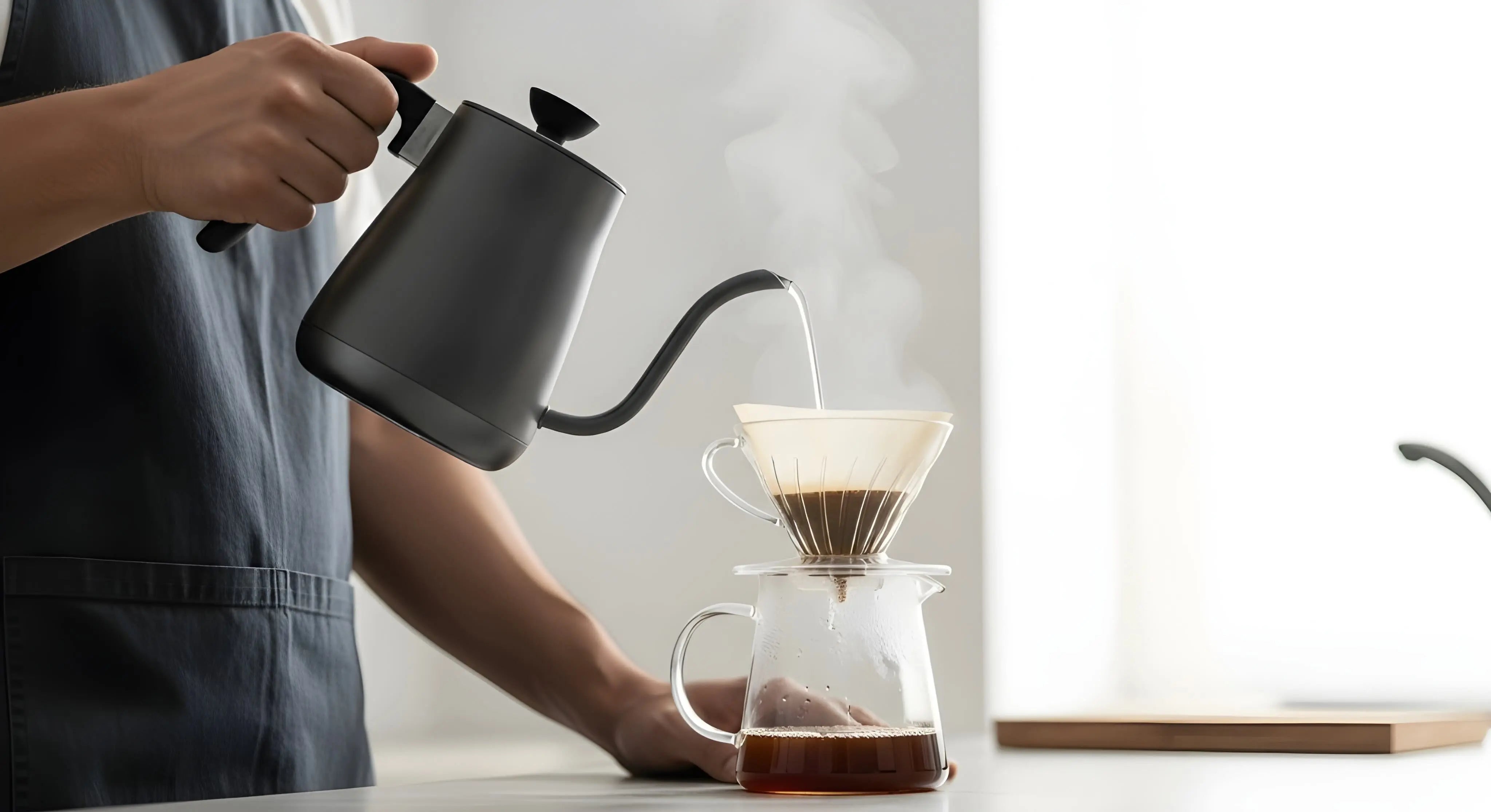
You’ve done everything right. You bought the ethically sourced, light-roasted Ethiopian Yirgacheffe beans with notes of "blueberry and jasmine." Or perhaps you splurged on that high-mountain Alishan Oolong tea. You have the precise scale, the temperature-controlled kettle, and the expensive burr grinder.
While perfecting these elements, you also need to pay close attention to the quality of your water. Since water makes up about 98% of a cup of coffee and tea, its chemical composition directly dictates the extraction process and the final flavor profile. To achieve professional brewing results at home, you must manage the chemical composition of your water. This process involves two critical steps: removing harmful impurities through Reverse Osmosis (RO) and restoring essential minerals through remineralization.
1. The Problems with Using Raw Tap Water for Brewing
There are three main components in tap water that negatively interfere with the brewing of coffee and tea.
Chlorine and Disinfectants
Municipal water providers use chlorine or chloramines to prevent bacterial growth. These chemicals have a strong odor and a sharp chemical taste. When heated and mixed with coffee or tea, chlorine reacts with organic compounds to create medicinal off-flavors. Even at very low concentrations, chlorine can completely mask the delicate floral or fruity notes of a premium brew.
Excessive Mineral Hardness
"Hardness" refers to the concentration of dissolved calcium and magnesium. While these minerals are necessary for flavor, tap water often contains them in excessive or unbalanced amounts. High levels of calcium carbonate act as a buffer that neutralizes the natural acids in coffee. This results in a "flat" or "dull" cup that lacks brightness. In tea, hard water reacts with polyphenols to create a cloudy appearance and an oily film on the surface.
Unpredictable Total Dissolved Solids (TDS)
TDS is the total measure of all dissolved substances in the water. Tap water TDS fluctuates significantly based on the season, local pipe conditions, and municipal adjustments. High TDS water (above 300ppm) is "saturated," meaning it has less capacity to dissolve and extract the desirable oils and solids from your coffee grounds or tea leaves.
2. How Reverse Osmosis (RO) Solves Initial Water Quality Issues
Reverse Osmosis is a filtration process that forces water through a semi-permeable membrane. This membrane has pores as small as 0.0001 microns, which allows it to remove up to 99% of dissolved solids, heavy metals, and chemicals.
Creating a Consistent Base
The primary advantage of an RO system is that it provides a consistent, clean starting point. By removing the chlorine, lead, and erratic mineral spikes found in tap water, you eliminate the "background noise" that interferes with flavor. For a serious brewer, this consistency is essential. It ensures that when you change your grind size or water temperature, the resulting change in flavor is due to your technique, not a shift in water chemistry.
Improving Beverage Clarity
Because RO water lacks the heavy minerals and contaminants of tap water, the resulting beverage is visually clearer. Tea brewed with RO water is transparent and vibrant, and coffee has a cleaner, more defined flavor separation. This "blank canvas" is the necessary first step for any high-end extraction.
3. The Limitations of Pure RO Water (0 TDS)
While purification is necessary, using 100% pure RO water (or 0-TDS water) is not recommended for brewing. This is where many standard kitchen filters fail to meet professional standards.
Over-Extraction and Bitterness
Pure water is a very aggressive solvent. Because it contains no minerals, it tends to extract too much from the coffee or tea. This often leads to over-extraction, where the water pulls out heavy, woody, and bitter compounds.
Lack of Flavor Carriers
Certain minerals, specifically magnesium and calcium ions, are required to help pull specific flavor compounds out of the coffee grounds and tea leaves. Without these ions, the water cannot effectively "grab" the sugars and acids that give coffee its sweetness and complexity. Brewing with 0-TDS water often results in a cup that tastes salty, sharp, or thin.
4. Why Remineralization is Necessary for Flavor Extraction
The solution to the problem of "too pure" water is remineralization. A professional-grade RO system does not stop at purification, it includes an additional stage where controlled amounts of essential minerals are added back into the water.
Magnesium as a Flavor Catalyst
Magnesium is a critical mineral for specialty coffee. It is an "extraction-friendly" ion that is highly efficient at pulling out the complex acids and fruity notes from light-roasted beans. A remineralization stage that adds magnesium ensures that the water has the chemical power to extract the full flavor profile of the bean.
Calcium for Mouthfeel and Body
Calcium contributes to the "body" or texture of the beverage. It rounds out the acidity and gives the coffee or tea a smoother, more substantial mouthfeel. In tea brewing, the correct amount of calcium prevents the tea from tasting watery or weak, providing a balanced and satisfying finish.
Reaching the SCA Target Range
According to the SCA (Specialty Coffee Association) Standard for Water for Brewing, the target Total Dissolved Solids (TDS) is 150 ppm, with an acceptable range of 75 to 250 ppm to ensure balanced extraction. A remineralizing RO system is designed to hit this range consistently. This provides enough mineral content to aid extraction while keeping the water clean enough to ensure clarity and sweetness.
5. Protecting Brewing Equipment from Limescale
Beyond flavor, water quality is the most important factor in maintaining expensive brewing equipment.
Preventing Mechanical Failure
Hard tap water contains high levels of carbonates that form limescale when heated. Limescale builds up inside the boilers, sensors, and heating elements of espresso machines and kettles. This buildup restricts water flow, causes inaccurate temperature readings, and eventually leads to complete machine failure.
The RO Advantage
A remineralizing RO system solves this by first removing the heavy, scale-forming minerals during the RO stage. The minerals added back during the remineralization stage are carefully controlled to ensure they provide flavor without causing significant scale buildup. This dramatically extends the life of your equipment and reduces the need for frequent, harsh chemical descaling.
6. Economic and Environmental Benefits
Choosing a home RO system with remineralization is also a more sustainable choice compared to purchasing bottled water.
-
Lower Cost Over Time: While there is an upfront cost for the system, the cost per gallon of RO water is a fraction of the price of premium bottled spring water.
-
Consistency: An RO system provides a permanent, stable water source in your kitchen.
-
Waste Reduction: A home system eliminates the need for single-use plastic bottles, reducing your household's environmental footprint.
Conclusion
To brew high-quality coffee or tea, you must manage your water quality with the same precision as your grind size or brew time. Tap water contains too many contaminants and inconsistent minerals, while pure RO water lacks the chemistry needed for a balanced extraction.
A Reverse Osmosis system with a dedicated remineralization stage provides the complete solution. It removes the harmful chemicals and excess minerals that ruin flavor, then re-introduces the specific ions necessary to unlock the full potential of your beans and leaves. By investing in our 6-stage Remineralization RO system, you are ensuring that the 98% of your cup is optimized for the best possible taste and the longest possible life for your equipment.


