
Reverse Osmosis System | Quality You Can Trust
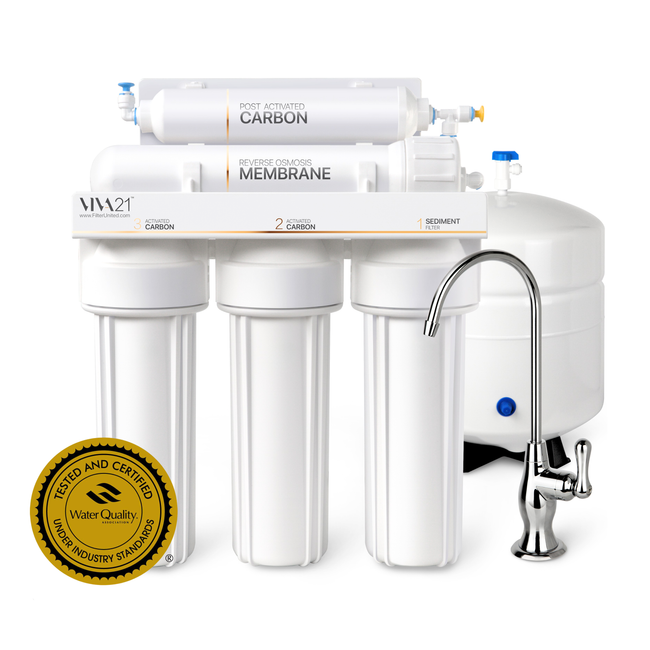
VIVA21 5-Stage Reverse Osmosis System
The VIVA21 5-Stage RO System is designed to provide premium water quality at an unmatched value. It fits under your sink, installs in less than 30 minutes, and delivers peace of mind for your health and hydration — no matter your zip code.
- Removes up to 99% of contaminants - PFAS, heavy metals, chlorine, and more.
- Built by a team with over 35 years of combined experience in water filtration industry.
- WQA Gold Seal certified to meet the strict NSF 58 and NSF 372 standards.
- Peace of mind - lifetime limited parts warranty and support.
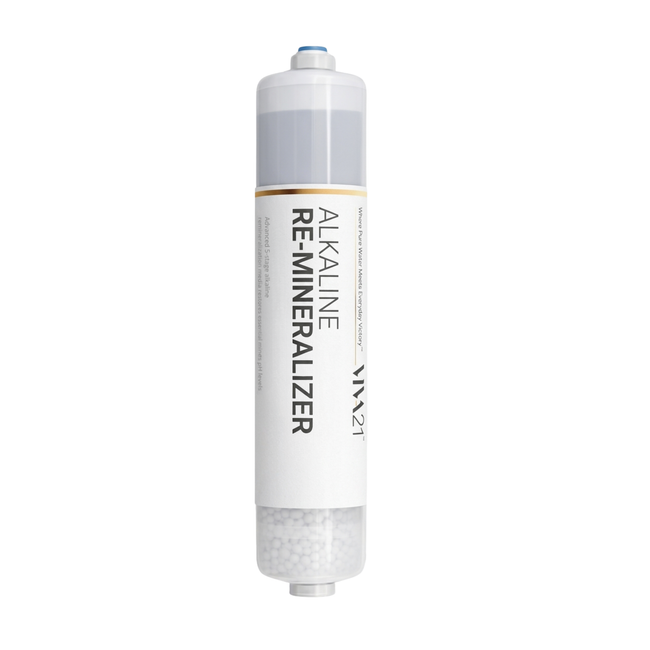
VIVA21 6-Stage Alkaline Remineralization Reverse Osmosis System
The VIVA21 6-Stage Alkaline RO System is designed to provide premium water quality at an unmatched value, then re-balance the water to a healthy pH level with multiple natural minerals. It fits under your sink, installs in less than 30 minutes, and delivers peace of mind for your health and hydration — no matter your zip code.
- Removes up to 99% of contaminants - PFAS, heavy metals, chlorine, and more.
- Mineral Boost: The natural mineral alkaline stage delivers spring-like water with a balanced, healthy pH and multiple essential minerals.
- Built by a team with over 35 years of combined experience in water filtration industry.
- WQA Gold Seal certified to meet the strict NSF 58 and NSF 372 standards.
- Peace of mind - lifetime limited parts warranty and support.
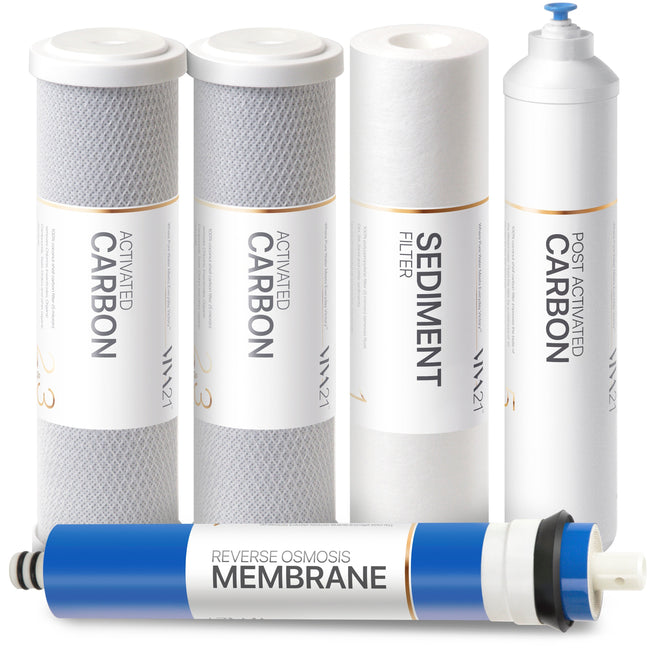
High Capacity RO System Pre-Filter Set
- Guaranteed 12 month capacity.
- This 3-stage set is specifically engineered to maximize the performance of your system by protecting and extending its lifespan.
- 5-micron filters, best in class.
- Universally compatible with iSpring, APEC Water, Express Water traditional RO systems.
What Our Customers Say
Margot B.
Budget RO system that works & cheaper than big-box stores.
This VIVA21 5-stage RO system is...
Mr. Aloha Friday
They are 5 micron, they fit, water tastes...
George C.
Flexible design! Perfect for Renovations!
I really like how modular the VIVA21 system is. It fit perfectly under my sink...
P. Jones
Good lower capacity system...
Phemsley
Nice set of Backup filters for RO System.
Nice replacement filters for my iSpring RO system. They are a reasonable price...
Will H.
Water tastes great...
Ryder D.
Great reverse osmosis replacement filter set!
This is a reverse osmosis water filtration...
Gregory
High quality filters at a great price...
Pure Water, Made Simple
Every day starts with simple choices. The water you drink is one of them with VIVA21 reverse osmosis system. Every drop delivers purity, confidence, and peace of mind.
Engineered for clean great tasting water, built to last, and designed for the way you live.
Lifetime Support
We built reliable reverse osmosis systems that work and are meant to elevate your wellness. Ask us anything or checkout out FAQs!
How long does shipping take?
Shipping usually takes 2-7 business days, depending on your location.
We ship our package in 1 business day, and the rest is taken care of by selected shipping carrier.
What is PFAS and how is it removed?
PFAS are "forever chemicals" that accumulate in the body and environment, linked to cancer, hormone disruption, and immune dysfunction. They are widely found in U.S. water supplies and bottled water.
Our reverse osmosis system, VIVA21 effectively removes PFAS from your water and provide best quality drinking water right from your kitchen.
What is the warranty on your RO system?
We offer an extra 2 years of system warranty with registration. Registration is free and simple, pease register your systems here.
You also get lifetime limited warranty for your RO system parts.
What is a Reverse Osmosis System
A Reverse Osmosis (RO) system is a multi-stage water filtration system that uses a semipermeable membrane to remove most of the dissolved solids, chemicals, and impurities in your tap water. It forces water through the membrane under pressure, leaving contaminants behind. RO is known for producing exceptionally clean drinking water. It is widely used in homes for improved taste, safety, and purity.
Why should I choose an RO system over other filtration methods?
RO systems remove up to 99% of harmful contaminants such as heavy metals, PFAS, nitrates, chlorine, fluoride, and micro-sediments commonly found in tap water, while carbon filters only remove taste and odor.
If you want truly purified drinking water, RO is the most effective household filtration technology.
How does an RO system work?
A RO system typically filters water through several stages, including sediment, carbon blocks, and the RO membrane. The membrane allows water molecules to pass through while rejecting contaminants. Clean water is stored or delivered directly to the faucet, while wastewater is flushed away through the drain line. The result is purified drinking water with significantly reduced impurities.
Why is there “wastewater” in an RO system?
Reverse osmosis produces “wastewater” because the system needs to flush away the contaminants it removes from your tap water.
During filtration, water is pushed through a membrane that blocks the impurities. The clean water passes through, while the concentrated contaminants must be carried out of the system through a small stream of “wastewater”.
This rinse water is essential. It prevents buildup on the membrane, keeps filtration performance high, and helps extend the life of the RO system.
Knowledge Base
Is Your State at Risk? How to Build a "Terminal Defense" Against Environmental Toxins
At FilterUnited, we believe that transparency is the first step toward safety. Recently, our team analyzed the latest Environmental Protection Agency (EPA) datasets regarding industrial chemical discharge across the United States. What we found was a complex map of environmental stress that every homeowner should understand. In this article, we will break down what "Toxic-Weighted Pounds" actually means, analyze the geographic distribution of these pollutants, and explain why a Reverse Osmosis (RO) system is a technical necessity for the modern home. 1. What is "Toxic-Weighted Pounds" (TWP)? When we talk about pollution, we usually think in raw numbers like "1,000 pounds of chemicals". But the EPA knows that not all chemicals are created equal. Discharging a pound of salt is a nuisance, but discharging a pound of mercury is a disaster. To make sense of this, the EPA uses a metric called Toxic-Weighted Pound Equivalent (TWPE). Instead of just looking at weight, they multiply the actual pounds by a Toxic Weighting Factor (TWF). This allows us to compare the "potential toxic nature" of completely different substances on a level playing field. The Math of Toxicity: Mercury: Has a high TWF of 117. So, 1 pound of mercury equals 117 TWP. Copper: Has a much lower TWF of 0.63. So, 1 pound of copper is only 0.63 TWP. Total Suspended Solids (TSS): Has a TWF of 0. Some pollutants have a TWF of 0, meaning they don't add to the toxicity score at all. When you see high TWP numbers in your state, it doesn't just mean there is "more stuff" in the water, it means the chemicals being released are biologically potent. Important Note: The EPA is clear that these numbers aren't a direct "health risk score" (because they don't track exactly how the water travels to every individual house). However, they are great tools we have to rank the relative toxicity of industrial discharge in our environment. It’s a measure of the toxic pressure being put on your local water sources before they ever reach a treatment plant. 2. Analyzing the Geographic "Heatmap" The colors on our heatmap aren't just about how much industrial waste is being dumped, they represent the Toxic-Weighted Pounds (lb-eq/year), which measures the actual "biological stress" on the water. It is important to note that the data we used for this map focuses specifically on "Major" facilities. In EPA terms, "Majors" are the heavy hitters: large-scale industrial plants, massive oil refineries, and significant municipal treatment works. These are the facilities with the greatest potential to impact our watersheds. Why Do Some States Glow "Red"? Based on the 2026 raw data for these Major facilities, the distribution is surprising. It shows that a state’s "Toxic Load" has more to do with what these giants are manufacturing than just how big their factories are. The High-Potency Outlier: Tennessee (1,168,328 TWPE) Tennessee is the most striking data point in our set, breaking the million-point mark. Why is it so high? This usually points to a concentration of facilities that handle high-toxicity materials like Mercury or Selenium. With major research hubs and coal-processing facilities, the "Toxic Weight" of their discharge is incredibly high. Even if the physical amount of waste isn't the largest in the country, its biological potency is off the charts. The Industrial Surprise: New York (236,245) vs. Texas (214,208) You might expect a massive energy hub like Texas to lead the pack in every category. While major facilities in Texas do discharge a staggering 1 billion pounds of raw pollutants, major facilities in New York actually have a higher Toxic Load (TWPE). New York is a hub for precision manufacturing, electronics, and imaging—industries that often use high-impact heavy metals and specialized solvents. Texas handles massive volumes of petrochemicals. While these are certainly pollutants, many oil byproducts have a lower "toxicity factor" than the heavy metals found in NY’s industrial discharge. The Fluid Nature of Environmental Risk It’s a common mistake to think, "I don’t live near a factory in Tennessee or a refinery in Texas, so I’m safe." Unfortunately, water is a fluid, connected system that doesn't care about state lines. Surface Water Flow: Chemicals discharged into a river in one state don't just stay there. They flow downstream, crossing borders and entering the intake valves of municipal water plants hundreds of miles away. The Groundwater "Bank": Many toxins seep through the soil into underground aquifers. Unlike a flowing river, an aquifer is like a slow-moving bank; once toxins are "deposited" there, it can take decades for them to flush out. Whether you live in a high-discharge state or a "clean" neighbor, your water source is likely connected to this broader environmental network. That is why having a final, molecular-level defense in your kitchen is so important. 3. Why Your Filter Needs to be Smarter The "Legal vs. Safe" Distinction Municipal water treatment plants are legally required to meet certain standards set by the Safe Drinking Water Act. However, these standards often lag decades behind the latest science. There are thousands of industrial chemicals (like PFAS "forever chemicals") that the EPA tracks but does not yet strictly regulate in tap water. Your water might be "legal", but that doesn't mean it's free of the toxic load we see in the discharge data. The Aging Infrastructure Problem Even if the water is perfectly clean when it leaves the treatment plant, it has to travel through a labyrinth of aging pipes to reach your home. In many parts of the country, these pipes are 50 to 100 years old. Along the way, water can pick up: Lead and Copper from corroding plumbing. Microplastics from degrading synthetic pipes. Biofilms and bacteria that thrive in the "dead ends" of city grids. The Source Stress Factor When the "Toxic Load" in the source environment is high, treatment plants must use more aggressive chemicals (like chlorine and chloramines) to disinfect the water. This creates a "secondary pollution" of Disinfection Byproducts (DBPs), which have been linked to long-term health issues. 4. What Reverse Osmosis (RO) can do This is where the technology of FilterUnited comes into play. If the environment is the source of the problem, Reverse Osmosis (RO) is the ultimate solution. How it Works: The Molecular Gatekeeper While standard carbon filters act like a "sponge" to soak up odors, an RO membrane acts like a molecular gatekeeper. Our systems use a semi-permeable membrane with a pore size of approximately 0.0001 microns. To put that in perspective, a single human hair is about 75 microns wide. An RO membrane is 750,000 times finer than a human hair. What RO Strips Away Because of this microscopic precision, RO is the only technology capable of effectively removing the components that make up the "Toxic Load": Heavy Metals: Lead, Arsenic, Chromium-6, and Mercury. Synthetic Chemicals: Pesticides, herbicides, and industrial solvents. PFAS/PFOS: The "forever chemicals" that are increasingly found in industrial discharge data. Dissolved Solids: Nitrates and salts that bypass standard filtration. Installing an RO system effectively disconnects your home from the regional industrial grid. You are no longer just drinking "city water" that has been exposed to the legacy of the surrounding industry, you are drinking water that has been restored to its purest, safest form. Conclusion The EPA’s data on Toxic-Weighted Pounds gives us a clear look at the invisible industrial landscape around us. While we can’t always influence what happens at a large-scale facility miles away, we have total authority over the water that enters our homes. Choosing an undersink RO system is about more than just a kitchen upgrade, it’s about making an informed decision for your long-term wellness. It’s the simplest way to ensure that no matter what the regional data looks like, the water in your glass is always exactly what it should be: pure, clear, and safe.
Learn moreHow Managing Water Hardness and Purity Can Calm Chronic Dry Skin and Eczema
If you struggle with chronic dry skin or eczema, you’ve likely tried everything: high-end dermatological creams, oatmeal baths, fragrance-free detergents, and perhaps even dietary changes. Yet, for many, the irritation persists. The culprit might not be what you are putting on your skin, but what you are washing it with. Hard water is more than just a plumbing nuisance, it is a significant environmental trigger for skin barrier disruption. In this article, we will explore the mechanical and chemical relationship between water quality and skin health, and the effective technology for restoring your skin’s natural balance. 1. The Science of "Soap Scum" and Skin Barrier Disruption To understand why your skin feels tight after a shower, we have to look at the mineral content of your water. "Hard water" is defined by high concentrations of dissolved calcium and magnesium. While these minerals are generally safe to drink, they react poorly with cleaning agents. According to the U.S. Geological Survey (USGS), water hardness is prevalent in most American homes. When calcium and magnesium encounter soap, they create an insoluble precipitate commonly known as "soap scum". On your shower tile, this looks like a white film; on your skin, it acts as a microscopic barrier that clogs pores and traps bacteria. For someone with healthy skin, this might result in minor dryness. However, for those with eczema, the consequences are more severe. A compromised skin barrier is highly sensitive to external irritants. Soap scum prevents the skin’s natural oils (sebum) from reaching the surface, leading to a cycle of inflammation, itching, and "flare-ups" that topical moisturizers struggle to penetrate. 2. Abrasive Minerals: The Hidden Irritants in Your Tap Beyond the creation of soap scum, the minerals in hard water are physically abrasive. On a microscopic level, these dissolved solids function like fine sandpaper. Every time you wash your face or hands, these mineral particles can cause micro-tears in the skin's surface, further weakening an already sensitive skin barrier. When these minerals dry on the skin, they don't just disappear. They crystallize within the pores and on the surface. For a dry skin sufferer, this means that even after you've patted your skin dry, the "hardness" is still there, drawing moisture out of your cells through osmosis. This is why many people feel the need to apply lotion immediately after washing—their water has essentially "dehydrated" their skin during the cleaning process. By using a filtration system that removes these solids entirely, you allow your skin to retain its own natural moisture. 3. Beyond Hardness: The Role of Residual Chlorine It isn't just the minerals that cause trouble, it’s the disinfectants added by municipal water treatment plants. Chlorine is highly effective at killing pathogens in the city's pipe network, but it is a known desiccant, meaning it strips moisture from surfaces. For a person with dry skin, chlorine acts as a mild chemical irritant. It oxidizes the lipids in your skin, making it feel "squeaky clean", which is actually a sign of over-stripped skin. When you combine the abrasive nature of hard water minerals with the drying effect of chlorine, you have a recipe for chronic irritation. 4. The Solution: A Two-Tiered Approach to Water Management To combat these irritants effectively, you need a strategy that addresses both the physical hardness and the chemical purity of your water. This is best achieved through a combination of Point-of-Entry (POE) and Point-of-Use (POU) technologies. The First Line of Defense: Whole-House Water Softening The most effective way to eliminate hard water minerals is at the source. A Water Softener uses ion exchange to exchange these minerals before they ever reach your showerhead or laundry machine. Eliminate Soap Scum: By softening the water, you allow soaps and cleansers to lather and rinse away perfectly, leaving no residue on your skin. Protect the Body: Softened water ensures that every shower or bath is gentle on your skin barrier, reducing the "sandpaper effect" and mechanical irritation across your entire body. The Finishing Touch: Reverse Osmosis (RO) Purification While a softener handles hardness, an RO system provides the ultra-pure water needed for targeted, high-sensitivity care. Installed at your bathroom or kitchen sink, Reverse Osmosis acts as a "precision filter". It forces water through a semi-permeable membrane with pores as small as 0.0001 microns, which is small enough to reject up to 99% of remaining dissolved solids, heavy metals, and residual chlorine. Using this purified water for your morning and evening face-washing routine ensures that your most delicate skin areas are treated with "blank slate" water, free from any chemical load. 5. Efficiency and Savings: Your Skincare Products Will Work Better One of the most immediate benefits of managing your water quality is the "lather effect". In hard water, you have to use significantly more product to achieve a lather because the minerals "deactivate" the surfactants. When you transition to a managed water system: Product Efficacy Increases: Without mineral interference, your cleansers work more efficiently. You can use less product to achieve a better result. Better Absorption: Without a layer of mineral scum or chlorine-stripped lipids, your expensive dermatological serums and moisturizers can actually reach the epidermis and do their job. Lower Chemical Exposure: Because you are using less soap, your skin is exposed to fewer synthetic fragrances and surfactants, which are common triggers for eczema flare-ups. Summary Eczema and chronic dry skin are complex conditions with many variables. However, the quality of your water is one of the few variables you can completely control. By integrating a Water Softener to eliminate hardness and an RO system to ensure total purity, you provide your skin with a foundation for healing. Your skin is your body’s largest organ. It deserves to be treated with water that is as pure and gentle as the products used to protect it. Understanding this relationship between water quality and dermatological health is a vital step toward long-term skin comfort and relief.
Learn moreAlkaline RO Water for Biohackers: Optimizing Cellular Hydration and Performance
What if the water you drink could do more than just quench your initial thirst? For the modern biohacker, hydration isn’t a passive requirement, it’s a precision tool. We track our macros, optimize our REM sleep, and fine-tune our exogenous ketones. This high-level optimization naturally leads us back to the most essential element—the water that powers every single biochemical reaction in the body. Optimization isn’t just about staying hydrated, it’s about cellular efficiency. The quality, structure, and mineral composition of your water dictate how your body functions, from mitochondrial ATP production to cognitive processing speed. This is where Alkaline Reverse Osmosis (RO) water emerges as a foundational biohack. By merging the extreme purity of RO with the physiological benefits of alkalinity, you create a "performance fluid" designed to support metabolic health at the source. 1. What is Alkaline RO Water? To appreciate the value of Alkaline RO water, we have to look at the two-step process that makes it a superior choice for health optimization. The Purity Power of Reverse Osmosis (RO) Reverse Osmosis is the "Gold Standard" of filtration. It works by forcing water through a semi-permeable membrane with microscopic pores (about 0.0001 microns). This process removes up to 99% of dissolved solids, including: Heavy Metals: Lead, arsenic, and mercury. Endocrine Disruptors: Fluoride, chlorine, and pharmaceutical runoff. Modern Contaminants: Microplastics and "forever chemicals" (PFAS). For a biohacker, starting with RO water is about reducing the body’s total toxic load. When your liver and kidneys aren't busy processing trace amounts of chlorine and lead from tap water, they can focus on metabolic detoxification. The Functional Edge of Alkalinity The "Alkaline" component addresses the one downside of traditional RO: the removal of healthy minerals, which can leave water slightly acidic. Alkaline RO systems use a re-mineralization stage. This adds back essential ionic minerals like Calcium, Magnesium, and Potassium, naturally restoring the water’s mineral balance and creating a clean, alkaline profile that supports your body’s internal homeostasis. This isn't just about "neutralizing acid", it’s about restoring the water's electrical conductivity and making it more "bioavailable" for your cells. 2. Your Guide to Cellular Hydration True hydration is a game of osmotic pressure. Drinking a gallon of distilled water won't help if that water isn't actually entering the cells. The Role of Aquaporins In 2003, the Nobel Prize in Chemistry was awarded for the discovery of aquaporins—the microscopic channels that regulate water flow in and out of cells. If your water is "cluttered" with toxins or lacks the proper mineral charge, it moves through these channels less efficiently. Why Minerals Matter for "Wetness" Pure RO water can sometimes be "aggressive," meaning it seeks to pull minerals out of your body to achieve balance. By drinking Alkaline RO water, you provide the minerals (electrolytes) required for the sodium-potassium pump to function. This ensures that the water you drink actually crosses the cell membrane to: Fuel ATP Production: Mitochondria require a hydrated environment to produce energy. Clear Cellular Waste: Efficient hydration flushes out "metabolic sludge" (autophagy byproducts). Reduce Oxidative Stress: Some studies suggest alkaline, hydrogen-rich water acts as a mild antioxidant. 3. Performance Benefits: Mind, Body, and Longevity Physical Performance and Lactic Acid Buffering When you push your body into the anaerobic zone (sprinting, heavy lifting), you produce hydrogen ions, which lower the pH of your muscle tissue—leading to that "burn" and eventual fatigue. While the body has its own buffering systems, biohackers use alkaline water as a supplemental strategy to help maintain systemic pH balance, potentially delaying the onset of fatigue and speeding up post-workout recovery. Cognitive Clarity and the "Brain-Fog" Fix The brain is approximately 75% water. Even a 1-2% drop in hydration can lead to significant cognitive impairment, slower reaction times, and increased perceived effort. Optimizing your filtration can ensure that the water fueling your neurons is free from neurotoxins like fluoride, which has been linked in some studies to lowered cognitive performance. Gut Microbiome and Longevity Emerging research suggests that the pH of what we drink can influence the diversity of our gut microbiota. A balanced internal environment supports the growth of beneficial bacteria, which in turn regulates everything from your mood (via the gut-brain axis) to your immune response. 4. Why VIVA21 is the Professional Choice If you're serious about your biohacking data, you don't just buy any off-the-shelf filter. You look for a system that provides consistent, verifiable results. VIVA21 6-Stage Remineralization System stands out in the performance community because it doesn't just "clean" water, it engineers it for biological success. Here is why it’s the professional’s choice: Precision Multi-Stage Filtration: This isn't just a carbon block. It’s a rigorous defense system that eliminates 99.9% of the "metabolic junk", such as fluoride, heavy metals, and microplastics, which can interfere with endocrine function and slow down your cellular energy production. Advanced Mineral Injection Technology: VIVA21 6-Stage Remineralization System doesn't leave your water "dead." It strategically reintroduces bioavailable Magnesium and Calcium, which are critical for maintaining healthy heart rhythms, bone density, and nervous system signaling. Performance-Grade Flow Rate: The high flow rate ensures that high-quality hydration is always on tap, removing the friction that often leads to dehydration. Endocrine-Safe Sustainability: By eliminating the need for bottled water, you aren't just helping the planet, you’re protecting your own hormones. VIVA21 allows you to avoid the BPA and BPS plastic leaching that occurs when water sits in cheap plastic containers, keeping your testosterone and estrogen levels uncompromised. 5. Practical Biohacking Protocols for Hydration To get the most out of your Alkaline RO system, integrate these "water hacks" into your daily routine: The Morning "Flush": Drink 16–20 oz of room-temperature Alkaline RO water immediately upon waking. Add a pinch of Celtic sea salt to further enhance mineral absorption. The Fasting Support: During intermittent fasting, your body excretes electrolytes rapidly. Alkaline RO water helps maintain mineral levels without breaking your fast. The Supplement Catalyst: Use Alkaline RO water to take your fat-soluble vitamins and Nootropics. The purity of the water ensures no chemical interference with your supplements. Temperature Cycling: Try drinking cool (not ice-cold) water for better absorption during workouts, but sip warm alkaline water during meals to support digestion. Conclusion: Make Every Sip Count In the world of biohacking, we often look for the most expensive, complex solutions to improve our health. But the most profound changes often come from optimizing the basics. Water is the foundation of your biological pyramid. By switching to Alkaline RO water, you are removing the "friction" of contaminants and providing your cells with the high-octane fuel they need to thrive. It’s an investment in your brain, your muscles, and your longevity.
Learn moreCan Boiling Water Remove PFAS?
For generations, the old reliable advice for ensuring water safety has been simple: boil it. Boiling is a time-tested method for neutralizing biological threats like bacteria, viruses, and parasites. However, as our industrial landscape has evolved, so have the contaminants in our water supply. Today, the primary concern for many households isn't just germs—it’s PFAS (Per- and Polyfluoroalkyl Substances). These "forever chemicals" have permeated global water sources, leading many to wonder if a rolling boil is enough to keep their families safe. The short answer is a definitive no. In fact, boiling water may actually make PFAS contamination worse. In this guide, we will dive deep into the science of PFAS, why traditional methods fail, and the specific filtration technologies like Reverse Osmosis (RO) that actually work. 1. What Are PFAS and Why Are They Called “Forever Chemicals”? PFAS are a group of more than 12,000 synthetic chemicals that have been used in industrial and consumer products since the 1940s. Their defining characteristic is the carbon-fluorine bond, one of the strongest chemical bonds in nature. Common Sources of PFAS Because PFAS are exceptionally good at resisting heat, water, and grease, they are found in a staggering array of products: Aqueous Film-Forming Foams (AFFF): Used for firefighting at military bases and airports. Non-stick Cookware: Specifically those using Teflon or similar coatings. Water-Repellent Clothing: Gore-Tex and other "weatherproof" fabrics. Food Packaging: Grease-resistant paper, fast-food wrappers, and microwave popcorn bags. Stain-Resistant Carpets: Treatments used in upholstery and flooring. Why They Matter: The Health Impact PFAS do not break down in the environment or the human body. Instead, they bioaccumulate, meaning they build up over time. According to the EPA and health researchers, long-term exposure to even trace amounts of PFAS can lead to: Metabolic Issues: Increased cholesterol levels and obesity risks. Immune System Suppression: Reduced vaccine response in children. Hormonal Disruption: Interference with natural hormones and thyroid function. Cancer Risks: Increased risk of kidney or testicular cancer. Developmental Effects: Low birth weight and developmental delays in infants. 2. Why Boiling Water Does Not Remove PFAS It is a common misconception that heat "cleans" water of all impurities. While 100°C (212°F) is lethal to living pathogens, it is insufficient for complex chemical compounds. Extreme Heat Resistance The carbon-fluorine bond that makes PFAS useful for non-stick pans also makes them incredibly stable. To thermally destroy PFAS, temperatures typically need to exceed 1000°C. A kitchen stove simply cannot reach the energy levels required to break these chemical bonds. The Concentration Effect When you boil water, the liquid turns into steam (water vapor), which is pure H₂O. However, PFAS are not volatile, they do not evaporate with the steam. Scenario: If you start with 1 liter of water containing 20 nanograms of PFAS and boil it down until only 0.5 liters remain, you still have 20 nanograms of PFAS. Result: You now have double the concentration of chemicals in your glass. By boiling your water, you are effectively distilling the toxins. Lack of Filtration Boiling is a disinfection process, not a filtration process. It does not physically remove heavy metals, microplastics, or synthetic chemicals. It only changes the state of the biological matter within the water. 3. Common Misconceptions About PFAS Removal Beyond boiling, several other "home remedies" are often incorrectly cited as solutions for PFAS: Lemon or Vinegar: Adding acid to water may change the taste or kill some bacteria, but it has zero impact on the molecular structure of "forever chemicals." Standard Pitcher Filters: While some basic carbon pitchers improve taste by removing chlorine, many are not rated to handle the microscopic size and chemical persistence of PFAS. UV Light: UV systems are excellent for killing DNA in bacteria, but they do not "break" chemical compounds like PFOA or PFOS. 4. How to Actually Remove PFAS: Proven Solutions If boiling is off the table, how can you protect your home? The EPA and independent water quality experts point toward two primary technologies: Activated Carbon and Reverse Osmosis. Granular Activated Carbon (GAC) Carbon filters work through adsorption. The PFAS molecules "stick" to the surface of the carbon as water passes through. Pros: Cost-effective, easy to install. Cons: Must be changed frequently. Once the carbon is "full," PFAS can leak back into the water (a process called breakthrough). Reverse Osmosis (RO) — The Gold Standard Reverse Osmosis is widely considered the most effective residential technology for PFAS removal. It uses a high-pressure pump to force water through a semi-permeable membrane. Pore Size: RO membranes have pores as small as 0.0001 microns. Since PFAS molecules are larger than this, they are physically blocked and flushed away as waste. Multi-Stage Protection: High-quality systems utilize a multi-stage approach: Sediment Stage: Removes rust and sand. Carbon Stage: Adsorbs chemicals and chlorine. RO Membrane: The heart of the system that blocks PFAS, lead, and arsenic. Post-Carbon/Remineralization: Polishes the taste and adds healthy minerals like calcium and magnesium back into the water. Ion Exchange Usually found in large-scale industrial or whole-house systems, these resins act like "chemical magnets" to trap PFAS. While highly effective, they are often more expensive and complex to maintain than under-sink RO units. 5. Choosing the Right System: What to Look For When shopping for a water filter specifically for PFAS, don't just take the manufacturer's word for it. Look for the following: Feature Importance NSF/ANSI 53 or 58 Certification Ensures the system is specifically tested for "contaminant reduction," including PFAS. Multi-Stage Filtration A single filter is rarely enough, look for at least 3 to 5 stages. Flow Rate Ensure the system can provide enough gallons per day (GPD) for your family's needs. Remineralization(Optional) RO water is so pure it can be slightly acidic, remineralization balances the pH. 6. Practical Tips for Reducing Overall PFAS Exposure While filtering your drinking water is the most important step, you can further reduce your "body burden" by making small lifestyle changes: Audit Your Cookware: Transition from older non-stick pans to stainless steel, cast iron, or ceramic-coated alternatives. Avoid Grease-Resistant Packaging: Minimize the use of microwave popcorn and greasy fast-food wrappers when possible. Check Your Water Report: In the U.S., the Annual Consumer Confidence Report (CCR) from your local utility will often list PFAS levels if they have been tested. Regular Maintenance: If you own an RO system, stick to the filter replacement schedule. A clogged or expired membrane cannot effectively block microscopic chemicals. Final Thoughts: Taking Control of Your Water Quality The realization that boiling water doesn't remove PFAS is often a "lightbulb moment" for many homeowners. While it’s a great tool for camping or emergency bacterial alerts, it is powerless against the invisible, industrial chemicals of the modern age. Investing in a Reverse Osmosis system is no longer just about "better-tasting" water, it is a critical barrier between your family and the persistent "forever chemicals" found in our environment. If you’re ready to make the switch, our NSF-certified 5-stage RO system is a great place to start. It’s built to tackle everything from heavy metals to the toughest PFAS, ensuring your home remains a sanctuary of health and safety By combining advanced filtration with smart lifestyle choices, you can ensure that your home remains a sanctuary of health and safety.
Learn more
Life Flows Forward With VIVA21
Removes 99% of PFAS, Lead, chlorine, heavy metals, and more - with no electricity required. Enjoy crisp clean water with lifetime limited parts warranty and support.
With over 35 years of combined experience in water filtration system, we built the VIVA21 reverse osmosis system with the most reliable components for everyone.