

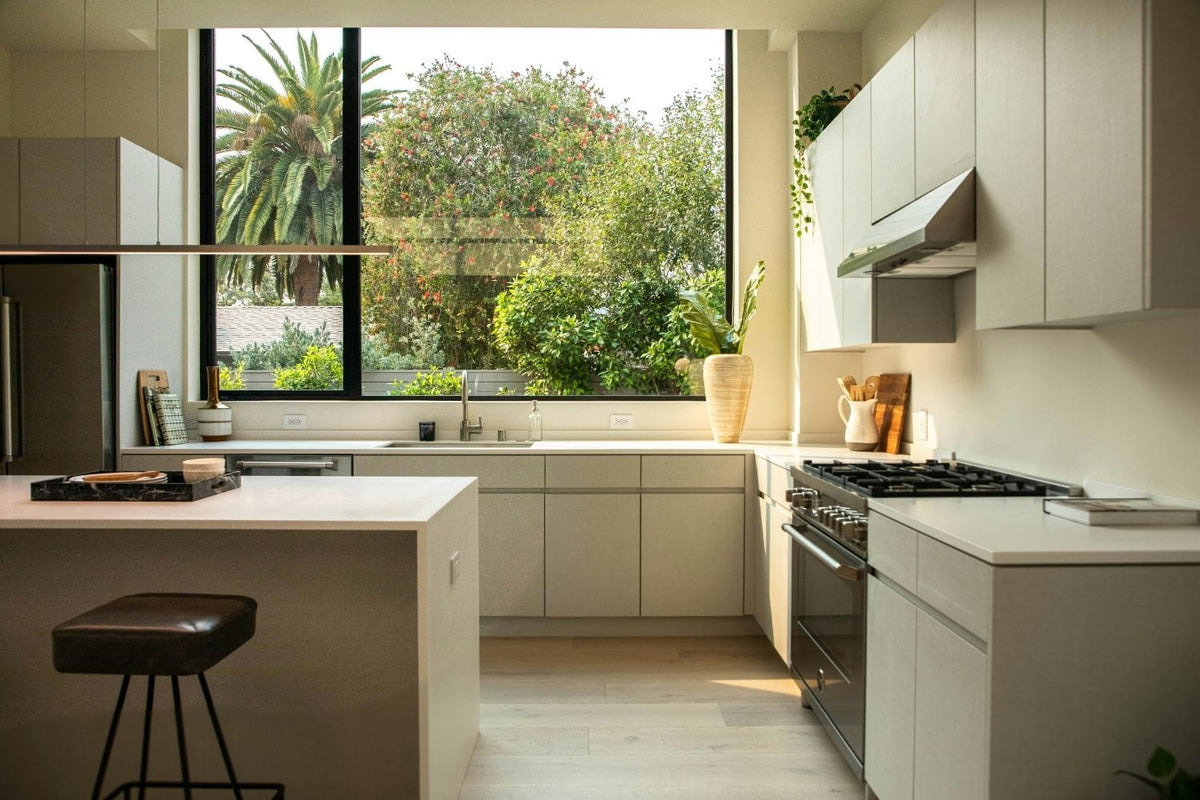
As health, convenience, and sustainability take center stage, built-in water filtration systems are rapidly becoming a standard feature in modern kitchen design. Moving beyond traditional pitchers and bottled water, these permanent, integrated solutions provide a seamless, eco-friendly supply of pure water, transforming tap water treatment from an optional upgrade into an essential component of contemporary kitchen architecture.
1. The Growing Concern Over Tap Water Quality
While municipal water treatment facilities meet basic government standards, the journey water takes from the treatment plant to your glass is long. Aging infrastructure, decaying iron pipes, and agricultural runoff mean that tap water often carries unwanted elements by the time it reaches your home.
According to a comprehensive study by the U.S. Geological Survey (USGS), roughly 45% of tap water in the United States contains PFAS (per- and polyfluoroalkyl substances), commonly known as "forever chemicals". Beyond PFAS, common residential water concerns include:
-
Microplastics: Fine synthetic particles that wash through standard city filters.
-
Heavy Metals: Lead, copper, and arsenic leached from older plumbing systems.
-
Chlorine and Chloramines: Disinfectants used by public treatment plants that leave a strong chemical taste and odor.
-
Total Dissolved Solids (TDS): Salts, minerals, and organic matter that affect water hardness and taste.
As public awareness around water quality grows, homeowners are prioritizing whole-home and point-of-use filtration systems as a non-negotiable health baseline for their families.
2. The Rise of the Hydration-Focused Home
Kitchen design trends reflect changing lifestyle habits. Today’s households place a premium on wellness, functional nutrition, and daily hydration.
Drinking enough clean water is no longer just a health recommendation, it is a lifestyle routine. When the water from your kitchen faucet tastes crisp, clean, and odorless, drinking the recommended 2 to 3 liters a day becomes effortless.
Beyond drinking water, high-purity water elevates daily culinary experiences:
-
Better Coffee and Tea: Coffee beans and tea leaves are highly sensitive to minerals and chlorine. Purified water allows the true flavor profiles to bloom without bitterness.
-
Cleaner Cooking: Boiling pasta, washing fresh produce, or making homemade soups in filtered water prevents unwanted chemical residues from entering your meal.
-
Crystal-Clear Ice: Impurities cause cloudy, fast-melting ice cubes. Pure water yields clear, slow-melting ice that won't dilute your drinks with unpleasant flavors.
3. Sustainability: Phasing Out Single-Use Plastic Water Bottles
Environmental consciousness is no longer an afterthought, it actively shapes buying decisions. Buying cases of single-use plastic water bottles is not only inconvenient and costly over time, but it also creates massive environmental waste.
Data shows that tens of billions of plastic water bottles end up in landfills or oceans every year. Switching to an under-sink reverse osmosis (RO) filtration system provides an infinite supply of pure, fresh water directly from your dedicated faucet, drastically cutting down your household’s plastic footprint.
|
Hydration Method |
Environmental Impact |
Convenience |
Annual Cost |
|
Single-Use Bottled Water |
High plastic waste & transport emissions |
Low (heavy lifting, storage needed) |
High |
|
Pitcher Filters |
Frequent plastic filter replacement |
Medium (slow filtration, constant refills) |
Moderate |
|
Under-Sink RO System |
Near-zero plastic waste |
High (instant high-purity water) |
Moderate |
4. What Is the Best Water Filtration Method for Modern Kitchens?
Not all filtration systems offer the same level of protection. While standard pitcher filters rely on simple carbon media to remove basic chlorine taste, they miss many dissolved microscopic contaminants.
To achieve truly pure drinking water, Reverse Osmosis (RO) is widely regarded as the gold standard in water purification technology.
How Reverse Osmosis Works
Reverse osmosis forces tap water under pressure through a semi-permeable membrane with pore sizes as small as 0.0001 microns. To put that into perspective, a strand of human hair is roughly 70 microns wide.
This process effectively reduces up to 99% of contaminants, including lead, nitrates, PFAS, heavy metals, microplastics, and dissolved salts, leaving behind clean, refreshing water.
5. Adding Value to the Modern Home
From an interior design and real estate perspective, built-in features that combine luxury with health yield strong returns.
Modern under-sink water filtration systems fit neatly out of sight, leaving countertops clutter-free. Paired with a stylish, brushed stainless steel or matte black dedicated drinking faucet, an RO system adds a touch of functional luxury to any kitchen remodel or new construction project. Prospective homebuyers increasingly look for integrated health appliances, making advanced water filtration a key selling point.
Choosing the Right System
If you are ready to elevate your kitchen's water quality, finding a reliable, high-performance system is key.
At Filter United, we design modern filtration systems built for real-world home needs. Our flagship VIVA21 series delivers reliable, multi-stage filtration engineered for performance and longevity:
-
VIVA21 5-Stage WQA-Certified Reverse Osmosis System: Rigorously tested and certified by the Water Quality Association to effectively reduce heavy metals, chemicals, and microscopic impurities.
-
VIVA21 6-Stage Remineralization RO System: Combines deep RO purification with a mineral stage that restores essential beneficial minerals like calcium and magnesium, producing clean water with an ideal alkaline balance and crisp natural taste.
We also offer complete replacement filter sets, pre-filters, and precision accessories to keep your home's water pure year after year.
Final Thoughts
Integrating clean water technology into your kitchen is one of the simplest, most impactful steps you can take for your health, environment, and home value. As household priorities shift toward wellness and sustainability, under-sink reverse osmosis systems are no longer a luxury—they are the new standard for the modern kitchen.


