

When you turn on the tap or fill a glass of water, you probably want it to taste clean, crisp, and refreshing. In recent years, terms like “alkaline water”, “pH balance”, and “remineralized reverse osmosis” have become increasingly common in conversations about wellness and drinking water.
But there’s one important distinction that often gets overlooked: pH and alkalinity are not the same thing. Although they are connected, each tells you something different about the chemistry of your water.
Whether you’re considering a home water filtration system, trying to improve the taste of your tap water, or simply curious about what makes drinking water “balanced”, understanding the difference between pH and alkalinity is a good place to start. Here’s what you need to know, and what these two measurements can actually tell you about your water.
What Is pH in Drinking Water?
To understand alkalinity, we first need to look at pH.
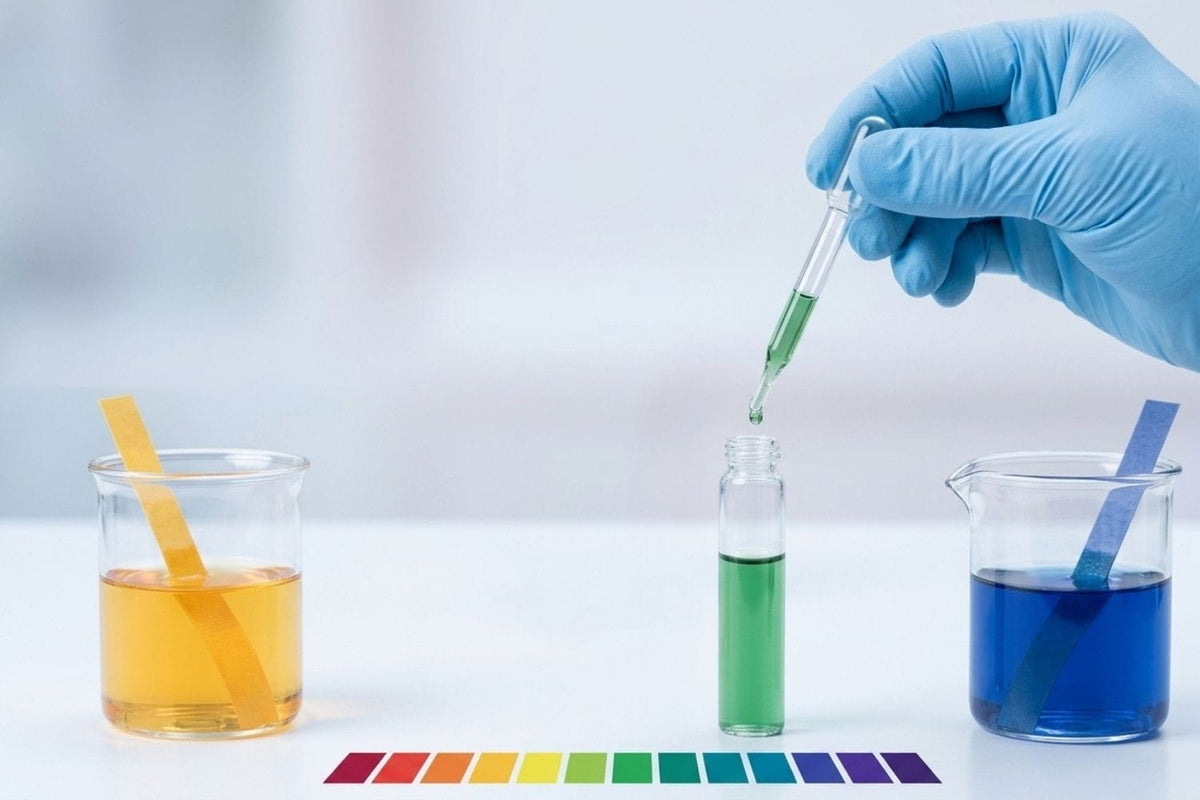
The term pH stands for "potential of Hydrogen". It measures the concentration of hydrogen ions in a liquid on a scale from 0 to 14:
-
pH < 7.0: Acidic
-
pH = 7.0: Neutral (pure H2O)
-
pH > 7.0: Alkaline (or basic)
According to guidelines from the U.S. Environmental Protection Agency (EPA), drinking water typically falls within a recommended national secondary drinking water standard of 6.5 to 8.5.
-
Municipal tap water often leans slightly basic (around 7.2–7.8) to prevent pipe corrosion.
-
Natural spring water varies depending on local soil and rock minerals.
-
Standard reverse osmosis (RO) purified water tends to sit slightly below neutral (around 6.0–6.8) because removing dissolved solids allows airborne carbon dioxide to dissolve into the water, forming mild carbonic acid.
While pH tells you how acidic or basic your water is right now, it doesn't tell you how stable that pH actually is. That’s where alkalinity comes in.
What Is Alkalinity in Drinking Water?
While pH measures current acidity, alkalinity is your water’s buffering capacity: its power to neutralize acids and resist sudden changes in pH.
Think of pH as the speed of a car, and alkalinity as the heavy flywheel keeping the ride smooth. A water sample can have a high pH (e.g., 8.5) but low alkalinity, meaning even a tiny drop of acid will instantly plunge the pH down to 4.0. Conversely, water with higher alkalinity holds its balance firmly, neutralizing incoming acids without drastic shifts.
In drinking water, total alkalinity is primarily created by naturally occurring dissolved minerals:
-
Bicarbonates (HCO3-)
-
Carbonates (CO32-)
-
Hydroxides (OH-)
When groundwater flows over limestone, marble, and mineral deposits, it naturally absorbs calcium carbonate and magnesium, giving natural spring water both its refreshing taste profile and its natural buffering capacity.
pH vs. Alkalinity: Key Differences at a Glance
|
Feature |
pH |
Alkalinity |
|
What it measures |
Concentration of hydrogen ions (H+) |
Capacity to neutralize acids (buffering power) |
|
Measurement Unit |
Scale from 0 to 14 |
Parts per million (ppm) or mg/L as CaCO3 |
|
Primary Driver |
Immediate ratio of H+ to OH- ions |
Presence of dissolved minerals (bicarbonates, calcium, magnesium) |
|
Impact on Water |
Affects taste profile and pipe corrosion |
Stabilizes water chemistry and prevents pH spikes |
|
Ideal Range for Tap Water |
6.5 – 8.5 |
30 – 200 ppm (mg/L) |
Is High Alkaline Water Actually Better for You?
The popularity of high-pH bottled water (pH 8.5 to 9.5+) has exploded in recent years. Marketers often claim that high-alkaline drinking water neutralizes body acid, improves hydration, and boosts energy levels.
What does the science actually say?
1. Human Biology Maintains Its Own Balance
Your body regulates its internal blood pH within a strictly controlled window of 7.35 to 7.45 through the kidneys and lungs. When high-pH water hits your stomach, stomach acid (hydrochloric acid, pH 1.5–3.5) instantly neutralizes it. Drinking alkaline water does not alter your systemic blood pH, and you wouldn't want it to.
2. Hydration and Mineral Benefits
Some researchers suggest rehydrating with alkaline, mineral-rich water after strenuous exercise may reduce blood viscosity slightly better than low-mineral water. However, the benefits are largely tied to the dissolved minerals (electrolytes) like calcium, magnesium, and potassium rather than the high pH number itself.
3. Taste and Daily Hydration
Water with balanced alkalinity and healthy dissolved mineral content simply tastes better. Pure distilled or unmineralized RO water can taste "flat" or slightly sharp. Adding essential minerals back into purified water produces that smooth, crisp flavor associated with premium spring water.
Common Contaminants Found in Municipal Tap Water
While seeking the ideal pH and mineral balance, it is equally important to focus on water purity. Higher tap water pH does not equal clean water. Standard municipal tap water can still contain heavy metals, trace chemicals, and micro-contaminants:
-
Lead & Heavy Metals: Aging plumbing infrastructure can leach lead, copper, and arsenic into household taps.
-
PFAS ("Forever Chemicals"): Per- and polyfluoroalkyl substances are widely detected synthetic chemicals that do not break down naturally in the environment or the body.
-
Chlorine & Chloramines: Added by municipalities for disinfection, leaving strong chemical odors and unpleasant tastes.
-
Fluoride, Nitrates, and Microplastics: Common runoff pollutants present in untreated tap water.
To achieve clean, healthy drinking water, the priority is thorough multi-stage purification paired with essential mineral restoration.
How Reverse Osmosis Removes Contaminants and Restores Balance
Reverse Osmosis (RO) remains the gold standard in residential water treatment. By forcing tap water through a semi-permeable membrane with pores as small as 0.0001 microns, an RO system removes up to 99% of total dissolved solids (TDS), including lead, PFAS, chlorine, nitrates, and micro-contaminants.
Because standard RO purification removes virtually everything, including good minerals, modern filtration solutions use a remineralization stage. By adding essential calcium and magnesium back into pure water, a remineralizing filtration setup lifts the pH to a balanced neutral-to-alkaline range while restoring natural buffering capacity and crisp taste.
For instance, solutions like the Filter United VIVA21 series address this balance directly. Whether utilizing a 5-Stage WQA-Certified Reverse Osmosis System for deep contaminant reduction or a 6-Stage Remineralization system that reintroduces healthy minerals, modern filtration makes it simple to achieve both ultra-pure water and ideal alkalinity at home without needing specialized bottled products.
Focus on Purity First, Balance Second
When evaluating your household drinking water, don't get caught up in chasing extreme pH numbers like 9.5+.
Instead, focus on a simple two-step goal:
-
Filter out toxic impurities like heavy metals, chlorine, and PFAS.
-
Restore healthy essential minerals to achieve balanced alkalinity and clean flavor.
A high-performance remineralization reverse osmosis system gives you the best of both worlds, uncompromised purity with the refreshing taste of naturally balanced water right from your kitchen tap.


