
Water Filtration Industry Insights
Bottled Water vs. RO: Calculate Your True Savings and Go Plastic-Free
For many homeowners, bottled water feels like the easiest and safest option. You grab a case during your weekly grocery run, stack it in the garage, and never think twice. But when you slow down and look at the numbers, bottled water turns out to be one of the most expensive and wasteful ways to stay hydrated. This article breaks down the RO system cost vs bottled water in a clear, practical way. We’ll walk through real-world assumptions, simple math, and a table you can reuse for your own household. By the end, you’ll see exactly how much RO water costs per gallon, when the system pays for itself, and why so many homeowners are switching to reverse osmosis for both financial and environmental reasons. 1. The Hidden Cost of Bottled Water Convenience Bottled water often feels cheap because you’re paying a few dollars at a time. But those small purchases add up fast. According to the Environmental Protection Agency, tap water in the U.S. costs fractions of a cent per gallon, while bottled water can cost hundreds, even thousands of times more for essentially the same end use: drinking. The real issue isn’t just price per bottle. It’s: Daily consumption over an entire year The ongoing cost with no long-term payoff The plastic waste created along the way This is where comparing RO system cost vs bottled water becomes eye-opening. Instead of paying again and again, a home RO system is a one-time investment with low annual maintenance. 2. Three Variables That Determine Your True Cost To fairly answer “is reverse osmosis cheaper than bottled water?”, we need to look at three simple variables: Initial cost (for the RO system) Annual maintenance cost (filters and water use) Daily water consumption (how much your family actually drinks) Once you plug in realistic numbers, the return on investment becomes very clear. 3. Step-by-Step Cost Breakdown: Bottled Water vs. RO 1. Annual Cost of Bottled Water Let’s use a conservative and realistic scenario. Assumptions Family of four 2 liters per (or 0.5 gallon) person per day Total daily consumption: 8 liters (or 2 gallons) Average bottled water cost: $0.50 per liter (or $2.00/gallon)(Many single bottles cost more, large multipacks may cost less, but $0.50 is a fair middle ground.) Calculation 8 liters/day × 365 days × $0.50/liter (or 2 gallons/day × 365 days × $2.00/gallon) Annual bottled water cost: $1460 This number surprises many homeowners. Nearly $1,500 per year is quietly leaving your household budget, and there’s no asset to show for it. 2. Annual Cost of a Reverse Osmosis System Now let’s look at the same household using a traditional under-sink RO system with a tank. Initial Investment RO system purchase price: $200 Optional professional installation: $100 Total upfront cost: $300 This is a one-time cost, not a recurring one. Annual Operating Cost Filter replacement: ~$40 per year Water usage (even with a 3:1 waste ratio): <$10 per year for most households Total annual operating cost: ~$50 This answers a common question homeowners ask: how much does RO water cost per gallon? When you spread this operating cost across thousands of gallons, the per-gallon price is extremely low and far below bottled water. 3. Side-by-Side Cost Comparison Table You can adapt the table below using your own numbers. This format also works well as a quick reverse osmosis ROI calculator. Category Bottled Water Reverse Osmosis Upfront Cost $0 $300 Annual Water Cost $1,460 ~$50 Cost After 1 Year $1,460 ~$350 Cost After 3 Years $4,380 ~$450 Cost After 5 Years $7,300 ~$550 Even when factoring in the cost of filter replacement per year, the long-term savings are dramatic. 4. The Break-Even Point: When RO Pays for Itself Now let’s look at the return on investment. Bottled water spending per year: $1,460 RO cost in Year 1: $300 (system) + $50 (operation) = $350 Net savings in Year 1 $1,460 − $350 = $1,110 saved At that rate, the system pays for itself in under 3 months. This is the key takeaway for homeowners comparing RO system cost vs bottled water. Even if your bottled water habits are more modest, the break-even point is usually well under one year. 4. The Plastic-Free Bonus Most People Forget Cost savings alone are compelling, but there’s another benefit that’s hard to ignore: plastic reduction. 8 liters of water per day equals roughly 16 standard 500ml bottles. 16 bottles/day × 365 days 5,840 plastic bottles per year That’s from just one household. Organizations like the World Health Organization and National Resources Defense Council have repeatedly raised concerns about plastic waste, recycling inefficiencies, and the environmental footprint of bottled water production and transport. Switching to RO doesn’t require changing your lifestyle, just where your water comes from. You still enjoy clean, great-tasting water, but without constantly buying, carrying, and disposing of plastic bottles. 5. Why Many Homeowners Choose Under-Sink RO Systems For homeowners, under-sink RO systems with tanks are popular because they: Deliver purified water on demand Fit neatly under standard kitchen cabinets Provide consistent water pressure and storage Have predictable, low annual maintenance When evaluating “is reverse osmosis cheaper than bottled water”, these systems strike a balance between performance, reliability, and long-term cost control. Final Thoughts: Spend Smarter, Waste Less When you compare bottled water and RO side by side, the conclusion is straightforward. Bottled water often costs around $2 per gallon, while RO water typically costs under $0.1 per gallon after installation and maintenance. For a typical family, that difference adds up fast. Bottled water can quietly drain nearly $1,500 per year from your household budget, while a home RO system requires about $300 upfront and roughly $50 per year to operate. The break-even point often arrives in just a few months. From a purely financial perspective, the RO system cost vs bottled water comparison strongly favors reverse osmosis. Add in the reduction of thousands of plastic bottles per year, and the value becomes even clearer. Ready to see what the numbers look like for your household? Use the table above as your own reverse osmosis ROI calculator, adjust it for your family’s habits, and discover how quickly RO can start saving you money, while helping you move toward a plastic-free kitchen.
Learn moreThe Hidden Cost of Clean Water: Calculating the True Cost of Ownership for Your RO System
Buying a reverse osmosis (RO) system often feels like a smart, one-time investment. You compare system prices, read reviews, and pick a model that fits your kitchen and budget. But many homeowners discover something unexpected after the first year: the system was affordable, yet the reverse osmosis filter replacement cost wasn’t. It’s a bit like buying a printer. The machine itself may be reasonably priced, but the ink cartridges can quietly cost far more over time. In this guide, we’ll break down the true cost of ownership of an RO system, so you’re not caught off guard by ongoing maintenance expenses. We’ll explain the real difference between proprietary vs universal water filters, calculate long-term costs, and highlight the hidden factors many buyers overlook. 1. Why Reverse Osmosis Filter Replacement Cost Matters More Than the System Price When shopping for an RO system, most homeowners focus on the upfront price. That makes sense because it’s the most visible number. But what really determines affordability is the cost of maintaining an RO system over time. Almost all under-sink RO systems require: Pre-filter replacements every 6–12 months Carbon filter replacements annually RO membrane replacement every 2–3 years These costs repeat for as long as you own the system. Over five years, filter replacements often exceed the original purchase price. This is where many homeowners feel “locked in.” The system works well, but replacement filters are brand-specific, expensive, or hard to source. Understanding filter types before buying is the key to avoiding that frustration. 2. Proprietary vs Universal Water Filters: What’s the Real Difference? The biggest factor influencing long-term cost is whether your RO system uses proprietary or universal (standard) filters. The difference isn’t about water quality, it’s about design, convenience, and pricing. Universal (Standard 10-Inch) Filters Universal filters follow industry-standard sizes, most commonly 10-inch cartridges, used across many filtration systems. Pros Widely available online and in hardware stores Multiple manufacturers keep prices competitive Among the cheapest RO filters to replace Typical annual cost: $30–$50 Cons Require basic tools like a filter wrench Filter changes take more time Can be slightly messy if not done carefully For homeowners comfortable with light DIY tasks, universal filters offer unmatched affordability. Proprietary (Quick-Change) Filters Proprietary filters are brand-specific cartridges designed for tool-free, twist-and-click replacement. Pros Extremely fast and clean filter changes No tools required Ideal for users who value convenience Cons Must be purchased from the original brand Limited competition keeps prices higher Annual replacement cost often $80–$150 This is where concerns about “lock-in” usually arise. Once you own the system, you’re committed to that brand’s pricing. Neither option is inherently better, but the long term cost of an RO system can vary dramatically depending on which path you choose. 3. Total Cost of Ownership: A 5-Year RO System Cost Comparison To see how this plays out in real life, let’s compare two typical homeowner scenarios over five years. System A: Low Upfront Price, Proprietary Filters Initial system cost: $180 Annual filter replacements: $120 RO membrane replacement (every 3 years): $90 5-Year Cost Breakdown Filters (5 years): $600 Membrane: $90 System cost: $180 Total: $870 System B: Higher Upfront Price, Universal Filters Initial system cost: $350 Annual filter replacements: $40 RO membrane replacement (every 3 years): $80 5-Year Cost Breakdown Filters (5 years): $200 Membrane: $80 System cost: $350Total: $630 The Break-Even Point Even though System B costs more upfront, it becomes the more economical choice by Year 3. This is why experienced homeowners increasingly evaluate the reverse osmosis filter replacement cost before buying, not after. 4. Hidden RO System Costs Homeowners Often Miss Filter replacements aren’t the only expense to consider. A realistic estimate of the cost of maintaining an RO system should include the following factors. RO Membrane Replacement RO membranes typically last 2–3 years, depending on water quality and usage. This cost is often excluded from marketing materials but should always be part of your long-term calculation. Water Efficiency and Wastewater All RO systems produce wastewater as part of the filtration process. However, newer designs are significantly more efficient than older models. High-efficiency systems can reduce wastewater, which may slightly lower your water bill over time. While this won’t outweigh filter costs, it can help offset part of the long term cost of an RO system. Availability and Shipping Costs Some proprietary filters require ordering directly from the manufacturer. Shipping fees and stock availability can add both cost and inconvenience, especially if you need replacements quickly. 5. Choosing the Right Balance: Cost, Convenience, and Control So what’s the right choice? If maximum convenience matters most, proprietary quick-change systems can be a good fit, as long as you’re comfortable with higher replacement costs. If lowest lifetime cost is the priority, universal filters clearly win. For many homeowners, the ideal solution sits in the middle: a well-built RO system designed to minimize ongoing expenses without making maintenance difficult. This is why more buyers are looking beyond “cheap systems” and instead comparing proprietary vs universal water filters before making a final decision. Final Thoughts: Making a Smart, Long-Term RO Investment A reverse osmosis system is one of the most effective ways to improve drinking water quality at home. But the real value isn’t just in how the water tastes, it’s in how predictable and reasonable the long-term costs are. Before purchasing, always ask: What is the reverse osmosis filter replacement cost per year? Are replacement filters widely available? What will this system cost me after 3–5 years? At VIVA21, we believe homeowners deserve transparency. Our 5-stage under-sink RO system with tank is designed to balance performance, ease of maintenance, and long-term affordability, without locking you into excessive annual costs. If you’re looking for an RO system that delivers clean water and peace of mind, understanding the true cost of ownership is the smartest place to start. Clean water shouldn’t come with hidden surprises.
Learn moreReverse Osmosis vs. Other Filtration Technologies: Which One Really Protects Your Health?
When we turn on the faucet, we expect to get clean, safe water. But the truth is that city water might have pollutants in it that we don't want to drink, like heavy metals, microplastics, and new compounds like PFAS. That's why so many people use Reverse Osmosis (RO), which is one of the best and most reliable ways to clean water. We'll talk about what RO water actually is, how the technology works, what it gets rid of, and how it compares to other ways to filter water in this post. We'll also talk about common worries, practical limits, and what you can do right now to stay healthy. 1. What Is Reverse Osmosis (RO) Water—and How Does It Work? Reverse osmosis uses science to accomplish something almost counterintuitive. Unlike natural osmosis—where water moves from areas of low solute concentration to high concentration—RO applies pressure to push water through a semipermeable membrane that allows only water molecules to pass. Input: Tap water, typically containing minerals, chemicals, and pollutants Process: Pressure forces water through a dense RO membrane Output: Clean water is collected, while contaminants are flushed away The result is water that’s clearer, fresher, and far safer than what comes out of the tap. 2. What Does RO Remove—and Why It Matters RO systems consistently outperform other filtration technologies when it comes to contaminant reduction. They target a broad spectrum of pollutants, including: Inorganic contaminants: Lead, arsenic, fluoride, nitrates Chemicals & dissolved solids: Chlorine, PFAS (“forever chemicals”), microplastics Pathogens: Many bacteria and viruses Taste & odor issues: Chlorine and sulfur compounds The science backs it up: RO membranes reject 90–99% of PFAS compounds, outperforming nanofiltration (NF) and activated carbon filters. The EPA confirms RO and other high-pressure membranes are among the most effective PFAS removal methods, often exceeding 90% across a wide range. 3. Is RO Water “Too Pure”? The Mineral Content Debate Critics sometimes argue that RO makes water “too pure” by stripping beneficial minerals. Here’s the truth: Dietary reality: Most calcium, magnesium, and other minerals come from food, not drinking water. Modern systems: Many RO units include a remineralization filter to restore healthy minerals. Risk vs. reward: The tiny loss of trace minerals pales in comparison to the serious risks posed by contaminants like lead, arsenic, or PFAS. In short, the absence of trace minerals isn’t a health risk—but the presence of pollutants is. 4. Safety, Standards, and Certifications When evaluating filtration systems, look for NSF/ANSI 58 certification. This standard ensures: Verified contaminant reduction, including PFAS Rigorous testing for performance and durability Peace of mind that your system does what it promises With so many products on the market, certification is the easiest way to separate reliable systems from questionable ones. 5. The Limitations You Should Know RO isn’t flawless, and it’s important to understand the tradeoffs: Wastewater: Traditional systems discharge 20–30% of input water as waste, though modern designs are increasingly efficient. Energy & cost: RO requires pressure, so it consumes slightly more energy than gravity-based filters. Maintenance: Filters and membranes need timely replacement to maintain performance. Not absolute perfection: While highly effective, no system removes 100% of all emerging contaminants—regular water testing is still wise. Even with these considerations, RO remains the gold standard for home water purification. 6. The Health Benefits of RO For households weighing different filtration technologies, the health case for RO is strong: Reduces exposure to chemicals, carcinogens, and endocrine disruptors Encourages hydration by improving taste and odor Environmentally friendly: Eliminates the need for bottled water Cost-effective: Especially for families who drink several gallons per week When it comes to long-term wellness, RO provides both peace of mind and practical savings. 7. What You Can Do Now Taking action doesn’t have to be complicated. Here are a few practical steps: Test your water: Identify PFAS, heavy metals, or other local contaminants. Choose certified systems: Look for NSF/ANSI 58 for proven performance. Add remineralization if desired: Many systems now offer this option. Stay on schedule: Replace filters and test water periodically. Support community efforts: Advocate for stronger water quality standards at the municipal level. Final Thoughts There is no perfect filtration system, but reverse osmosis is one of the most reliable and scientifically proven choices available today. It gives you clean, safe water, lowers your risk of coming into contact with harmful substances, and replaces bottled water with a long-lasting, affordable option. People are growing more aware of PFAS, heavy metals, and other toxins, so RO is no longer just a convenience; it's becoming a need. You may be sure that every glass of water you drink is good for your health, your family's health, and your peace of mind if you take care of your RO system. We at Filter United think you should have that peace of mind, one glass at a time.
Learn moreBest Budget Traditional RO System with NSF 58 Certification
We all expect the water coming out of our kitchen taps to be safe and clean, but that doesn’t mean we’re willing to overpay for it. These days, because people are much more worried about hidden contaminants like lead, fluoride, and other dissolved toxins, Reverse Osmosis (RO) systems have basically become the gold standard for home filtration. However, here is the catch: the market is currently filled with countless "budget-friendly" options, though these options vary significantly when it comes to meeting rigorous durability and construction standards. This brings up a very fair question that almost every smart shopper asks: Is it actually possible to find a truly high-quality RO system without overpaying? The short answer is a definite yes, but it requires some knowledge on what to prioritize. This guide was put together for homeowners who aren't looking for flashy gadgets, but rather verified safety, steady performance, and real value. We’ve cut through the noise to highlight the top 3 affordable, traditional RO systems that hit all the safety benchmarks without any of the unnecessary complexity. 1. Why NSF 58 Certification Is Non-Negotiable for Budget RO Systems When evaluating an affordable reverse osmosis system, certification is more important than brand claims, stage count, or marketing language. NSF/ANSI Standard 58 is the only certification developed specifically for residential reverse osmosis drinking water treatment systems. This standard is administered by NSF International in cooperation with ANSI and requires independent laboratory testing and ongoing compliance. A system certified to NSF 58 must have measurable, repeatable performance. NSF 58 certification confirms a system’s ability to: Reduce Total Dissolved Solids (TDS) by at least 75% Effectively reduce health-related contaminants such as lead, arsenic, fluoride, nitrates, radium, and cysts Maintain structural integrity, ensuring safe operation under normal household water pressure Provide consistent performance over time, not just when new The U.S. Environmental Protection Agency (EPA) identifies reverse osmosis as one of the most effective residential technologies for removing dissolved inorganic contaminants, including lead. NSF 58 certification provides the independent verification that a specific system actually meets those expectations in real-world conditions. For homeowners searching for an RO system, this certification is essential. Without it, there is no reliable proof that an RO system can perform its most critical function to protect drinking water quality. 2. Why Traditional RO Systems Offer the Best Budget Value for Homeowners When you start looking into reverse osmosis, you’ll find they mostly fall into two categories: the modern tankless units and the classic tank-based systems. Even though the tankless ones are famous for saving under-sink space and offering faster flow, the traditional tank systems are still for anyone preferring a more cost-friendly choice. Instead of using a fancy electric booster pump, these classic setups store your purified water in a pressurized tank, ready to go. This design actually brings some very real-world advantages that often get overlooked: For starters, the upfront price is much lower because you aren't paying for complex electronics. It’s also a simpler machine, which honestly means fewer parts that can break down or glitch on you. Plus, they usually use standardized filters, so you won't get stuck with a massive bill when it's time for maintenance. What’s important to remember is that an NSF-certified traditional system is just as good at cleaning your water as the expensive ones. You’re really just trading a bit of convenience and space for a much better price, the actual safety and water quality remain exactly the same. That’s why, when you look at budget-friendly reviews, these reliable tank systems still come out on top for most normal homes where having a massive flow rate isn't the biggest priority. 3. What Defines the Best Budget Traditional RO System It is important to recognize that not every affordable RO system delivers the same level of long-term value. While a low entry price is attractive, it doesn't automatically guarantee a positive ownership experience. In our view, the most reliable budget-friendly RO systems are defined by a specific trifecta: independent certification, mechanical simplicity, and manageable long-term costs. For a homeowner to make a sound investment, several core characteristics are essential. First and foremost is a verified NSF 58 certification that is clearly traceable back to the manufacturer. Beyond that, a standard 5-stage filtration process covering everything from sediment and carbon to the RO membrane and post-filtration remains the industry benchmark for efficacy. We also highly recommend choosing systems with non-proprietary filters. Being able to source replacements from multiple suppliers keeps you from being "locked in" to a single brand’s pricing. Furthermore, many of the best budget models intentionally skip high-tech add-ons like UV lights, digital screens, or smart sensors. While these bells and whistles have their place in specialized setups, they aren't strictly necessary for removing contaminants from typical residential water. In many cases, these simpler, robust designs actually prove more durable over the years, simply because there are fewer electronic components that could eventually fail. 4. Trusted Budget Traditional RO Systems with NSF 58 Certification Several affordable traditional RO systems consistently stand out for balancing verified certification, dependable long-term performance, and reasonable pricing. For budget-conscious homeowners, NSF 58 certification serves as an important baseline, as it confirms that a system has been independently tested for contaminant reduction, structural integrity, and overall performance. APEC ROES-50 is frequently cited for its conservative engineering and long membrane lifespan. Certified under the WQA Gold Seal program to NSF/ANSI 58, it is well suited for municipal water supplies and homeowners who prioritize reliability, steady output, and minimal complexity over added features. Its straightforward design has made it a popular choice among users seeking a proven, low-maintenance system. iSpring RCC7AK offers NSF 58–certified performance with the addition of a remineralization stage. This configuration appeals to homeowners who want to maintain strong contaminant reduction while restoring a small amount of minerals to improve taste. It strikes a balance between performance-focused filtration and user preference for water flavor, without moving into premium pricing territory. VIVA21 Traditional RO System distinguishes itself by holding both NSF 58 certification for filtration performance and NSF 372 certification for lead-free materials. This dual certification highlights a focus not only on water purity, but also on material safety and compliance with modern plumbing standards. Positioned within the affordable category, it is designed for homeowners who want verified performance and peace of mind without unnecessary complexity. Together, these systems demonstrate that homeowners do not need to sacrifice certification, safety, or reliability when shopping within a budget. A well-designed traditional RO system with recognized NSF certifications can still deliver consistent water quality, predictable maintenance, and long-term value for everyday household use. 5. Frequently Asked Questions Q: How much does it cost to maintain a budget traditional RO system annually? Expect to spend roughly $30–$60 per year on maintenance. This usually covers the pre-filters and carbon filters, which need swapping every 6–12 months. The RO membrane is more durable, typically lasting two to three years depending on your water quality. Because traditional systems use standard, non-proprietary filters, you aren’t locked into expensive brand-name replacements, keeping your long-term costs predictable and very low. Q: Do traditional RO systems waste a lot of water? It’s a fair concern, but modern efficiency has come a long way. Most NSF 58–certified traditional systems now operate at a 3:1 or 4:1 ratio, meaning they use three to four gallons for every gallon of purified water produced. While some high-end tankless models are more efficient, many homeowners find this a reasonable trade-off for the traditional system's much lower upfront cost and proven reliability. Q: How long does it take for the storage tank to refill? A standard 3–4 gallon tank usually takes 2–4 hours to fill from completely empty. However, you’ll rarely notice this in daily life. Since the system refills automatically every time you draw water, you’ll almost always have a pressurized supply ready for drinking or cooking. For an average household, the tank capacity is more than enough to keep up with daily demand without any wait time. Final Thoughts At the end of the day, opting for a budget-friendly reverse osmosis system shouldn’t feel like a gamble on your family’s health. As we’ve seen, you can absolutely find a reliable setup that offers verified safety and long-term value without overspending. It just requires looking past the price tag and focusing on what really matters. The bottom line? Never skip out on independent certification. An NSF/ANSI 58 seal is your only real guarantee that a system can actually handle contaminants like lead as promised. Because of their time-tested design and low upkeep costs, traditional RO systems remain the most practical choice for the average household. If you’re ready to pull the trigger on a new system, stick with these certified models that put performance first. Explore current pricing and availability for NSF 58–certified budget traditional RO systems and choose a solution that fits both your home and your budget.
Learn moreTankless RO System vs Traditional RO System - Which to Buy?
Choosing a reverse osmosis (RO) system is no longer just about water quality. Today’s homeowners also care a lot about space, efficiency, long-term cost, and how much effort maintenance will take over the years. That’s why the comparison between a Tankless RO System vs Traditional RO System has become such a common question. Both systems are designed to produce clean water by eliminating dissolved solids, heavy metals, and numerous chemical contaminants. Yet, there is often a massive gap between their technical specs and how they actually perform during your everyday routine. To help you pick the RO setup that truly fits your kitchen, habits, and wallet, we have built this comprehensive breakdown. We will dive into the real-world factors that matter to homeowners, including filtration power, maintenance, water waste, footprint, and long-term expenses. 1. Knowing the Basics: How RO Systems Operate Inside reverse osmosis, pressure pushes water through a semi-permeable membrane that catches pollutants while allowing pure water to pass. When you keep up with maintenance, RO filtration is remarkably effective at reducing nitrates, lead, arsenic, total dissolved solids (TDS), and various organic chemicals. The main difference between systems lies in how filtered water is delivered to your faucet: Traditional RO systems store purified water in a pressurized tank. Tankless RO systems purify water on demand without a storage tank. This design difference affects nearly every aspect of ownership. 2. Traditional RO Systems: The Proven, Familiar Option How a Traditional RO System Operates A classic RO setup cleans your water slowly and stores it inside a pressurized tank tucked under the sink. Fresh water flows out of that tank the moment you flip the RO faucet, giving you a steady stream until the reservoir runs low and starts to refill. Advantages of Traditional RO Systems Lower upfront costTraditional systems typically have a lower purchase price, making them appealing for homeowners who want dependable RO filtration without making a large initial investment. Strong peak flowBecause water is stored in advance, traditional RO systems can deliver a relatively high flow rate for short periods. This is useful when filling large containers or cooking. No electricity required Most traditional RO systems operate entirely on water pressure, which simplifies installation and eliminates energy use. Well-established technologyThis design has been used for decades and is widely understood by plumbers and installers, contributing to its reputation for reliability. Limitations to Consider Under-sink space usageThe storage tank takes up a significant amount of cabinet space. In smaller kitchens, this can limit storage or complicate installation. Higher RO system water wasteTraditional systems often operate at a 3:1 or 4:1 waste-to-purified-water ratio. Over time, this can increase household water usage, especially in regions with high water costs. More filter managementWith multiple filter stages and a tank involved, maintenance may require more attention to keep performance consistent. 3. Tankless RO Systems: The Modern Alternative How a Tankless RO System Works A tankless RO system uses a high-efficiency membrane and, in many cases, a booster pump to filter water instantly when you open the faucet. There is no storage tank, and purified water is produced on demand. Advantages of Tankless RO Systems Exceptional space savingWithout a storage tank, these systems free up valuable cabinet space. For homeowners with small kitchens, this is sometimes a deciding factor. Enhanced water efficiencyIn comparison to conventional designs, many contemporary tankless systems run at a 1:1 or 2:1 ratio, greatly minimizing RO system water waste. Simplified maintenance designFilter replacement is quicker and cleaner with tankless devices since they frequently employ integrated, quick-change cartridges. Consistent water freshnessSince water is filtered on demand, there is no concern about water sitting in a tank for extended periods. Limitations to Consider Higher upfront and maintenance costAdvanced components such as booster pumps and high-performance membranes increase both initial cost and the ongoing cost of replacement filters. When evaluating the cost of tankless RO vs traditional, this is an important factor. Electricity requirementTankless systems typically need a nearby power outlet, which may add complexity during installation. Flow rate limitationsAlthough improved significantly in recent years, on-demand filtration can still feel slower than a full tank when large volumes of water are needed quickly. 4. Tankless RO System vs Traditional RO System: Side-by-Side Comparison Feature Traditional RO System Tankless RO System Water Delivery Stored in tank On-demand filtration Under-Sink Space Large footprint Compact, space-saving Water Efficiency Typically 3:1 or higher Often 1:1 or 2:1 Electricity Needed No (most models) Yes Maintenance Style Multiple filters + tank Integrated cartridges Upfront Cost Lower Higher Long-Term Cost Moderate Higher but more efficient This table highlights why the tankless RO pros and cons and traditional RO strengths appeal to different homeowner priorities. Over the long term, ownership differences are most evident in maintenance style and cost predictability. Traditional RO systems generally offer cheaper replacement filters but involve more parts, including a storage tank, which requires more frequent upkeep over time. Tankless RO units make upkeep easier using integrated cartridges and fewer components, though swap-out filters usually price higher because of improved efficiency and complex pump tech. When deciding between the two, homeowners should think about whether they would prefer having a more streamlined, low-touch maintenance experience over time or lower incremental costs. 5. Which RO System Is Right for Your Home? Choose a Traditional RO System If: You prioritize affordability and want a lower initial purchase cost. You have ample cabinet space under your sink. You value proven technology that operates simply under pressure. You want strong peak flow without relying on electricity. Choose a Tankless RO System If: Under-sink space is limited and organization matters. You are concerned about RO system water waste and long-term efficiency. You prefer simplified, quick-change filter maintenance. You are comfortable with a higher upfront investment for modern design benefits. Final Thoughts: Making a Confident Decision There is no single winner in the Tankless RO System vs Traditional RO System debate. The right choice depends on your specific priorities: space, efficiency, simplicity, or upfront affordability. For decades, families have trusted traditional RO systems as a dependable and low-cost solution. If you are ready to spend a bit more, tankless RO units provide better efficiency along with space savings. For daily drinking and cooking needs, a classic RO setup remains a solid choice if you prioritize proven results, consistent flow, and easy upkeep. Check out our thoughtfully built traditional RO system and find how reliable filtration blends perfectly into your home.
Learn moreWhich Type of Reverse Osmosis System Should I Get: Under-sink or Countertop?
If you’re considering a reverse osmosis system but cannot decide which type fits your home, you’re not alone. With so many water filtration options available, reverse osmosis stands out as one of the most popular and effective solutions for improving drinking water quality. Most buyers are choosing between under-sink and countertop RO systems, while some also look into whole-house filtration as part of an overall water treatment plan. This guide provides an honest comparison to help you understand the differences and choose the right option. 1. Understanding The Main Types of Reverse Osmosis Systems Reverse osmosis is a multi-stage filtration process that typically uses a semi-permeable membrane to remove dissolved solids, contaminants, and impurities from water. While the technology itself is consistent, RO systems are designed in different formats to meet varying household needs. Most RO systems focus on purified drinking water at a single point, such as the kitchen sink, while whole-house RO systems are less common due to their size, cost, and installation requirements. The key is choosing the system format that best matches how and where you actually use water in your home. 2. Under-sink Reverse Osmosis Systems How Under-sink RO Systems Work Under-sink RO systems are installed under the kitchen sink and connect directly to the cold water supply. Water flows through a multi-stage filtration process before being dispensed through a dedicated faucet or stored for on-demand use. The filtration process typically includes sediment and carbon filters and a reverse osmosis membrane. Key Benefits Stable, Fast Water Delivery Under-sink RO systems can use a built-in storage tank to keep filtered water ready at all times. The tank ensures a stable supply of clean water, so you don’t have to wait for filtration during normal use. They also provide a much higher flow rate than countertop units, allowing you to quickly fill water bottles in just a few seconds. For users who want even faster access, tankless under-sink systems take convenience a step further by filtering water directly as it flows, so there is no need to wait for a tank to refill. This makes under-sink systems a great choice for households that use filtered water frequently and need a reliable, steady supply throughout the day. Out-of-sight Layout Under-sink RO systems remain completely hidden under the sink, allowing them to disappear from your sight. This design helps preserve kitchen aesthetics and counter space, maintaining a clean, uncluttered countertop. This could be especially useful for those who have smaller kitchens and limited countertop space. Long-term Value for Households Once installed, under-sink RO systems can provide a consistent supply of filtered water with little adjustment. Filter replacements follow a regular schedule and are generally more cost-effective than relying on bottled water or smaller systems that require frequent handling. Because of their stable setup and reliable performance, these systems work well for households that use filtered water often. They are especially popular with families, people who cook regularly, and homeowners looking for a clean, built-in solution that balances practicality and appearance. Possible Limitations Installation and Space Requirements These systems require available under-sink space and basic plumbing connections, which may be challenging in compact kitchens or in homes with limited cabinet room. Lack of Portability or Flexibility Once installed, the system is fixed in place, making it less suitable for renters or those who expect to move frequently. 3. Countertop Reverse Osmosis Systems How Countertop RO Systems Work Countertop RO systems are portable, self-contained units that sit directly on the kitchen counter. They filter water through multiple stages, including a reverse osmosis membrane, and dispense purified water directly from the unit, with little to no permanent installation required. Key Benefits Minimal Setup One of the biggest advantages of countertop RO systems is that they require no drilling or complex setup. Power it on, connect it to your faucet, and you’re ready to go. You can finish the setup on your own in less than 15 minutes by following the simple instructions. Countertop RO systems are built for convenience, allowing users to start enjoying purified water quickly without committing to fixed installation or inviting a technician. Flexible and Portable Design Countertop RO systems can be easily relocated or stored. If you need to move to a new home, you can just unplug it and take it with you. This makes them ideal for renters, apartments, dorms, or temporary living situations where you move from time to time and are not allowed to modify your kitchen area. You can also simply move the unit to another spot to create more working room if your counter gets crowded while cooking. Affordable and Easy to Maintain Countertop RO systems are typically more affordable upfront compared to under-sink RO systems. With no installation fees and a simplified filtration layout, they are often easier to maintain, especially for users who prefer a low-commitment, low-maintenance solution. Adequate Filtration for Small-household Use For individuals or couples mainly focused on drinking water, countertop RO systems provide effective filtration without the complexity of larger systems. Possible Limitations Limited Output and Flow Rate Compared to under-sink systems, countertop models generally produce water more slowly, which may be noticeable during higher usage periods. Visible Footprint on the Countertop The system occupies kitchen counter space, which can be a drawback in smaller kitchens or for users who prefer a cleaner visual setup. Less Suitable for High-demand Households In larger households or homes with frequent cooking needs, countertop systems may feel restrictive over time due to capacity limits. 4. Whole-house Water Filtration Systems Unlike countertop and under-sink reverse osmosis systems that filter water at a single faucet, whole-house filtration systems treat all the water entering your home. This means filtered water is available not only at the kitchen sink, but also in bathrooms, showers, and appliances. Whole-house systems are designed to improve overall water quality by reducing chlorine, sediment, and odors, helping protect plumbing and appliances rather than producing highly purified drinking water. Because they handle water for the entire home, these systems require professional installation and are typically a long-term solution for homeowners. Many households combine a whole-house filter with an under-sink or countertop RO system to get both cleaner household water and high-quality drinking water. 5. Choosing the Right System for Your Home To better understand the differences between countertop RO, under-sink RO, and whole-house filtration systems, the table below summarizes their core features and typical applications. Comparison Table: Countertop RO vs Under-sink RO vs Whole-house Systems Parameter Countertop RO System Under-sink RO System Whole-house Filtration System Primary Function Drinking water purification Drinking & cooking water purification Whole-home water quality improvement Typical Installation Location Kitchen countertop Under the kitchen sink Main water line (point of entry) Filtration Technology Multi-stage RO (usually 3–7 stages) Multi-stage RO (usually 5–7 stages) Sediment + carbon (RO optional, less common) Storage Capacity Built-in tank: ~0.5–3 gallons Storage tank: ~2–4 gallons (if tank-based) No storage tank Typical RO Rejection Rate 90–99% TDS removal 95–99% TDS removal Varies by system design Counter Space Required Yes No No Portability High Low None Installation Complexity Very low Medium High (professional installation) Typical User Capacity Individuals or couples Small to large households Medium to large homes Maintenance Cost Low to medium Medium Medium to high Best Use Scenario Renters, apartments, flexible living Long-term household use Whole-home protection & comfort Final Thoughts All of these systems are effective water filtration solutions, and the real difference lies in how they fit into your everyday life. Under-sink systems are built for consistent, long-term drinking and cooking needs, while countertop systems prioritize convenience and flexibility. Whole-house filtration systems address overall water comfort and protection, and are most effective when combined with a point-of-use reverse osmosis system. Thinking about your kitchen space, living situation, and daily habits will make it clear which option suits you best.
Learn moreThe Best Under-Sink Reverse Osmosis Systems in 2025
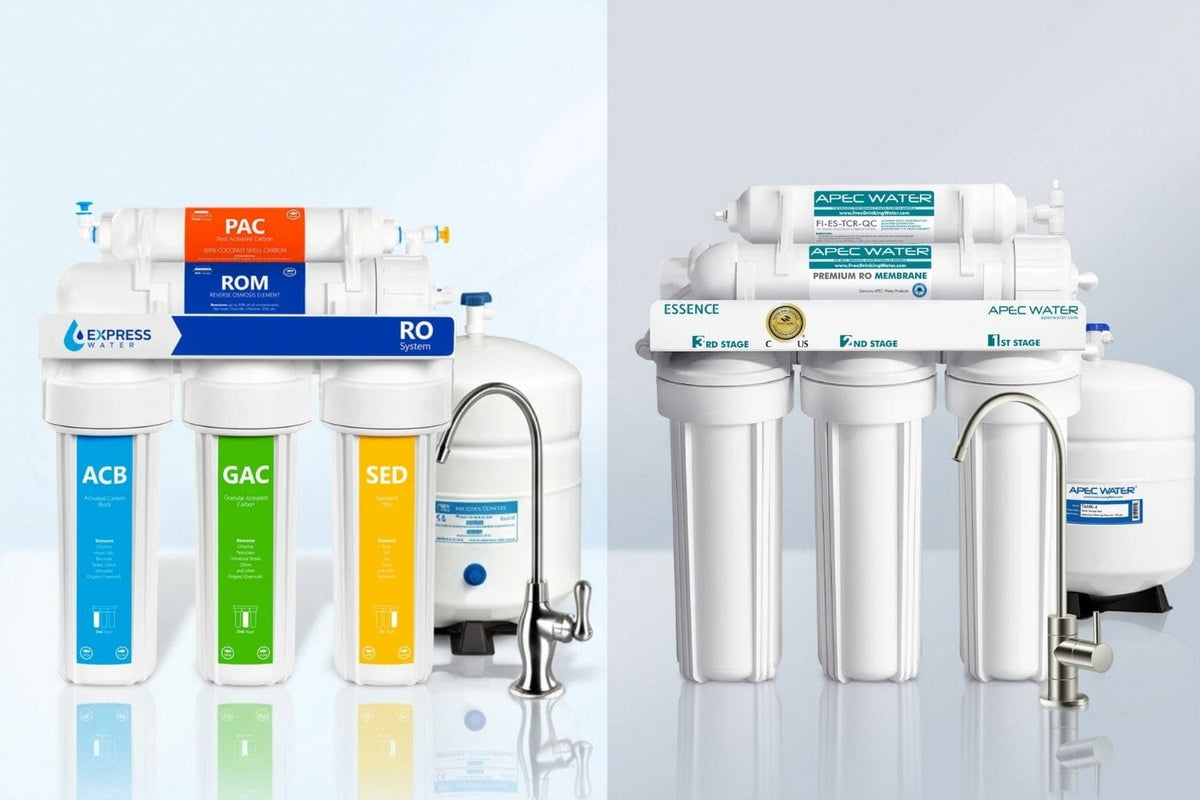
If you’re shopping for an under-sink reverse osmosis (RO) system, you’ve probably noticed how many options there are. Some promise high-tech smart features, others focus on affordability, and a few highlight U.S. assembly. The truth is, the “best” system depends on your priorities — whether that’s cost, space, taste, or long-term reliability. Looking through the most popular systems in 2025, here are five that stand out, followed by how our own VIVA21 Reverse Osmosis System stands among the list. 1. Waterdrop X12 – Smart and Space-Saving Waterdrop has become a leader in the tankless reverse osmosis category, and the X12 is their flagship system. It’s compact, sleek, and doesn’t take up much space under the sink. What makes it special is the smart faucet that shows water quality and lets you dispense set amounts with a tap. It also has UV sterilization and a modern design. Why people like it: it’s modern, smart, and looks great in the kitchen.What to keep in mind: the filters are on the pricier side, and the unit costs much more than traditional reverse osmosis systems. 2. APEC RO-Hi – Reliable and Affordable APEC has been making RO systems for years, and the RO-Hi is their flagship system. It remains a popular choice for people who want a dependable, fast-flow to fill cup of water option. It uses a classic 5-stage design with a storage tank and has certification from the Water Quality Association. Why people like it: traditional setup built to last, 3/8" output quick-dispense, and replacement filters don’t break the bank.What to keep in mind: no extra features like remineralization or digital readouts, and it takes up more space under the sink than tankless designs. 3. iSpring RCC7AK – Balanced and Mineral-Rich If you don’t love the flat taste of pure RO water, the iSpring RCC7AK is a solid pick. It’s a 6-stage system that includes an alkaline filter, which puts minerals back into the water and improves flavor. Why people like it: better-tasting water, straightforward setup, and strong customer support.What to keep in mind: it’s another tank system, so you’ll lose some cabinet space, and water flow isn’t as fast as other systems on this list. 4. Aquasana SmartFlow – Efficient Filtration with Extras Aquasana’s SmartFlow series focuses on efficiency and longevity. It’s designed to cut down on water waste and includes remineralization, so you get healthier-tasting water. It’s also certified to remove a wide range of contaminants, including chlorine, lead, and even microplastics. Why people like it: fewer filter changes, improved water flavor, and strong contaminant removal.What to keep in mind: installation can be trickier than simpler units, and it costs a bit more than entry-level systems. 5. Express Water RO5DX – Best Value Starter Option For people dipping their toes into reverse osmosis for the first time, the Express Water RO5DX is an easy win. It’s budget-friendly, comes with an extra set of filters in the box. Why people like it: low price, traditional setup, and DIY-friendly install.What to keep in mind: it doesn’t have mineral filters or fancy monitoring features. It’s a basic workhorse. Why We Offer the VIVA21 Traditional RO System All of the systems above are solid choices, but our VIVA21 Traditional RO System is built with a different focus: engineered for purity, designed for wellness. Here’s what makes it stand out: USA Based: Our systems are designed and assembled domestically, giving customers peace of mind about quality and support. Backed by Experience: Even though Filter United is a newer brand name, But we bring over 20 years of experience in reverse osmosis systems to deliver the VIVA21 RO system. Customer-First Support: Every system comes with lifetime support, which is rare in this industry where most brands stop at a limited warranty. We are confident in our products. Affordable and Reliable: You don’t need to spend $600–$800 for clean water. VIVA21 comes at dependable performance at a much more reasonable price. Dependable Setup: The traditional reverse osmosis system architecture has been proven for decades. A perfect combination of easy installation and maintenance. Final Thoughts If you want the most advanced option with all the bells and whistles, Waterdrop X12 is hard to beat. If you’re after a budget system with a long track record, APEC ROES-50 is a classic. For better taste, iSpring RCC7AK is the way to go, while Aquasana SmartFlow balances efficiency and flavor. The Express Water RO5DX makes a great entry-level choice. But if you’re looking for the sweet spot — customer-first with lifetime support, a reliable system that’s built from a US manufacturer with decades of experience — the VIVA21 Traditional RO System is our clear recommendation.
Learn more