
Our Products & How It Works
Is RO Right for Well Water? The Complete Guide to High TDS and Heavy Metal Removal
Owning a home with well water comes with a sense of independence. You’re not tied to municipal supply lines or city water restrictions, and your water often feels more “natural.” But that freedom also brings responsibility. Unlike city water, well water isn’t regulated by federal standards, which means its quality can vary widely, even from one house to the next on the same road. If you’re dealing with well water with high TDS, strange tastes, staining, or concerns about heavy metals, you’ve probably asked yourself a key question: Is an RO system for well water really necessary? The short answer is yes. A properly designed RO system for well water is often the most reliable way to ensure safe, great-tasting drinking water. But success depends on using the right setup, including pressure support and proper pre-treatment. This guide will walk you through what homeowners need to know. 1. Why Treatment Matters Well water arrives straight from underground aquifers. While that seems pure in principle, groundwater naturally dissolves minerals, metals, and salts while moving through soil and rock. Over time, this often leads to elevated levels of dissolved solids and pollutants. Private well owners are accountable for testing and treating their own water, and there is zero automatic monitoring for toxins such as arsenic, lead, or nitrates. That’s why the first and most critical step is comprehensive water testing through a certified laboratory before choosing any RO system for well water. Once you understand what’s in your water, treatment decisions become much clearer. 2. Why Well Water Is Challenging for Standard RO Well water frequently holds higher and more unpredictable levels of pollutants than city water, which can make it tough for a basic RO setup to run smoothly without extra help. Unlike municipal water, well water lacks pretreatment, so the RO unit has to manage the entire pollutant burden by itself: High TDS (Total Dissolved Solids) Many private wells show elevated TDS because of dissolved minerals, salts, and metals. High TDS compels the RO membrane to strain more during each filtration cycle, which hastens membrane wear, slows water production speed, and cuts membrane lifespan short. Hardness & Mineral ScaleCalcium and magnesium are common in groundwater and are a leading cause of hard water. These minerals can crystallize on the RO membrane surface, creating scale buildup known as membrane fouling. Over time, this restricts water flow, reduces system efficiency, and can lead to premature membrane failure. Iron and ManganeseIron and manganese frequently occur in well water and can quickly clog sediment and carbon pre-filters. Once pre-filters get clogged, water pressure dropping causes the RO unit to falter, frequently calling for extra pretreatment to keep things running smoothly. Essentially, even though RO technology is powerful, well water usually needs steps like sediment filtering, iron removal, or softening to shield the RO membrane and guarantee steady, durable performance over time. 3. Essential Features of a Well Water RO System Not all RO systems are built with well water in mind. For consistent performance and long membrane life, homeowners should focus on three core elements. Pre-Treatment Is Non-Negotiable Effective pre-treatment for well water RO protects the system before water ever reaches the membrane. Sediment filtration removes sand, silt, and rust particles that can damage internal components. Water softeners are strongly recommended when hardness exceeds roughly 7–10 grains per gallon. Softening dramatically reduces scale buildup on the RO membrane. Iron pre-filters or oxidation filters may be needed when iron or manganese levels are elevated. Major water treatment brands consistently emphasize that RO membranes perform best only when upstream filtration addresses these issues first. The Booster Pump: Powering Performance Most private wells operate at lower pressure than municipal systems. RO filtration relies on pressure to push water through a semi-permeable membrane. Without enough pressure, production slows and wastewater increases. This is why plenty of owners choose an RO unit with a booster pump when dealing with well water. A pump can ramp up production speed, boost contaminant removal, and cut down on extra water waste. For homes on a well, having that pressure support is usually the deciding factor between constant frustration and reliable daily performance. Sufficient GPD Capacity Well water users often face fluctuating pressure and higher demand. Selecting an RO setup with enough GPD capacity ensures you have a steady supply of clean water, even during busy hours. A correctly sized RO system for well water prevents long waits and handles your daily cooking and drinking needs with ease. 4. Reverse Osmosis Heavy Metal Removal: What Science Shows One of the strongest reasons homeowners turn to RO is its proven effectiveness at contaminant reduction. Reverse osmosis heavy metal removal is widely recognized as one of the most reliable technologies available for residential use. RO membranes are designed to reject a wide range of dissolved contaminants, including Arsenic, Lead, Nitrates, Fluoride, and Sulfates. Independent testing and certification matter here. The NSF International sets performance standards for drinking water systems. RO systems certified under NSF/ANSI Standard 58 are tested for both TDS reduction and heavy metal removal, giving homeowners confidence in real-world performance. For well water users concerned about long-term exposure, this level of validation is critical. Final Thoughts It’s important to be clear: an RO system is not designed to replace whole-house treatment for heavily contaminated well water. Instead, RO functions best as a point-of-use fix for your drinking and cooking needs. On its own, an RO unit might struggle with issues like hardness, sediment, or iron, but once paired with the right pre-treatment, it turns into a powerful final barrier for water purity. Because of this, many well water owners use a tiered strategy: whole-house pre-filters to manage sediment, hardness, or iron, followed by an under-sink RO setup dedicated to clean drinking water. This arrangement does more than just supply fresher, better-tasting water, it also shields the RO membrane, boosting system efficiency and stretching its lifespan. When picking an RO system for well water, families should look past marketing claims and focus on real-world needs. A solid RO unit must work with pre-treatment gear, handle low-pressure spots or support a booster pump, hold NSF certification for proven results, and utilize a multi-stage layout to balance filtration power and flavor. At VIVA21, we prioritize a smartly built 5-stage under-sink RO system with tank storage, meant to deliver steady results when combined with proper well water pre-treatment. While no single unit fits every well, this specific setup remains a reliable and trusted path for those wanting safe, high-quality drinking water. In short, RO is absolutely right for most well water homes when it’s used correctly. Start with water testing, address sediment, hardness, and iron first, then install an RO system designed to handle the unique demands of well water. Clean drinking water isn’t about guessing; it’s about understanding your well and using proven solutions that work together.
Learn moreReverse Osmosis System: What It Is, Why It Works, and Why People Love It
Most of us want our drinking water to check a few simple boxes: it should taste fresh, be safe to drink, and not drain our wallets. That’s where a reverse osmosis system comes in. If you’ve seen the term before but never really looked into it, you’re not alone. The name sounds technical, but the idea is pretty straightforward—and the results are impressive. Let’s walk through what reverse osmosis actually is, how it works, and why it’s become a go-to choice for so many households. What Exactly Is a Reverse Osmosis System? At its core, a reverse osmosis (RO) system is a type of water filter that uses a special membrane to strip out contaminants. Think of it as a super-fine screen—so fine, in fact, that it can catch particles much smaller than you could ever see. The “reverse” part comes from flipping a natural process on its head. Normally, in osmosis, water moves through a membrane from a weaker solution to a stronger one. RO systems push water in the opposite direction, using household water pressure to force it through the membrane. Clean water makes it to your glass; the impurities get flushed away. How Well Do They Work? Pretty darn well. A good reverse osmosis system can take out up to 99% of many common contaminants. That includes: Chlorine and other treatment chemicals Heavy metals like lead and mercury Nitrates, sulfates, and dissolved salts Certain bacteria and viruses PFAS (the “forever chemicals” making headlines lately) Furthermore, more than one filter is involved in the process. Sediment filters, carbon filters, the RO membrane itself, and occasionally a final polishing filter are the stages that make up the majority of RO units. Each step performs a specific function, and when combined, they result in notably cleaner water. Benefits You’ll Notice in Everyday Life When people first install a reverse osmosis system, they often expect cleaner water—but they’re surprised by a few other things. First, there’s the peace of mind. You turn on the tap, fill a glass, and drink without wondering if there’s something in it you shouldn’t be swallowing. It’s a small but real shift—you stop second-guessing your own water. Then there’s taste. If you’ve been living with chlorinated tap water, the difference is immediate. The odd “swimming pool” scent disappears, and the water just tastes… cleaner. Even coffee or tea brewed with RO water seems smoother. Money savings creep up on you too. It’s not like you get a giant check in the mail, but you stop hauling home cases of bottled water every week. After a few months, that’s money you didn’t spend—and you notice it. On top of that, you’re cutting down on plastic waste. No empty bottles piling up in the recycling bin, and fewer in the trash. It’s one of those quiet environmental wins that feels good without you having to think about it every day. And finally, you end up using the water for more than drinking. Cooking pasta? RO water. Watering a finicky houseplant? RO water. You realize you’re using it in all sorts of ways because it’s just there, ready to go, whenever you want it. Not Just Effective—Convenient Too If the idea of maintenance makes you hesitant, here’s the good news: modern RO systems are easy to live with. They usually fit under the kitchen sink and come with their own dedicated faucet. Filter changes? Most homeowners can handle them in minutes—no special tools, no calling a plumber. Depending on your water quality, you might only need to swap out filters once or twice a year. Questions People Often Ask Does RO strip out healthy minerals?Yes, it removes most dissolved minerals along with contaminants. For most people eating a balanced diet, this isn’t a problem. Some systems even add minerals back for taste. Is there a lot of water waste?Older RO units did waste more water, but newer designs are far more efficient. Does it get rid of everything?RO is one of the most comprehensive techniques you can use at home, but no system can completely eliminate all pollutants. The VIVA21 Reverse Osmosis System's Unique Features The filter United's VIVA21 system simplifies everything that makes RO great. It integrates several filtration phases into a small, under-sink device, giving you: Removal of many contaminants, including PFAS A better-tasting, cleaner supply at your fingertips Easy and fast filter changes Long-lasting design for many years of use Wrapping It Up There is more to a reverse osmosis system than just another water filter. Every household can benefit from having control over the ingredients in their drinking water. You get more than just purified water when you use VIVA21. You're saving money, gaining peace of mind, and making a tiny but significant contribution to the fight against plastic waste. That combination is difficult to beat for a lot of families.
Learn moreHow Reverse Osmosis Works: A Closer Look at the VIVA21 Undersink RO System
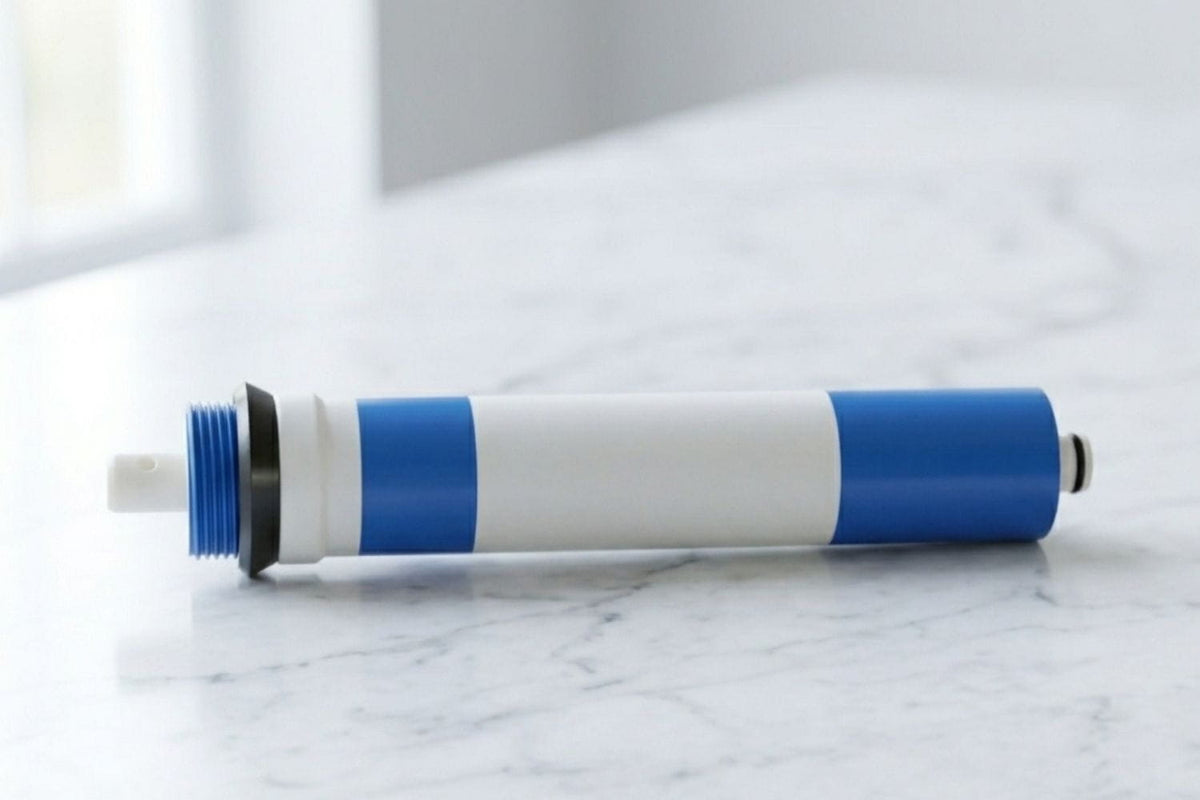
Water is something we all take for granted until the taste is off or we start wondering what’s actually in it. You've undoubtedly heard of reverse osmosis (RO) systems if you've ever wondered if your tap water is safe or if you wish it tasted as good as bottled water. They’re widely considered one of the most effective ways to filter drinking water. But what does reverse osmosis actually mean? And how does a system like the VIVA21 from Filter United make use of this process right under your kitchen sink? Let’s walk through it in plain language. What Is Reverse Osmosis, Really? Reverse osmosis can be better understood by first considering regular osmosis, which is how plants naturally absorb water. Consider how roots migrate from a weaker solution (soil water) to a stronger one (inside the plant cells) by drawing moisture from the soil. Osmosis is that. Now turn that notion on its head. In reverse osmosis, water is forced through a semipermeable membrane, a type of filter, by applying pressure in the opposite direction. Only water molecules can pass through this extremely thin membrane, leaving behind dissolved salts, heavy metals, and other impurities. It's similar to forcing water through an extremely fine net that can distinguish pure water from almost anything else. The Step-by-Step Process in the VIVA21 The VIVA21 undersink reverse osmosis system adapts the same concepts used in large-scale municipal treatment plants for use in residential kitchens. The process from tap to glass looks like this: Pre-FiltrationWhen water enters the system, it first goes through sediment and carbon filters. These get rid of things like chlorine, rust, and sand. Even though they can't catch everything, they are essential in preventing premature deterioration of the fragile RO membrane. The RO MembraneThis is the heart of the system. Under pressure, water molecules are pushed through the semipermeable membrane. Most contaminants—including lead, arsenic, nitrates, PFAS (“forever chemicals”), and other dissolved solids—are left behind and flushed out as wastewater. Storage TankPurified water doesn’t come out instantly in large amounts. That’s why the VIVA21 stores clean water in a pressurized tank, ensuring you have enough on demand when you fill a pot or pour a glass. Polishing StageBefore you drink it, the water passes through one last carbon filter to fine-tune the taste. This “polishing” step makes the difference between water that’s simply safe and water that actually tastes refreshing. Why People Choose Undersink RO Systems There are countless ways to filter water—pitcher filters, countertop units, whole-home systems—but undersink RO setups have become popular for a few simple reasons: Comprehensive filtration: Few other home systems remove as many contaminants. Set it and forget it: Once installed, you only need occasional filter changes. Convenient: Water is delivered right to your dedicated faucet, no waiting for pitchers to drip through. The VIVA21 was designed with these everyday benefits in mind. It doesn’t reinvent the science—it just packages it neatly for homeowners who want dependable, bottle-quality water without the plastic waste or ongoing expense of delivery services. Common Questions About Reverse Osmosis Does RO water taste different?Yes. Because so many dissolved solids are removed, the water has a lighter, almost crisp profile. Some describe it as “cleaner” than tap or bottled water. What about minerals—are they all removed?Reverse osmosis does strip out both harmful contaminants and some naturally occurring minerals like calcium and magnesium. Whether that’s a downside depends on personal preference. Some people add a remineralization filter if they prefer a slightly “mineralized” taste. How much water is wasted?Older RO systems had a reputation for wasting a lot of water. The VIVA21 is built with efficiency in mind, so while it still uses water to flush away contaminants, the ratio is much better than traditional models. Is it difficult to maintain?Not really. The pre-filters usually need changing every 6–12 months, while the membrane lasts two or three years depending on your water quality. Most homeowners find the process simple once they’ve done it once. Why Reverse Osmosis Is Still Relevant Today In recent years, there’s been growing concern about contaminants in tap water—PFAS chemicals, microplastics, lead from old pipes, and agricultural runoff. While municipal treatment plants do a good job within regulations, standards don’t always keep up with emerging contaminants. That’s where having an RO system at home makes sense. It gives you a final layer of protection and control over the water you and your family drink every day. It’s not about being alarmist—it’s about peace of mind. Real-World Example A family in Southern California recently switched to the VIVA21 after years of buying bottled water. Their main complaint wasn’t just cost—it was the hassle of hauling cases from the store and the guilt over plastic waste. After installation, they noticed the taste was just as good as their favorite bottled brand, and they estimated saving hundreds of dollars per year. Stories like this aren’t unusual. Taste, convenience, and confidence in the beverage are the main, everyday reasons why many people switch, rather than complex scientific ones. Final Thoughts Reverse osmosis may sound like complex science, but the principle is simple: push water through a super-fine filter, and leave the bad stuff behind. Systems like the VIVA21 put this process into action under your sink, delivering water that’s cleaner, safer, and better tasting—without the plastic bottles or uncertainty of what’s coming from the tap. Understanding how reverse osmosis works isn’t just about the science. It’s about knowing how technology can make a daily difference, one glass at a time.
Learn moreHow to Install an Undersink Reverse Osmosis (RO) System—A Simple, Step-by-Step Guide
If you’re ready to take clean, healthy drinking water into your own hands, installing an undersink Reverse Osmosis (RO) system is a smart and achievable DIY project. With a little planning and the right tools, you’ll enjoy crisp, purified water in no time—without needing a plumber or paying extra. Let's walk through the installation process together, clearly and confidently. 1. Choose the Right System—and Gather Your Tools Not all RO systems are created equal. Here’s what to look for: Certification: NSF/ANSI 58 ensures the system reduces common contaminants effectively. Features: Consider whether you want a remineralization filter, a high-efficiency design, or a smart monitoring system. Space and Specs: Make sure the under-sink space fits the tank and filters. Tools you’ll need: Adjustable wrench Phillips and flat-head screwdrivers Drill (if you need to install a new faucet hole) Teflon tape (plumbers’ tape) Bucket or towel (for water spills) 2. Shut Off, Prep, and Position Turn off the cold-water supply under your sink. Open the existing faucet to relieve pressure and drain residual water. Plan where the system parts will go: A spot for the RO faucet (usually on your countertop) The filtration stack (pre-filters, membrane, post-filter) The storage tank (below, in a corner) 3. Install Pre-Filters and Membrane Follow manufacturer instructions—most systems use twist-off cartridge filters. Sequence matters: Sediment filter Carbon pre-filter RO membrane Post-filter (polisher) Optional remineralization filter Make sure each filter snaps or screws in securely with no leaks. 4. Mount the RO Faucet If needed, drill a hole in your countertop or sink (usually ⅝″ or ⅞″). Secure the faucet with its provided hardware and tighten firmly—but gently. Route the faucet tubing through the hole toward your filters. 5. Connect the Storage Tank Locate a stable area below the sink. Wrap the tank valve threads with Teflon tape. Screw the tank into place and connect its tubing to the RO system. 6. Set Up the Drain Line Find a high point on the drain pipe (above the P-trap). Drill a small pilot hole, then install the drain saddle clamp. Secure the tubing from the RO unit into the saddle—no leaks allowed! 7. Pressurize, Flush, and Check Turn the cold-water valve back on. The system fills, pushing clean water into the tank and waste to the drain. Flush the system once it’s full—typically a few tanks-worth of water for best taste. Inspect for leaks—check every connection, fitting, and joint. 8. Test and Fine-Tune Wait roughly 24 hours for the tank to fully fill. Use a TDS (Total Dissolved Solids) meter to test the water. Expect significant reduction—your readings from raw to post-RO should drop noticeably. If something’s off—low flow? Strange taste?—recheck filters, connections, and pressure. 9. What You Can Do Now Set up reminders (phone or calendar) for filter replacements. Mark your calendar for membrane replacement every 2–5 years, depending on water quality. Optionally, clean and sanitize your storage tank once a year. Keep your TDS meter handy and test periodically to ensure consistent performance. Final Thoughts Installing an undersink RO system doesn’t have to be intimidating. With the right setup, tools, and a little persistence, you’ll have clean, delicious water flowing from your kitchen in just a few hours. Not only will you save money on bottled water—but you’ll gain peace of mind and a hands-on understanding of your filtration system. Enjoy every crystal-clear sip, one confident step at a time.
Learn more