

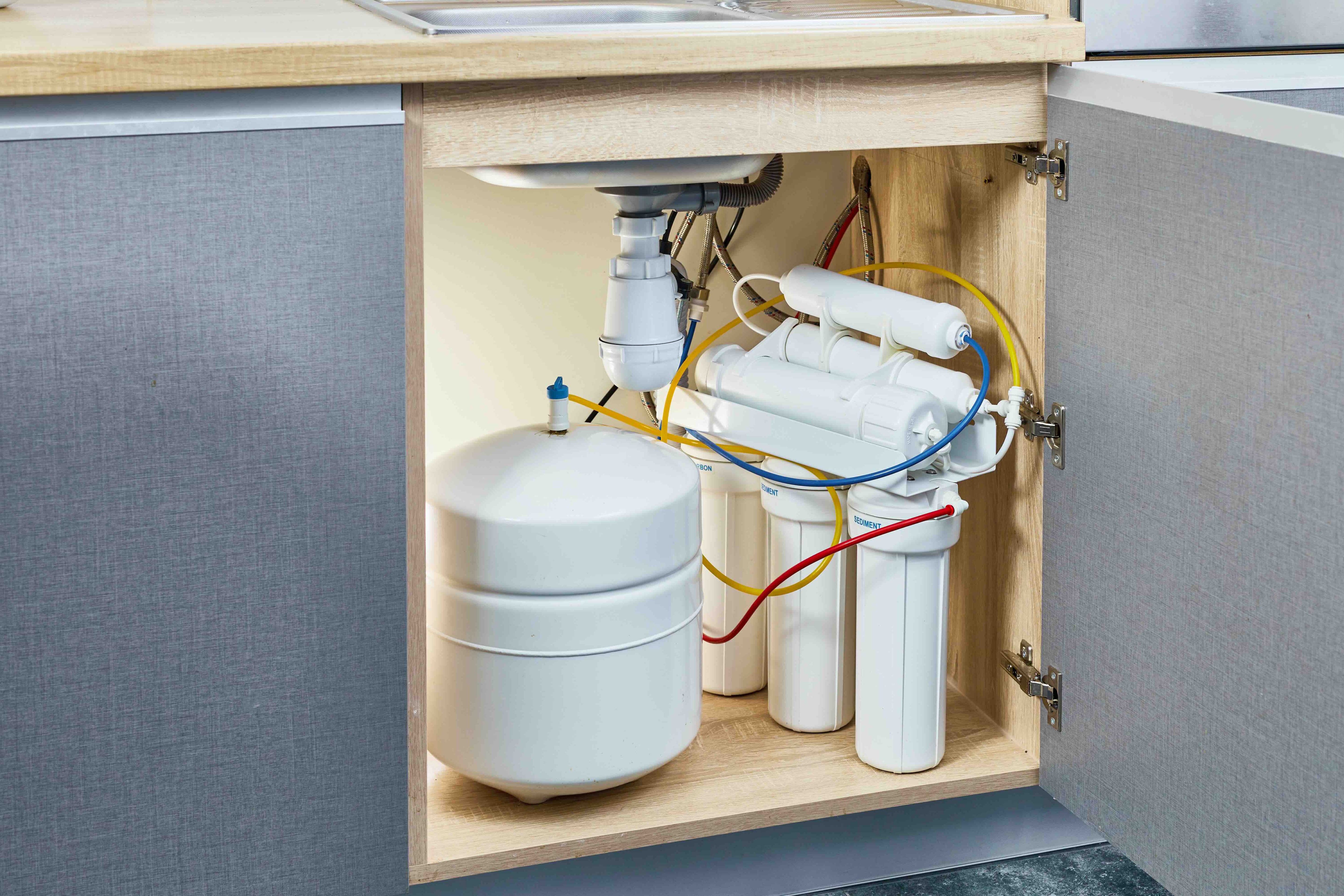
A Reverse Osmosis (RO) system is a sophisticated hydraulic assembly designed to operate silently in the background of your home. Because these systems rely on pressure differentials, diaphragm valves, and high-velocity water flow, they can occasionally produce vibrations, humming, or clicking sounds.
In most cases, a noisy RO system does not indicate a mechanical failure. Instead, it is a symptom of trapped air, improper pressure calibration, or resonance. This guide provides a technical breakdown of why these noises occur and offers five direct, DIY-friendly solutions to restore silent operation.
1. Primary Cause Analysis by Category
Before applying a fix, it is essential to categorize the mechanical or hydraulic origin of the system’s instability. A noisy RO system is typically a symptom of pressure imbalances or air displacement rather than a total mechanical failure.
|
Primary Cause |
Technical Explanation |
Severity |
|
Trapped Air |
Air pockets trapped in the membrane housing or carbon blocks post-maintenance prevent smooth hydraulic flow. |
Low (Common after maintenance) |
|
ASO Diaphragm Flutter |
The Auto Shut-off Valve (ASO) fails to seat firmly, often due to internal screw looseness or diaphragm wear. |
Medium (Affects system efficiency) |
|
Pressure Threshold Hovering |
Incoming feed water pressure is hovering too close to the system's shut-off limit, causing valve oscillation. |
Medium (Can wear out valves) |
|
Mechanical Resonance |
Kinetic energy from water flow causes unsecured LDPE lines to vibrate against the cabinet structure. |
Low (Purely mechanical) |
|
Drain or Valve Leakage |
A failure in the check valve or turbulence in the drain line prevents the system from reaching a pressurized "rest" state. |
High (Wastes water) |
2. 5 Quick Fixes for a Noisy RO System
1. Purge Trapped Air Post-Maintenance
Air is the most common cause of noise in any pressurized water system. When you replace filters or install a new unit, air pockets become trapped within the filter housings and the membrane sleeve. As water attempts to pass through, these air pockets compress and decompress rapidly, causing a "shuddering" or "vibrating" sensation that can be felt through the countertop.
The Fix: Manual Degassing
To effectively remove air, you must help the bubbles migrate to an exit point.
-
The 45-Degree Tilt: Locate the main RO manifold (the bracket holding the filters). While the system is actively producing water, gently tilt the unit at a 45-degree angle. Hold this position for 30–60 seconds. This repositioning allows trapped air at the top of the horizontal membrane housing to flow toward the drain or the faucet.
-
Controlled Tank Flush: Close the tank ball valve and open the RO faucet. Let the water trickle out for 5 minutes. Then, open the tank valve and allow the system to run through two full production cycles (fill the tank, then drain it completely). This high-volume flow usually sweeps micro-bubbles out of the carbon stages.
2. Stabilize and Optimize Tubing Layout
RO systems use semi-rigid LDPE (Low-Density Polyethylene) tubing. When water flows at high velocity, it creates kinetic energy. If the tubing is excessively long or lacks support, it acts as a resonator. This is often the cause of "mysterious" rattling sounds that occur only when the tank is filling.
The Fix: Mechanical Dampening
-
Shorten the Path: Excess "spaghetti" tubing under the sink is a liability. Use a professional tube cutter to trim lines to the shortest functional length. Ensure all cuts are perfectly square to prevent leaks.
-
Secure the Lines: Use adhesive P-clips or plastic zip ties to anchor the tubing to the cabinet wall or the RO bracket. When tubes are bundled together, their combined mass reduces the frequency of vibration.
-
Check the Drain Saddle: If the noise is a constant "gurgling," ensure the drain line is not sagging. The tube leading to the drain pipe should be as straight as possible to prevent water from splashing loudly inside the pipe.
3. Calibrate the Auto Shut-off Valve (ASO)
The ASO valve is a pressure-sensitive diaphragm component. It monitors the pressure in the storage tank and shuts off the incoming water supply once the tank reaches approximately 60-65% of the feed water pressure. If the pressure balance is marginal, the diaphragm will "flutter": vibrating back and forth hundreds of times per second. This creates a loud humming or buzzing sound.
The Fix: Pressure Balancing
-
Tighten the Valve Housing: The ASO valve is held together by four stainless steel screws. Over time, thermal expansion can loosen these screws, allowing the internal diaphragm to vibrate against the plastic casing. Use a Phillips-head screwdriver to tighten these screws firmly.
-
Check the Tank Pre-charge: If the ASO valve hums, your storage tank's internal air bladder might be under-pressurized. Empty the tank completely and use a low-pressure gauge to check the air valve (Schrader valve) at the bottom. It should be set to 7–8 psi. If the tank pressure is too low, the ASO valve cannot "seat" properly, leading to vibration.
-
Component Replacement: If the buzzing persists, the diaphragm inside the ASO valve may be stretched or inelastic. Replacing the ASO valve is a 5-minute task using quick-connect fittings.
4. Correct the Feed Water PSI
Reverse Osmosis is a pressure-driven process. Most residential systems are engineered to operate between 40 psi and 80 psi.
The Problem of "Pressure Flutter"
-
High Pressure (>80 psi): Excessive pressure can cause "water hammer," where the sudden closing of valves creates a shockwave through the plastic housings, resulting in a loud "thump."
-
Low Pressure (<40 psi): If your home pressure is too low, the system struggles to overcome the osmotic pressure of the membrane. This causes the valves to "chatter" or click as they fail to stay closed against the back-pressure of the tank.
The Fix: Hydraulic Regulation
-
Install a Pressure Regulator: If your home's incoming pressure exceeds 80 psi, install a specialized RO pressure-reducing valve. This protects the system and eliminates high-pressure vibration.
-
Add a Permeate Pump or Booster Pump: For homes with low pressure, a non-electric Permeate Pump uses the energy of the waste water to push treated water into the tank, significantly reducing noise and improving efficiency. Alternatively, an electric Booster Pump provides a steady, silent flow that eliminates valve chattering.
5. Replace the Defective Check Valve
The check valve is a small, one-way component typically located at the pure water outlet of the RO membrane housing. Its primary function is to allow purified water to flow into the storage tank while preventing high-pressure water from leaking back into the membrane. When this valve fails, it disrupts the pressure equilibrium required for the Auto Shut-off (ASO) valve to function, leading to persistent noise.
The Fix: Component Replacement
Because check valves contain internal springs or diaphragms that can become scaled or lose elasticity, they are generally non-serviceable and must be replaced.
-
Depressurize the System: Close the feed water valve and the tank ball valve.
-
Locate the Valve: Identify the L-shaped or straight quick-connect fitting on the membrane housing outlet (usually the one closest to the center).
-
Swap the Part: Disconnect the tubing, unscrew the old check valve, and apply 3–5 wraps of Teflon tape to the threads of the new valve before installing it.
-
Verify Shut-off: Reconnect the lines and turn the water back on. The system should now reach pressure and shut off decisively without vibration.
3. When to Call the Pros
While the fixes above address 95% of noise-related issues, certain sounds require immediate attention to prevent property damage:
-
Continuous Hissing: If you hear water running into the drain hours after the tank should be full, your check valve (located at the membrane outlet) has likely failed. This forces the system to run indefinitely, wasting thousands of gallons of water.
-
Metallic Grinding: If you use an electric booster pump and it begins to produce a metallic or grinding sound, the bearing is failing. The pump should be disconnected immediately to prevent overheating.
-
Water Leaking with Vibration: If a vibration is accompanied by even a single drop of water, it indicates a hairline crack in a filter housing or a compromised O-ring. Turn off the feed water valve immediately.
Conclusion
A quiet Reverse Osmosis system is a sign of a healthy, well-calibrated unit. By systematically purging air, securing tubing, and maintaining the correct pressure environment, you can eliminate nearly all common kitchen noises.
Routine maintenance is the most effective way to prevent these issues from returning, specifically checking your tank's air pre-charge and replacing pre-filters.


