

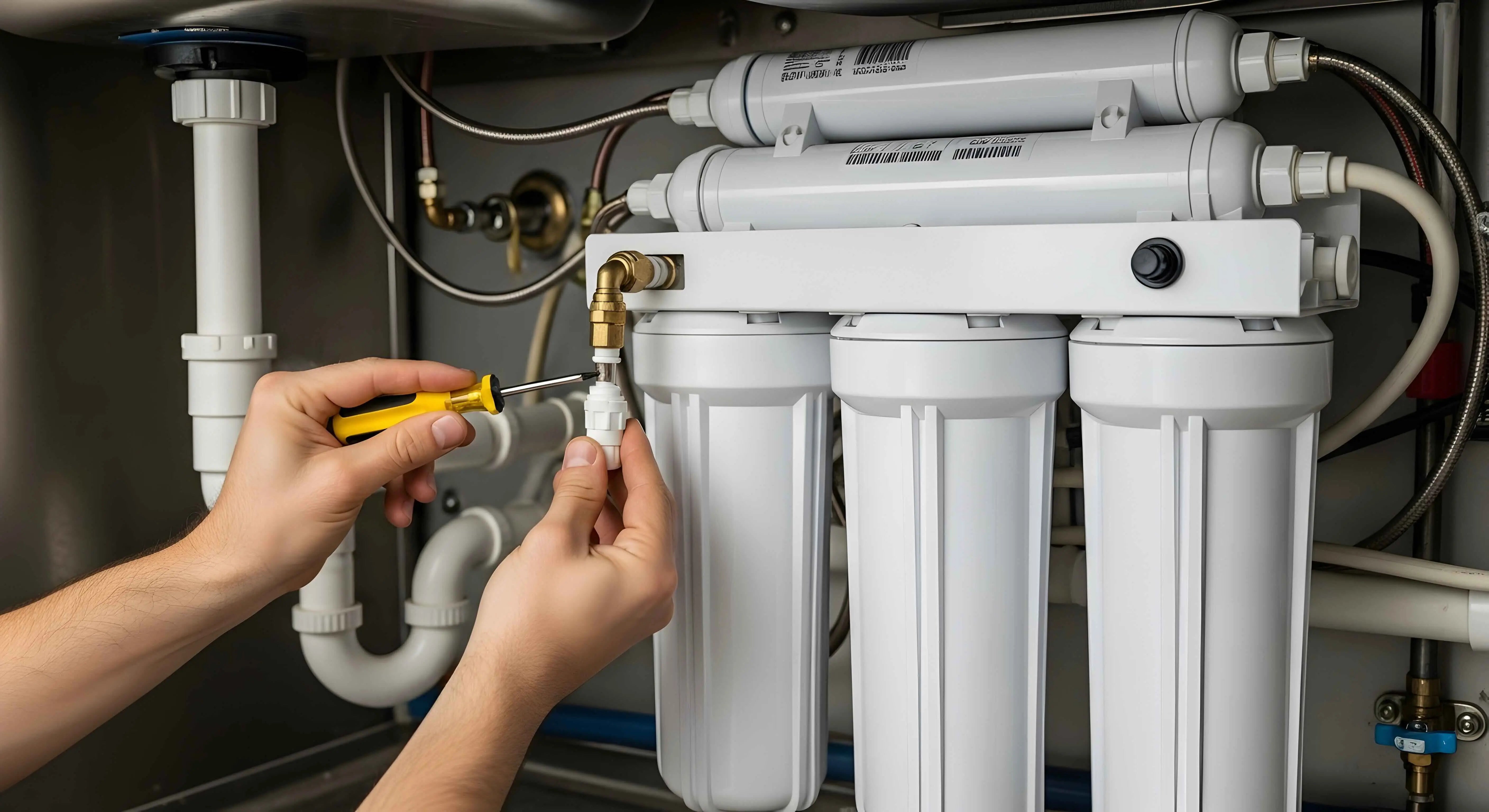
There is a specific sound that every homeowner with a reverse osmosis (RO) system eventually learns to dread: the constant, faint hiss of water trickling down the drain. While RO systems are arguably the gold standard for home water purification, they aren’t "set it and forget it" appliances. When your RO system constant drain water issue begins, it’s more than just a background noise nuisance, it is a literal drain on your utility bill and the lifespan of your filters.
A properly functioning RO system is a marvel of engineering, but it relies on a delicate balance of pressure. When that balance is disrupted, the system can run 24 hours a day, 7 days a week, wasting hundreds of gallons of water every month. According to data from various environmental agencies, a malfunctioning RO system can waste significantly more water than a leaking toilet if left unchecked.
The good news? You don’t necessarily need a plumber to solve this. Most constant-drain issues trace back to three specific components. In this guide, we will walk through the mechanics of your system and show you how to troubleshoot the "Big 3" culprits.
1. The Mechanics of "Waste Water": Why Does It Drain at All?
Before diving into repairs, it’s important to understand that your RO system is supposed to drain some water. Unlike a standard carbon filter that acts like a sponge, an RO membrane uses cross-flow filtration.
As water is pushed through the semi-permeable membrane, contaminants are stripped away. To prevent these minerals and salts from immediately clogging the microscopic pores of the membrane, a stream of "concentrate" waste water constantly washes over the surface of the membrane and carries the debris out through the drain line.
However, this process is designed to stop once your storage tank is full. The system uses a mechanical "stop signal" based on pressure. In a standard system, the Automatic Shut-off (ASO) valve is the gatekeeper. It senses when the pressure in the storage tank reaches approximately two-thirds of the incoming feed water pressure. Once that threshold is hit, the valve closes, and the water stops flowing to the drain. When this "stop signal" fails, you end up with an RO system running 24/7.
2. The "Big 3" Culprits: Troubleshooting Your RO System
If your system is constantly draining, it’s likely a failure in the pressure-sensing loop. Here is how to isolate the problem.
The Automatic Shut-Off (ASO) Valve
The ASO valve is the most common reason an reverse osmosis waste water won't stop flowing. This valve is a small plastic square with four tube connections. It sits in the middle of the system, feeling the "push" from both the source water and the purified water in the tank.
-
The Symptom: Your storage tank is heavy (full), and you can get plenty of water from the faucet, but the drain line never stops gurgling.
-
The Test: Close the ball valve on top of your RO storage tank. Wait about 5 to 10 minutes. If the water flowing to the drain stops, your ASO valve is actually working fine, and the issue lies elsewhere. If the water continues to flow to the drain even with the tank closed, the ASO valve internal diaphragm has likely failed and needs replacement.
The Check Valve
The check valve is a tiny, often overlooked component usually located inside the 90-degree elbow fitting where the purified water exits the membrane housing. Its job is simple: let water flow out of the membrane toward the tank, but never let it flow back in.
-
The Symptom: The system exhibits "short cycling". It turns off for a few minutes, then kicks back on, even if no one has used any water.
-
The Problem: If the check valve is faulty, the pressurized water in your storage tank leaks backward through the membrane and out the drain line. This causes the pressure in the tank to drop, which signals the ASO valve to open again. This loop creates a RO check valve symptoms profile where the system effectively "bleeds" its purified water into the sewer.
Low Feed Water Pressure
Sometimes, the "part" that is broken isn't inside the RO system at all, it's your home's plumbing. Reverse osmosis is a pressure-dependent process. Most residential systems require a minimum of 40 to 60 psi (pounds per square inch) to operate efficiently.
-
The Science: If your home's incoming pressure is too low (common in homes with older well pumps or high-rise apartments), the system can't produce enough pressure to "push back" against the ASO valve. Because the valve never receives the signal that the tank is full, it stays open.
-
The Solution: If you suspect low feed water pressure RO issues, you can test your home's pressure with a simple gauge from a hardware store. If it’s below 40 psi, you may need a permeate pump or a booster pump to help the system reach the shut-off threshold.
3. The Storage Tank Variable: More Than Just a Container
If your valves check out, the problem might be the storage tank itself. Inside every standard RO tank is a rubber air bladder, much like a tire. This bladder provides the "oomph" to push water up to your faucet.
The tank needs a specific "pre-charge" of 5 to 7 psi when the tank is completely empty of water. Over time, this bladder can lose air or even rupture. If the tank loses its air charge, it can't create enough back-pressure to trigger the ASO valve, leading to a RO system constant drain water scenario.
The "Rupture" Test: Locate the Schrader valve (the same kind of air valve found on a bicycle tire) on your tank. Press the center pin briefly. If air comes out, you might just need to re-pressurize the tank with a hand pump. However, if water squirts out of the air valve, the internal bladder is ruptured. At this point, the tank cannot be repaired and must be replaced.
4. Quick Fixes vs. Major System Overhauls
When troubleshooting an RO system running 24/7, you have to weigh the cost of parts versus the age of the unit.
|
Component |
Difficulty to Replace |
Estimated Cost |
|
ASO Valve |
Moderate (Many tubes) |
Low |
|
Check Valve |
Easy |
Very Low |
|
Storage Tank |
Easy (Plug and play) |
Moderate |
|
Full System |
Moderate |
High (Initial) / Low (Long-term) |
While replacing a single valve is cost-effective, older systems (10+ years) often suffer from "internal creep." This is where the plastic manifolds or O-ring seats become warped or pitted from years of water pressure. In these cases, you might replace the ASO valve only to find the system still leaks because of a hairline crack in the housing.
Furthermore, if you are looking at the combined cost of a new storage tank, a fresh set of filters, and a new ASO valve, you are often within $50 of the price of a brand-new, high-efficiency system.
Conclusion: Is it Time for an Upgrade?
A constantly draining RO system is more than a minor annoyance, it is a sign that your system is no longer operating at peak efficiency. If you've checked your ASO valve troubleshooting steps and verified your tank pressure, yet the water continues to flow, your system may have reached the end of its functional lifespan.
At VIVA21, we focus on reliable, time-tested designs. Whether you prefer the simplicity of a 5-stage undersink RO system with a dedicated storage tank or the enhanced mineral profile of a 6-stage remineralization system, ensuring your valves are functional is key to sustainable water usage.
To ensure your long-term satisfaction and total peace of mind, we also provide a lifetime limited parts warranty and dedicated technical support. Whether you encounter a stubborn valve issue or simply need maintenance advice, our team is here to ensure your system runs flawlessly for years to come.


