
System Troubleshooting & Maintenance
Slow Flow from RO Faucet? The Reason Why Your Tank Isn’t Pushing Water
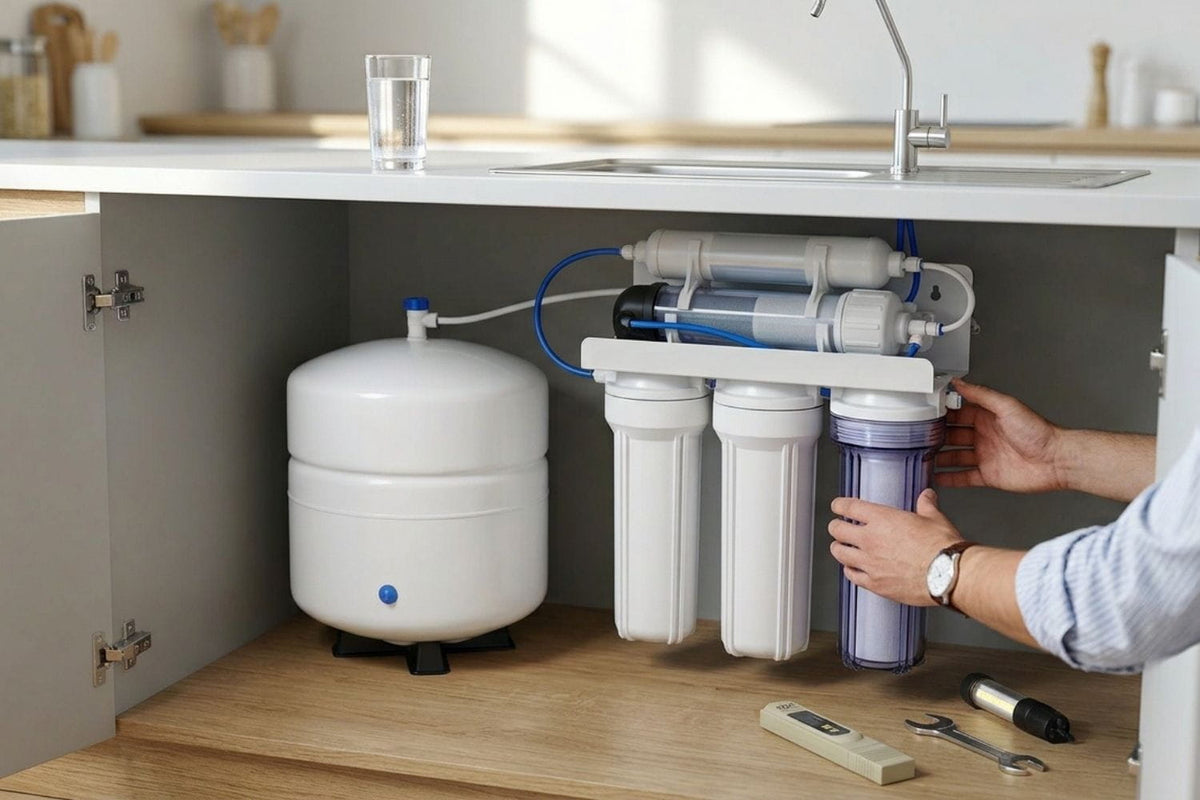
A weak stream from a Reverse Osmosis (RO) faucet is a common maintenance issue. When you experience a slow flow from RO faucet, the problem generally stems from one of two areas: the production of water (filtration) or the delivery of water (the pressure tank). Understanding the mechanics of your undersink system is the fastest way to troubleshoot. This guide breaks down the five most common reasons for low water pressure from RO system faucets and provides a clear path to restoration. 1. How Pressure Tanks Work In a system with a storage tank, the tank is far more than a plastic or metal container. It is a dual-chamber pressure vessel. Inside, a thick butyl rubber bladder separates pure water from a chamber of compressed air. As the RO membrane slowly filters water, it drips into the tank and compresses the air chamber. This compressed air acts as a "potential energy spring." When you flip the faucet handle, that air expands, pushing the bladder upward to force water out. If this air-to-water pressure balance is lost, the system cannot "push," resulting in a slow flow from RO faucet. 2. 5 Reasons for Slow Flow from Your RO System 1. Loss of Air Pressure (The "Flat Tire" Effect) Just like a bicycle tire or a car tire, an RO tank can lose air over time. This is the #1 reason for a slow flow from RO faucet. Air molecules are tiny and can slowly permeate through the rubber bladder or leak from the Schrader valve (the metal air valve) gradually. When the air charge drops too low, there isn't enough "spring" left to force the water out of the tank and up through your faucet. You might have a tank that is 100% full of water, but without the internal RO tank pressure to back it up, the water will only trickle out. The Fix: You can often solve this by re-pressurizing the tank to 7-10 PSI (when empty) using a simple bicycle pump. 2. A Ruptured Internal Bladder If your tank is heavy but no water comes out even after you try to add air, you might be facing a ruptured bladder. This happens when the internal rubber bladder loses its integrity and develops a hole. When this occurs, water crosses over into the air chamber. Since water cannot be compressed like air, the tank becomes "waterlogged." There is a simple test for this: depress the pin inside the air valve. If water squirts out of the air valve, the bladder is gone. This is a mechanical failure that unfortunately requires a full tank replacement to resolve the low water pressure from the RO system. 3. Clogged Pre-Filters (Sediment and Carbon) The first three stages of an RO system are designed to protect the RO membrane by removing dirt, rust, and chlorine. If these pre-filters aren't changed every 6-12 months, they can become so packed with debris that they physically block the water from reaching the tank. In this scenario, the reason for the slow flow from RO faucet isn't that the tank won't "push", it's that the tank never got "filled" in the first place. You’ll notice the tank feels very light when you lift it, indicating it’s empty. 4. Low Feed Water Pressure Reverse Osmosis is a pressure-driven process. Most industry experts agree that standard residential RO membranes perform optimally at 50-60 PSI, and production drops significantly below 40-45 PSI. If your home’s main water pressure is too low (common in some rural areas or older apartments), the RO membrane will struggle to produce water. The system will "tinker" along, but it will never generate enough volume to fill the storage tank properly. Without a full tank, you will experience a constant low water pressure from the RO system whenever you try to use the faucet. 5. Mechanical Flow Obstruction Occasionally, tubing under the sink may become kinked or compressed during maintenance. Inspect all lines from the tank to the faucet to ensure no physical blockage is restricting flow. 3. The "Weight Test" Diagnostic To determine if the issue is the delivery (tank/pressure) or the production (filters/input), perform this test: Heavy Tank + Slow Flow: The problem is the "Push." The tank is full of water, but there is insufficient air pressure to move it. You should check air pressure or for a ruptured bladder. Light Tank + Slow Flow: The problem is the "Fill." Your system is not producing water. You should check for clogged filters or low incoming water pressure. 4. How to Re-pressurize Your RO Tank (The DIY Guide) If your tank is heavy but the flow is weak, and the air valve is dry (no leaks), you can likely restore the low water pressure from the RO system by re-charging the air chamber. Safety Warning: Never over-pressurize the tank. The target is 7-10 PSI when the tank is empty. Excessive pressure can permanently damage the bladder. The Process: Turn off the water supply: Close the feed water valve. Drain the tank: Keep the RO faucet open until water stops. (Note: The tank may still be heavy if pressure is low). Locate the Air Valve: Remove the cap from the Schrader valve (standard tire valve) on the tank. Pump Air: Use a manual bicycle pump. As you add air, residual water will be pushed out of the faucet. Continue until the tank is empty and light. Calibrate PSI: Use a low-pressure gauge to set the empty tank pressure to 7-8 PSI. Restart: Open the water supply and allow 2-4 hours for the system to refill. 5. Troubleshooting Summary: Repair vs. Replace Symptom Potential Diagnosis Recommended Action Water exits the air valve Ruptured Bladder Replace the Storage Tank Tank is light/empty Clogged Filters or Low Feed PSI Replace Filters / Check Home PSI Tank is heavy, flow is slow Low Air Pressure Re-pressurize (See DIY Guide) Flow starts strong, then dies Normal behavior Allow 2-4 hours to refill 6. Professional Maintenance for Longevity To prevent a slow flow from RO faucet in the future, follow these preventative steps: Annual Pressure Check: Test your RO tank pressure once a year while the tank is empty. Filter Schedule: Replace sediment and carbon pre-filters every 6–12 months. Temperature Awareness: Remember that RO production slows down in winter as water viscosity increases. This is normal and not a sign of system failure. Final Thoughts A decrease in water flow is a signal that your system requires a minor adjustment. By identifying whether the bottleneck lies in the storage tank's air charge or the filtration stages, you can maintain a high-performance system for years. Consistent maintenance ensures that your RO system continues to deliver the purity and flow rate your household deserves.
Learn moreWhy Your RO System is Continuously Draining: 3 Valves to Check
There is a specific sound that every homeowner with a reverse osmosis (RO) system eventually learns to dread: the constant, faint hiss of water trickling down the drain. While RO systems are arguably the gold standard for home water purification, they aren’t "set it and forget it" appliances. When your RO system constant drain water issue begins, it’s more than just a background noise nuisance, it is a literal drain on your utility bill and the lifespan of your filters. A properly functioning RO system is a marvel of engineering, but it relies on a delicate balance of pressure. When that balance is disrupted, the system can run 24 hours a day, 7 days a week, wasting hundreds of gallons of water every month. According to data from various environmental agencies, a malfunctioning RO system can waste significantly more water than a leaking toilet if left unchecked. The good news? You don’t necessarily need a plumber to solve this. Most constant-drain issues trace back to three specific components. In this guide, we will walk through the mechanics of your system and show you how to troubleshoot the "Big 3" culprits. 1. The Mechanics of "Waste Water": Why Does It Drain at All? Before diving into repairs, it’s important to understand that your RO system is supposed to drain some water. Unlike a standard carbon filter that acts like a sponge, an RO membrane uses cross-flow filtration. As water is pushed through the semi-permeable membrane, contaminants are stripped away. To prevent these minerals and salts from immediately clogging the microscopic pores of the membrane, a stream of "concentrate" waste water constantly washes over the surface of the membrane and carries the debris out through the drain line. However, this process is designed to stop once your storage tank is full. The system uses a mechanical "stop signal" based on pressure. In a standard system, the Automatic Shut-off (ASO) valve is the gatekeeper. It senses when the pressure in the storage tank reaches approximately two-thirds of the incoming feed water pressure. Once that threshold is hit, the valve closes, and the water stops flowing to the drain. When this "stop signal" fails, you end up with an RO system running 24/7. 2. The "Big 3" Culprits: Troubleshooting Your RO System If your system is constantly draining, it’s likely a failure in the pressure-sensing loop. Here is how to isolate the problem. The Automatic Shut-Off (ASO) Valve The ASO valve is the most common reason an reverse osmosis waste water won't stop flowing. This valve is a small plastic square with four tube connections. It sits in the middle of the system, feeling the "push" from both the source water and the purified water in the tank. The Symptom: Your storage tank is heavy (full), and you can get plenty of water from the faucet, but the drain line never stops gurgling. The Test: Close the ball valve on top of your RO storage tank. Wait about 5 to 10 minutes. If the water flowing to the drain stops, your ASO valve is actually working fine, and the issue lies elsewhere. If the water continues to flow to the drain even with the tank closed, the ASO valve internal diaphragm has likely failed and needs replacement. The Check Valve The check valve is a tiny, often overlooked component usually located inside the 90-degree elbow fitting where the purified water exits the membrane housing. Its job is simple: let water flow out of the membrane toward the tank, but never let it flow back in. The Symptom: The system exhibits "short cycling". It turns off for a few minutes, then kicks back on, even if no one has used any water. The Problem: If the check valve is faulty, the pressurized water in your storage tank leaks backward through the membrane and out the drain line. This causes the pressure in the tank to drop, which signals the ASO valve to open again. This loop creates a RO check valve symptoms profile where the system effectively "bleeds" its purified water into the sewer. Low Feed Water Pressure Sometimes, the "part" that is broken isn't inside the RO system at all, it's your home's plumbing. Reverse osmosis is a pressure-dependent process. Most residential systems require a minimum of 40 to 60 psi (pounds per square inch) to operate efficiently. The Science: If your home's incoming pressure is too low (common in homes with older well pumps or high-rise apartments), the system can't produce enough pressure to "push back" against the ASO valve. Because the valve never receives the signal that the tank is full, it stays open. The Solution: If you suspect low feed water pressure RO issues, you can test your home's pressure with a simple gauge from a hardware store. If it’s below 40 psi, you may need a permeate pump or a booster pump to help the system reach the shut-off threshold. 3. The Storage Tank Variable: More Than Just a Container If your valves check out, the problem might be the storage tank itself. Inside every standard RO tank is a rubber air bladder, much like a tire. This bladder provides the "oomph" to push water up to your faucet. The tank needs a specific "pre-charge" of 5 to 7 psi when the tank is completely empty of water. Over time, this bladder can lose air or even rupture. If the tank loses its air charge, it can't create enough back-pressure to trigger the ASO valve, leading to a RO system constant drain water scenario. The "Rupture" Test: Locate the Schrader valve (the same kind of air valve found on a bicycle tire) on your tank. Press the center pin briefly. If air comes out, you might just need to re-pressurize the tank with a hand pump. However, if water squirts out of the air valve, the internal bladder is ruptured. At this point, the tank cannot be repaired and must be replaced. 4. Quick Fixes vs. Major System Overhauls When troubleshooting an RO system running 24/7, you have to weigh the cost of parts versus the age of the unit. Component Difficulty to Replace Estimated Cost ASO Valve Moderate (Many tubes) Low Check Valve Easy Very Low Storage Tank Easy (Plug and play) Moderate Full System Moderate High (Initial) / Low (Long-term) While replacing a single valve is cost-effective, older systems (10+ years) often suffer from "internal creep." This is where the plastic manifolds or O-ring seats become warped or pitted from years of water pressure. In these cases, you might replace the ASO valve only to find the system still leaks because of a hairline crack in the housing. Furthermore, if you are looking at the combined cost of a new storage tank, a fresh set of filters, and a new ASO valve, you are often within $50 of the price of a brand-new, high-efficiency system. Conclusion: Is it Time for an Upgrade? A constantly draining RO system is more than a minor annoyance, it is a sign that your system is no longer operating at peak efficiency. If you've checked your ASO valve troubleshooting steps and verified your tank pressure, yet the water continues to flow, your system may have reached the end of its functional lifespan. At VIVA21, we focus on reliable, time-tested designs. Whether you prefer the simplicity of a 5-stage undersink RO system with a dedicated storage tank or the enhanced mineral profile of a 6-stage remineralization system, ensuring your valves are functional is key to sustainable water usage. To ensure your long-term satisfaction and total peace of mind, we also provide a lifetime limited parts warranty and dedicated technical support. Whether you encounter a stubborn valve issue or simply need maintenance advice, our team is here to ensure your system runs flawlessly for years to come.
Learn moreSleep Soundly: Why You Need an RO System with Integrated Leak Detection
The kitchen is the heart of the home for many people. It is where we prepare meals, gather with family, and increasingly, where we install advanced technology to ensure our water is pure. However, there is a lingering "nightmare scenario" that keeps many people from pulling the trigger on an under-sink water filter: the fear of a midnight flood. Imagine coming home after a long weekend to find your hardwood floors warped, your custom cabinetry sodden, and a steady stream of water creeping toward your living room rug. According to the Insurance Institute for Business & Home Safety (IBHS), water damage is one of the most frequent and costly causes of home insurance claims, with the average cost of a kitchen leak often reaching into the thousands of dollars. The good news? Modern water purification technology has evolved. You don’t have to choose between pure water and a dry kitchen. By selecting a system with a reverse osmosis leak detector auto shut off feature, you are essentially buying "cheap insurance" for your home. 1. How Modern Leak Detection Systems Protect Your Home In the past, a leak in an under-sink system might go unnoticed for days, hidden behind cleaning supplies and trash bins. Today’s high-quality Reverse Osmosis systems utilize two primary types of protection to mitigate this risk: electronic sensors and mechanical shut-offs. Electronic "Smart" Sensors Many premium systems now feature integrated digital sensors located at the base of the unit. These sensors are incredibly sensitive. If even a single drop of water touches the base, the system triggers an immediate response. The unit will beep to alert the homeowner and, more importantly, engage a solenoid valve to cut off the incoming water supply instantly. This "Smart Guard" approach ensures that a minor drip never turns into a major flood. Mechanical Leak Stops For traditional systems, mechanical leak stops are a reliable, non-electric alternative. These devices utilize a compressed "expanding pad" or tablet. When water touches the pad, it expands rapidly, physically tripping a lever that shuts off the water flow. Whether electronic or mechanical, having a smart RO system with leak alert capabilities means you can sleep soundly knowing your kitchen is monitored 24/7. 2. Understanding the "Push-to-Connect" Revolution When homeowners ask about common causes of RO leaks, they often assume it’s a failure of the machine itself. In reality, the culprit is usually human error during installation or a failure at a connection point. Historically, plumbing required specialized tools and threading that were prone to stripping or improper sealing. The industry shifted significantly with the introduction of Quick-Connect (Push-Fit) fittings. These fittings have revolutionized home water safety by reducing installation errors by an estimated 90%. Instead of tightening nuts and bolts, you simply push the tubing into the fitting until it "locks." This creates a permanent, watertight seal using an internal O-ring and stainless steel teeth. By simplifying the architecture of the system, manufacturers have eliminated the most common failure points, making the modern RO system one of the safest appliances in your kitchen. 3. Essential Maintenance Tips to Prevent RO System Leaks While integrated safety features provide a vital safety net, a professional installation and regular maintenance are your first lines of defense. If you are a DIY-inclined homeowner, following these three professional tips will help you prevent RO system leaks before they ever start. Cut Tubing with Precision The most common mistake during installation is using household scissors to cut the plastic tubing. Scissors tend to "pinch" or flatten the tube, creating an oval shape that won't seat properly in the O-ring. Always use a dedicated tube cutter or a very sharp utility knife to ensure a perfectly square, clean cut. The "Mark and Push" Technique Many leaks occur because the tubing wasn't pushed far enough into the fitting. To ensure a secure connection, use a Sharpie to mark the tubing about 1/2 inch to 3/4 inch from the end (refer to your manual for exact depth). Push the tube into the fitting until your mark disappears or reaches the collet. This visual confirmation gives you 100% certainty that the seal is engaged. Manage Your Home’s Water Pressure The Environmental Protection Agency (EPA) notes that standard home water pressure should ideally sit between 40 and 60 PSI. If your home’s pressure exceeds 80 PSI, it can put undue stress on your RO membranes and fittings. If you live in an area with high municipal water pressure, installing a simple pressure regulator at the feed water line is a smart move to protect all your appliances. 4. The Value of Integrated Safety: The VIVA21 Approach At VIVA21 (FilterUnited), we believe that water purification should bring peace of mind, not project anxiety. While some brands treat leak detection as an optional add-on, we view it as a fundamental component of responsible design. Our signature 5-stage undersink RO system is engineered specifically with home safety in mind. Each unit includes a reverse osmosis leak detector auto shut off mechanism as a standard feature. By integrating the leak detector directly into the system's workflow, we ensure that if a leak is detected at the source, the water supply is severed immediately. This is particularly important for systems with storage tanks. A tank holds pressurized water ready for use; if a line downstream fails, an auto-shutoff ensures that the system doesn't continue to pull water from the main line, effectively capping the maximum amount of water that could ever escape. It turns a potential catastrophe into a minor puddle that can be wiped up with a single paper towel. 5. Why a Water Leak Detector for Under Sink Areas is Non-Negotiable If you are currently shopping for a water filtration system, it is easy to get distracted by "alkalinity," "remineralization," or "micron ratings." While water quality is the goal, the structural integrity of your home is the foundation. Investing in a water leak detector for under sink installations is a classic example of "an ounce of prevention is worth a pound of cure." When you consider that a kitchen renovation can cost anywhere from $15,000 to $50,000, spending a few extra dollars on a system with integrated safety sensors is the most logical financial decision a homeowner can make. Furthermore, many modern home insurance policies offer "smart home" discounts for homeowners who install leak detection devices. By choosing an RO system that proactively monitors itself, you aren't just protecting your floors, you are potentially lowering your long-term ownership costs. Conclusion: Total Peace of Mind Water damage is a silent threat, but it doesn’t have to be an inevitable one. The transition to a smart RO system with leak alert technology marks a turning point in home maintenance. You no longer have to worry about the "what ifs" of plumbing failures or the "hidden drips" that cause mold and rot. By combining high-quality Quick-Connect fittings, proper installation techniques, and a reliable reverse osmosis leak detector auto shut off system, you can enjoy the highest quality drinking water without any of the stress. A few extra dollars spent on safety today can save you thousands in potential renovations tomorrow. Don't risk your floors for the sake of a simpler filter. Explore the VIVA21 5-stage RO system, featuring our integrated "Smart Guard" automatic leak shut-off technology, and discover what it feels like to have total peace of mind in your kitchen.
Learn moreMaintaining Your Reverse Osmosis System: How to Maximize Filter Life and Water Quality
One of the greatest methods to make sure your family always gets clean, safe drinking water at home is to use a reverse osmosis (RO) system. But the truth is that once you install a RO system, it doesn't just "run forever." If you don't change the filters on time or undertake regular maintenance, the water quality gets worse, the filters get clogged, and the whole system can break down. The good news is? It's easier than you think to keep your RO system in good shape. The reward is years of great-tasting, reliable water for a fraction of the expense of bottled water. In this article, we'll talk about why maintenance is important, which parts need it, how often to change them, and the best ways to make your RO system last longer. 1. Why RO Maintenance Matters Your RO system works quietly under the sink, day and night. But it’s not a “set it and forget it” appliance. Neglecting it can have real consequences: Water quality risks: Filters eventually saturate. Once full, they let impurities slip through—so your water may no longer be as safe as you think. Shortened lifespan: Pre-filters protect the RO membrane. If you skip changes, the membrane clogs or fouls, often years before its expected life. Higher costs: A new filter set costs far less than replacing a ruined membrane—or the whole system. Think of it like your car: oil changes prevent breakdowns. Regular maintenance does the same for your RO system. 2. Get to Know Your RO System Understanding how the system works makes maintenance a whole lot easier. Here are the key players: Sediment Pre-filter: Blocks dirt, sand, and rust before they reach delicate parts. Carbon Pre-filter: Removes chlorine and chemicals that can damage the RO membrane. RO Membrane: The heart of the system, removing dissolved solids, heavy metals, nitrates, fluoride, and PFAS. Post-carbon “polishing” filter: Improves taste and odor before the water hits your glass. Optional remineralization filter: Restores calcium and magnesium for better taste. Storage tank: Holds purified water until you need it. Each stage has its own lifespan—and your job is simply to swap them out before they expire. 3. The Filter Replacement Schedule Most manufacturers recommend: Sediment filter: every 6–12 months Carbon pre-filter: every 6–12 months RO membrane: every 2–3 years (sometimes 5 with soft water) Post-carbon filter: every 6–12 months Remineralization filter: annually A simple phone reminder or calendar note keeps you on track. Skipping just one cycle can clog the system and shorten the membrane’s life. 4. Warning Signs Your System Needs Attention Even with schedules in place, real-world use may wear filters out faster. Watch for: Slower flow: A dribble instead of steady flow means clogs somewhere. Bad taste or smell: Chlorine, metallic notes, or “mustiness” often signal exhausted filters. High TDS readings: Use a TDS meter—if readings climb above ~50 ppm (vs. the usual 20–30 ppm), it’s time for replacements. Constant draining or odd noises: Can point to pressure or clogging issues. Catching these early saves money and ensures you don’t drink compromised water. 5. Annual and Biannual Tasks Beyond Filters Maintenance isn’t only about swapping cartridges. A few extra steps keep your system healthy: Sanitize the storage tank once a year to prevent bacterial buildup. Check tank pressure (should be 7–8 psi when empty) to keep storage capacity up. Inspect tubing and fittings—loose parts can leak. Flush the system (many include a flush valve) to keep the membrane clean. Think of this as your “deep clean” for long-term reliability. 6. DIY Care vs. Professional Service You have two good options: DIY maintenance: Modern RO systems make cartridge changes simple with twist-and-lock designs. It’s cheaper and gives you control. Professional servicing: Annual contracts or a one-time technician can handle full sanitization, membrane testing, and troubleshooting. Ideal if you’re short on time or not comfortable with plumbing. 7. Myths About RO Maintenance A few common misconceptions get people into trouble: “Good taste = good water.” Wrong. Some contaminants have no taste, smell, or color. “The membrane lasts forever.” False. Without pre-filters, membranes can clog in less than a year. “If I change filters, I don’t need to clean the tank.” Not true—bacteria can grow inside tubing and storage. “RO systems waste too much water.” Modern high-efficiency systems waste far less than older units. Knowing what’s fact vs. fiction keeps your system performing. 8. The True Cost of Neglect vs. Care Let’s compare two households: Household A (Neglect): Skips filter changes for 3 years. The membrane fouls, repairs cost $600–$800, and total 10-year expenses exceed $1,500. Household B (Proper Maintenance): Stays on schedule, spends about $250/year. The membrane lasts 5 years, and the system runs efficiently. Over 10 years: ~$750 total—half as much, with better water quality. The lesson is clear: preventive care saves money. 9. Tools and Tips to Make Maintenance Easier TDS meters: Cheap, quick, and accurate. Smart alerts: Some modern systems use LEDs or phone apps to remind you when filters need changing. Filter subscription kits: Auto-delivery means you never forget. These tools turn “remembering” into “automatic.” 10. What You Can Do Now Don’t wait until water tastes off or the flow slows to a trickle. Take these steps today: Check your system’s manual for replacement intervals. Buy a TDS meter if you don’t already have one. Mark calendar or phone reminders for filter changes. Sanitize your tank at your next filter change. If your RO system is over 10 years old, consider upgrading—newer units are more efficient and easier to maintain. Final Thoughts One of the best ways to get clean, safe drinking water is to buy a reverse osmosis system, but it only works well if you take care of it. A little monitoring, changing the filter regularly, and cleaning once a year go a long way. It doesn't have to be hard or cost a lot to keep things in good shape. You can keep your family healthy, save money, and enjoy clean water for ten years or more, one delicious glass at a time, with a simple regimen and a few minutes of care each year.
Learn more