

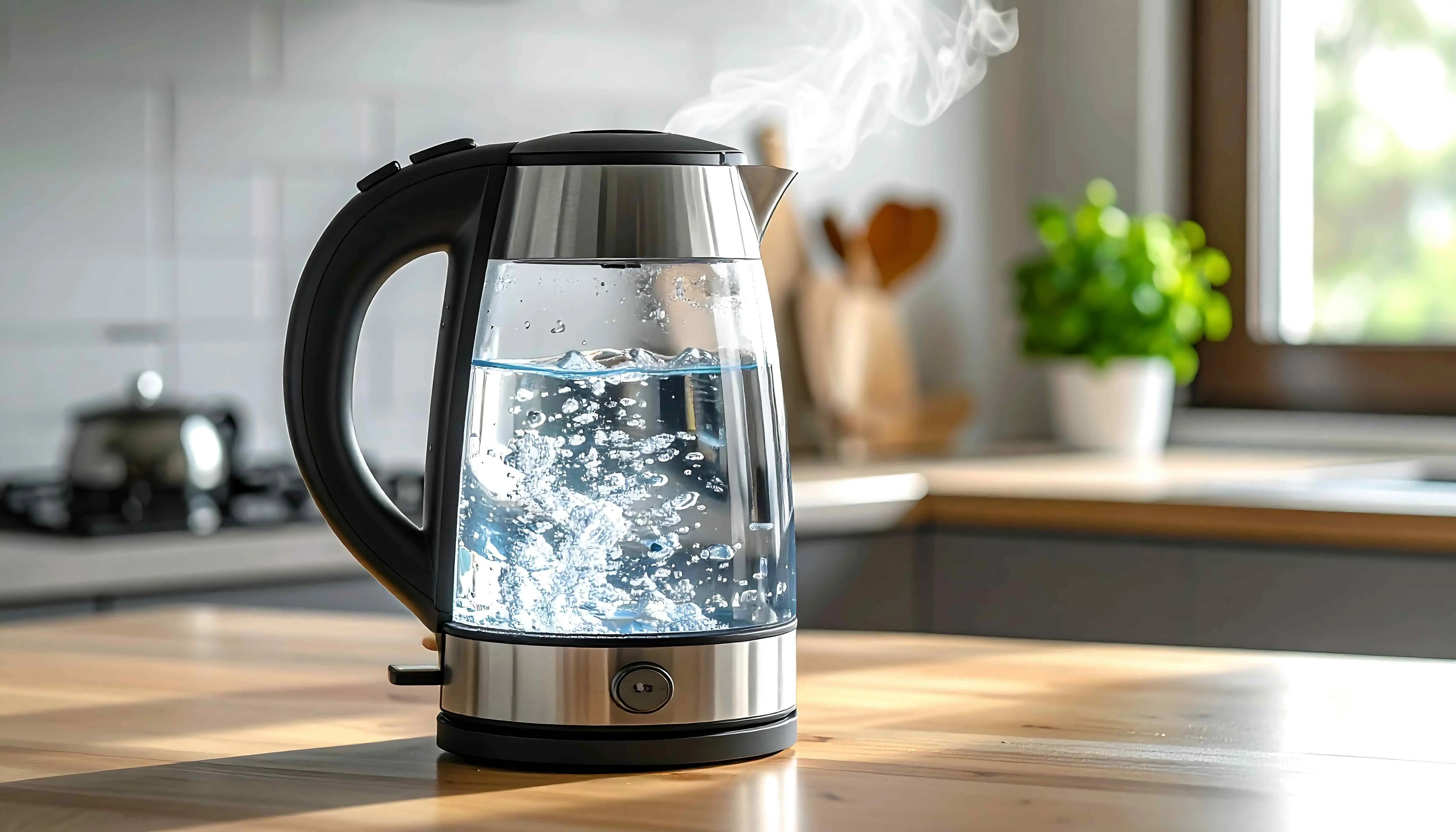
For generations, the old reliable advice for ensuring water safety has been simple: boil it. Boiling is a time-tested method for neutralizing biological threats like bacteria, viruses, and parasites. However, as our industrial landscape has evolved, so have the contaminants in our water supply.
Today, the primary concern for many households isn't just germs—it’s PFAS (Per- and Polyfluoroalkyl Substances). These "forever chemicals" have permeated global water sources, leading many to wonder if a rolling boil is enough to keep their families safe.
The short answer is a definitive no. In fact, boiling water may actually make PFAS contamination worse. In this guide, we will dive deep into the science of PFAS, why traditional methods fail, and the specific filtration technologies like Reverse Osmosis (RO) that actually work.
1. What Are PFAS and Why Are They Called “Forever Chemicals”?
PFAS are a group of more than 12,000 synthetic chemicals that have been used in industrial and consumer products since the 1940s. Their defining characteristic is the carbon-fluorine bond, one of the strongest chemical bonds in nature.
Common Sources of PFAS
Because PFAS are exceptionally good at resisting heat, water, and grease, they are found in a staggering array of products:
-
Aqueous Film-Forming Foams (AFFF): Used for firefighting at military bases and airports.
-
Non-stick Cookware: Specifically those using Teflon or similar coatings.
-
Water-Repellent Clothing: Gore-Tex and other "weatherproof" fabrics.
-
Food Packaging: Grease-resistant paper, fast-food wrappers, and microwave popcorn bags.
-
Stain-Resistant Carpets: Treatments used in upholstery and flooring.
Why They Matter: The Health Impact
PFAS do not break down in the environment or the human body. Instead, they bioaccumulate, meaning they build up over time. According to the EPA and health researchers, long-term exposure to even trace amounts of PFAS can lead to:
-
Metabolic Issues: Increased cholesterol levels and obesity risks.
-
Immune System Suppression: Reduced vaccine response in children.
-
Hormonal Disruption: Interference with natural hormones and thyroid function.
-
Cancer Risks: Increased risk of kidney or testicular cancer.
-
Developmental Effects: Low birth weight and developmental delays in infants.
2. Why Boiling Water Does Not Remove PFAS
It is a common misconception that heat "cleans" water of all impurities. While 100°C (212°F) is lethal to living pathogens, it is insufficient for complex chemical compounds.
Extreme Heat Resistance
The carbon-fluorine bond that makes PFAS useful for non-stick pans also makes them incredibly stable. To thermally destroy PFAS, temperatures typically need to exceed 1000°C. A kitchen stove simply cannot reach the energy levels required to break these chemical bonds.
The Concentration Effect
When you boil water, the liquid turns into steam (water vapor), which is pure H₂O. However, PFAS are not volatile, they do not evaporate with the steam.
-
Scenario: If you start with 1 liter of water containing 20 nanograms of PFAS and boil it down until only 0.5 liters remain, you still have 20 nanograms of PFAS.
-
Result: You now have double the concentration of chemicals in your glass. By boiling your water, you are effectively distilling the toxins.
Lack of Filtration
Boiling is a disinfection process, not a filtration process. It does not physically remove heavy metals, microplastics, or synthetic chemicals. It only changes the state of the biological matter within the water.
3. Common Misconceptions About PFAS Removal
Beyond boiling, several other "home remedies" are often incorrectly cited as solutions for PFAS:
-
Lemon or Vinegar: Adding acid to water may change the taste or kill some bacteria, but it has zero impact on the molecular structure of "forever chemicals."
-
Standard Pitcher Filters: While some basic carbon pitchers improve taste by removing chlorine, many are not rated to handle the microscopic size and chemical persistence of PFAS.
-
UV Light: UV systems are excellent for killing DNA in bacteria, but they do not "break" chemical compounds like PFOA or PFOS.
4. How to Actually Remove PFAS: Proven Solutions
If boiling is off the table, how can you protect your home? The EPA and independent water quality experts point toward two primary technologies: Activated Carbon and Reverse Osmosis.
Granular Activated Carbon (GAC)
Carbon filters work through adsorption. The PFAS molecules "stick" to the surface of the carbon as water passes through.
-
Pros: Cost-effective, easy to install.
-
Cons: Must be changed frequently. Once the carbon is "full," PFAS can leak back into the water (a process called breakthrough).
Reverse Osmosis (RO) — The Gold Standard
Reverse Osmosis is widely considered the most effective residential technology for PFAS removal. It uses a high-pressure pump to force water through a semi-permeable membrane.
-
Pore Size: RO membranes have pores as small as 0.0001 microns. Since PFAS molecules are larger than this, they are physically blocked and flushed away as waste.
-
Multi-Stage Protection: High-quality systems utilize a multi-stage approach:
-
Sediment Stage: Removes rust and sand.
-
Carbon Stage: Adsorbs chemicals and chlorine.
-
RO Membrane: The heart of the system that blocks PFAS, lead, and arsenic.
-
Post-Carbon/Remineralization: Polishes the taste and adds healthy minerals like calcium and magnesium back into the water.
Ion Exchange
Usually found in large-scale industrial or whole-house systems, these resins act like "chemical magnets" to trap PFAS. While highly effective, they are often more expensive and complex to maintain than under-sink RO units.
5. Choosing the Right System: What to Look For
When shopping for a water filter specifically for PFAS, don't just take the manufacturer's word for it. Look for the following:
|
Feature |
Importance |
|
NSF/ANSI 53 or 58 Certification |
Ensures the system is specifically tested for "contaminant reduction," including PFAS. |
|
Multi-Stage Filtration |
A single filter is rarely enough, look for at least 3 to 5 stages. |
|
Flow Rate |
Ensure the system can provide enough gallons per day (GPD) for your family's needs. |
|
Remineralization(Optional) |
RO water is so pure it can be slightly acidic, remineralization balances the pH. |
6. Practical Tips for Reducing Overall PFAS Exposure
While filtering your drinking water is the most important step, you can further reduce your "body burden" by making small lifestyle changes:
-
Audit Your Cookware: Transition from older non-stick pans to stainless steel, cast iron, or ceramic-coated alternatives.
-
Avoid Grease-Resistant Packaging: Minimize the use of microwave popcorn and greasy fast-food wrappers when possible.
-
Check Your Water Report: In the U.S., the Annual Consumer Confidence Report (CCR) from your local utility will often list PFAS levels if they have been tested.
-
Regular Maintenance: If you own an RO system, stick to the filter replacement schedule. A clogged or expired membrane cannot effectively block microscopic chemicals.
Final Thoughts: Taking Control of Your Water Quality
The realization that boiling water doesn't remove PFAS is often a "lightbulb moment" for many homeowners. While it’s a great tool for camping or emergency bacterial alerts, it is powerless against the invisible, industrial chemicals of the modern age.
Investing in a Reverse Osmosis system is no longer just about "better-tasting" water, it is a critical barrier between your family and the persistent "forever chemicals" found in our environment. If you’re ready to make the switch, our NSF-certified 5-stage RO system is a great place to start. It’s built to tackle everything from heavy metals to the toughest PFAS, ensuring your home remains a sanctuary of health and safety By combining advanced filtration with smart lifestyle choices, you can ensure that your home remains a sanctuary of health and safety.


