

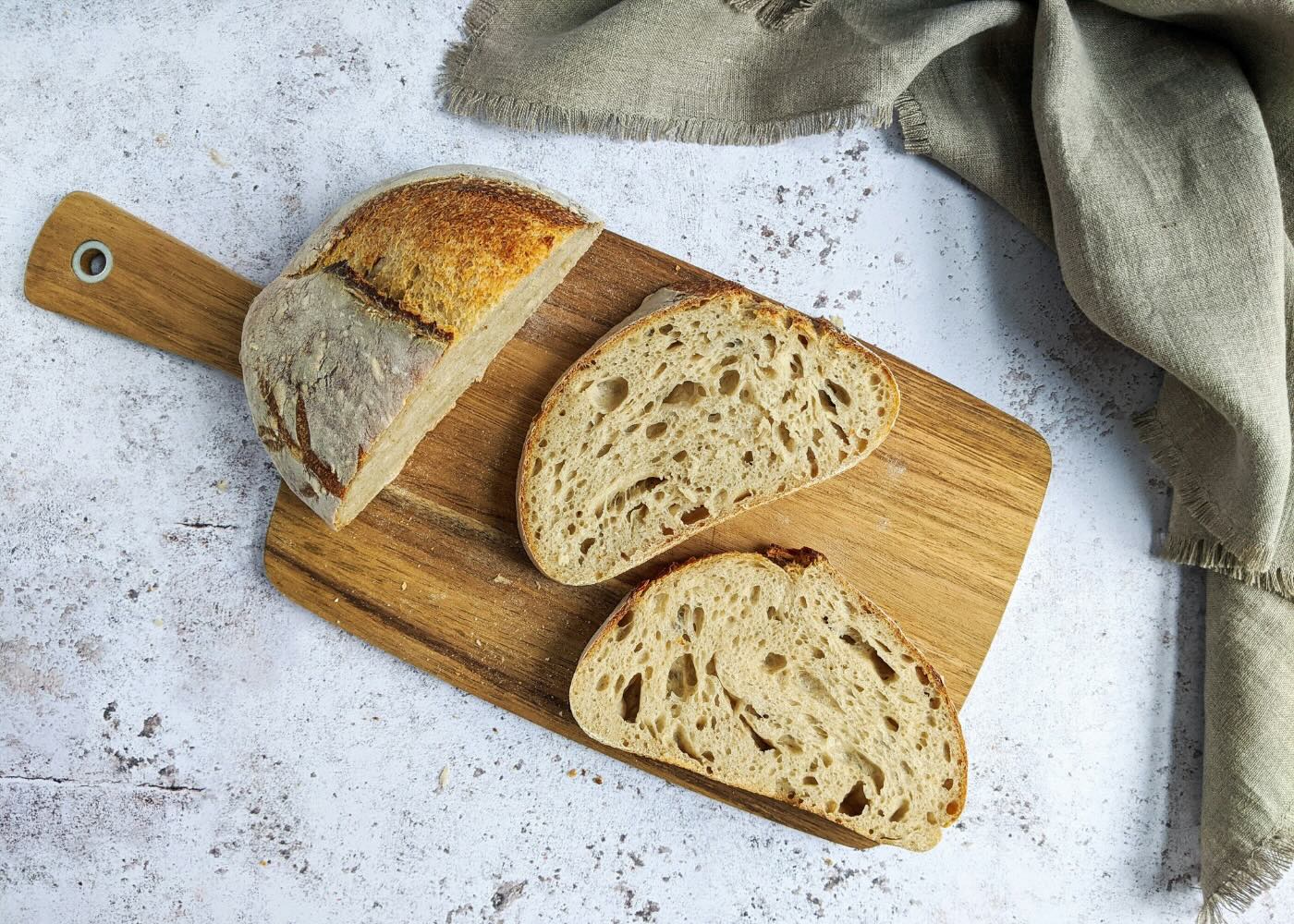
Water makes up 60% to 80% of your dough weight. It is not only a wet ingredient that hydrates flour, it is also the biochemical engine driving fermentation, gluten development, and crumb structure. Unfiltered tap water which is laden with disinfectants, fluctuating hardness, and heavy metals can disrupt wild yeast activity and alter dough elasticity.
Using Reverse Osmosis (RO) water with proper remineralization offers a reliable solution for consistent, bakery-quality sourdough at home.
1. Disinfectants vs. Microbes
Sourdough relies on a delicate symbiotic colony of wild yeast and lactic acid bacteria (LAB). These microorganisms metabolize simple sugars in flour to produce carbon dioxide, organic acids, and complex flavor precursors.
Municipal tap water treatment relies on chemicals like chlorine and chloramine to kill bacteria in municipal pipes. While safe for human consumption, these disinfectants do not distinguish between harmful pathogens and beneficial starter microbes.
Chlorine evaporates if tap water is left out overnight, but modern municipal water systems increasingly use chloramine (a compound of chlorine and ammonia), which does not evaporate. Chloramine inhibits lactic acid bacteria, slowing acid development and weakening the carbon dioxide gas bubbles necessary for dough expansion.
A multi-stage reverse osmosis process almost completely eliminates chlorine, chloramine, heavy metals, and trace pharmaceutical residues, creating a neutral environment where wild yeast can thrive.
2. Managing Water Hardness: Balancing Gluten Structure and Elasticity
Water hardness refers to the concentration of dissolved minerals, primarily calcium and magnesium. According to professional references, the ideal water hardness for bread baking falls between 50 and 150 ppm (parts per million).
Extreme mineral concentrations can impact dough dynamics:
|
Water Mineral Level |
Effects on Sourdough Dough Chemistry |
Resulting Crumb & Rise |
|
Excessively Hard Water (>200 ppm) |
Calcium/magnesium over-tighten gluten bonds; slows water absorption. |
Dense crumb, tight structure, restricted expansion during oven spring. |
|
Pure Deionized / Pure RO (0 ppm) |
Lack of mineral cations yields weak cross-linking between proteins. |
Slack, sticky, unmanageable dough that struggles to hold shape. |
|
Balanced Remineralized Water(50–150 ppm) |
Optimal ionic strength reinforces glutenin and gliadin networks. |
Strong gas retention, open crumb, tender chew, and maximum rise. |
Using 100% pure RO water (0 ppm) can result in slack, overly soft dough because proteins require trace minerals to form strong structural bonds. Conversely, using excessively hard municipal tap water tightens the gluten network, preventing maximum volume.
The ideal approach involves reverse osmosis followed by controlled remineralization, providing clean water with balanced mineral levels for predictable hydration.
3. Optimizing pH for Starter Health and Maillard Browning
The pH of your mixing water directly affects enzyme activity during autolyse and fermentation.
Wild yeast and lactic acid bacteria prefer a slightly acidic to neutral pH environment (6.0 to 7.0). Highly alkaline tap water (often over 8.0 pH due to municipal buffering agents) acts as a buffer against natural acidity, forcing the starter to work harder to lower the pH. This delays bulk fermentation and alters dough extensibility.
Maintaining neutral water pH supports:
-
Alpha-Amylase Activity: Enzymes break down starches into fermentable maltose efficiently.
-
Protease Modification: Proteins break down at controlled rates, producing an extensible dough that stretches during gas expansion without tearing.
-
Enhanced Maillard Reaction: Proper acid balance frees up amino acids and simple sugars, creating a golden, caramelized crust with complex flavor notes during baking.
Precision Water Filtration for Home Bakers
Achieving consistent water quality requires high-performance filtration. The Filter United VIVA21 Series provides precision water treatment designed for home baking and drinking needs.
Choosing the Right System for Your Kitchen
-
For Pure Filtration: The VIVA21 5-Stage WQA-Certified Reverse Osmosis System uses a high-rejection RO membrane to eliminate up to 99% of contaminants, including chloramines, heavy metals, fluoride, and microplastics.
-
For Baking & Hydration: The VIVA21 6-Stage Remineralization Reverse Osmosis System adds a balanced post-filter that restores trace calcium and magnesium minerals. This yields an ideal mineral concentration, better for sourdough fermentation.
Maintain system performance with genuine VIVA21 Complete Filter Sets, Pre-Filter Sets, and specialized accessories to ensure consistent water quality for every bake.
Quick Reference: Baking Adjustments for Water Types
If you are transitioning from tap water to remineralized RO water, consider these minor adjustments:
-
Monitor Bulk Fermentation: Pure, chloramine-free water allows wild yeast to ferment more efficiently. Pay attention to dough volume rather than relying solely on time, as fermentation may move faster.
-
Hydration Ratio: Balanced mineral water absorbs reliably into flour proteins. If your dough previously felt sticky due to soft or alkaline water, you may find it holds shape better at 75% to 80% hydration.
-
Starter Feedings: Refresh your starter using remineralized RO water to maintain consistent bubbling, volume increase, and sour flavor development.
Improve Your Baking Consistency
Great sourdough depends on controlling variable factors. While flour choice and fermentation schedules receive significant focus, water quality remains a foundational element.
By removing chlorine and chloramines while balancing mineral content and pH, the Reverse Osmosis Systems help provide the consistent water profile necessary for optimal rise, open crumb structure, and flavor development in every loaf.


