

In 2026, water has moved beyond its role as a background utility and stands as the strategic core of global conflict. The perceived reliability of urban infrastructure is being dismantled by a harsh new reality: the systems powering our daily lives are dangerously exposed to modern security threats.
Current global confrontations have transcended energy markets and digital firewalls to target a more intimate frontline. From the Persian Gulf to the borders of Eastern Europe, water infrastructure is now a deliberate physical target.
1. When the Tap Becomes a Target
The first week of March 2026 highlighted a troubling shift in the geography of modern conflict, as water infrastructure increasingly entered the scope of reported hostilities.
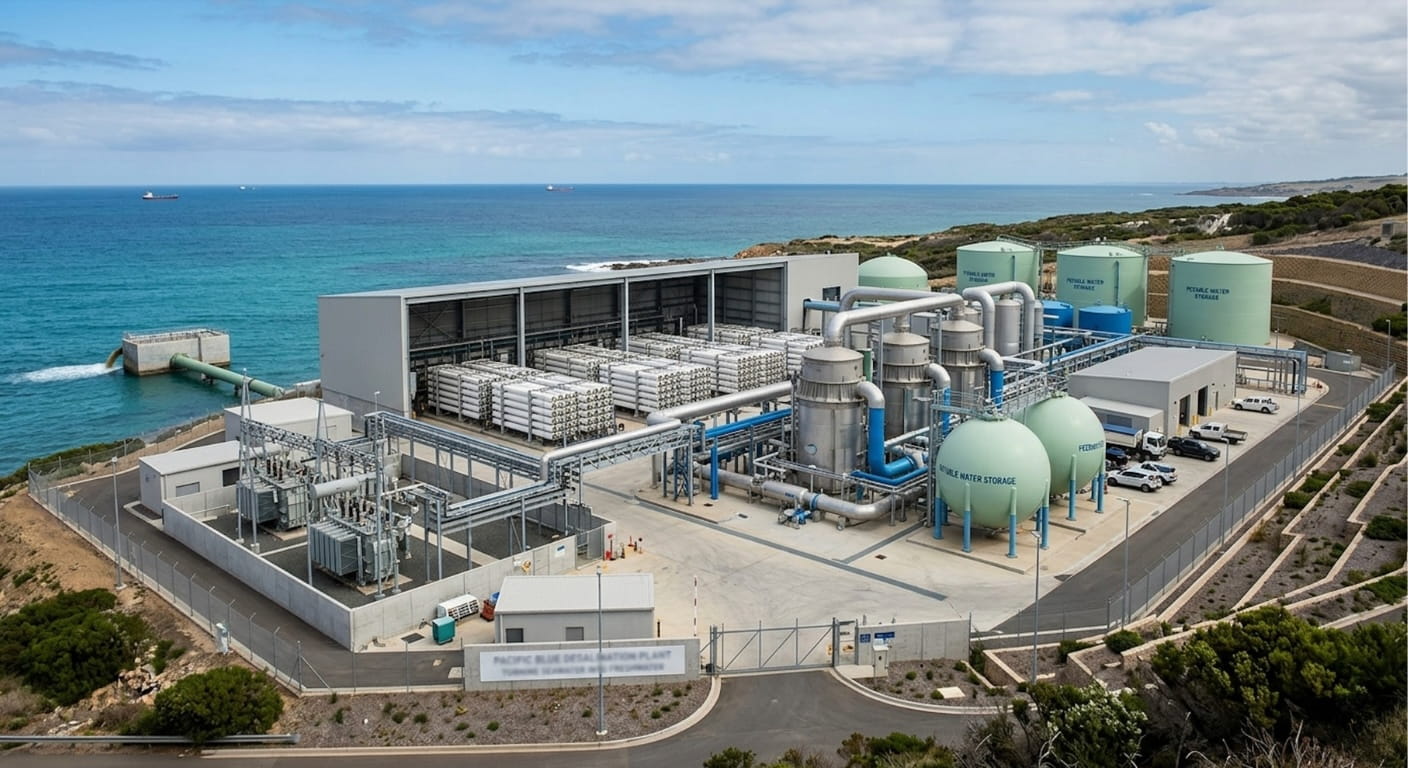
On March 7, Iranian officials reported a targeted strike on desalination facilities on Qeshm Island, alleging involvement by U.S. forces. Local reports indicated that the incident disrupted water access for dozens of villages, underscoring the vulnerability of communities that rely on centralized desalination systems.
Less than 24 hours later, on March 8, the Kingdom of Bahrain accused Iran of carrying out a retaliatory drone strike on a major freshwater desalination facility. Although details remain contested, the incident drew attention to the systemic risks faced by nations where over 90% of drinking water is derived from seawater desalination. In such contexts, even temporary disruptions can have far-reaching implications for public health and daily life.
These developments raised concerns about the potential for broader regional spillover, particularly as water systems become increasingly interconnected. There are also growing concerns around cyber vulnerabilities in water systems, as increasing digitalization exposes infrastructure to new forms of disruption. These events have prompted renewed scrutiny of what we might call the "Fragility of the Tap". We are learning that in a volatile world, the distance between a functioning city and a water crisis is measured in hours, not days.
2. Infrastructure Interdependence
To understand why water security is so precarious, we must look at what engineers call "Infrastructure Interdependence". Modern water supply is not a standalone service, it is a "System of Systems."
To deliver a single gallon of water to a high-rise apartment, several invisible chains must remain unbroken:
-
The Energy Chain: Large-scale water treatment and desalination require massive amounts of electricity. When a regional power grid fluctuates or suffers a blackout due to conflict, the pumps stop.
-
The Chemical Chain: Purifying municipal water relies on a complex global supply chain of chlorine, coagulants, and pH adjusters. If logistics are disrupted by blockades or sanctions, the quality of "treated" water can degrade rapidly.
-
The Physical Chain: Pipelines are static, fixed targets. Unlike digital data, water cannot be rerouted through a different "server" if a main artery is damaged.
This interdependence means that a crisis in the energy sector is, by definition, a crisis in the water sector. Our homes are only as secure as the furthest, most vulnerable link in this global chain. When the grid trembles, the water in our pipes reflects that instability.
3. The Era of "Water Bankruptcy" and Secondary Contamination
In January 2026, the United Nations University (UNU) released its landmark report on "Global Water Bankruptcy". The report highlights a grim reality: we are entering an era where the demand for clean water has entered a state of irreversible "debt".
However, the most pressing concern in a conflict zone isn't just the "cutoff" of water, it is Secondary Contamination. Warfare introduces a cocktail of toxins into the environment that municipal systems were never designed to handle. Fuel runoff from damaged refineries, heavy metals from munitions, and biological risks from compromised sanitation systems can seep into aquifers.
According to data from UN-Water, these contaminants can linger in aging municipal infrastructure for years. In Eastern Europe and the Middle East, humanitarian warnings in early 2026 emphasized a heartbreaking struggle: families weren't just searching for water, they were searching for water pure enough for medical hygiene and infant formula. When the primary treatment plants are operating under duress, the "safety" of municipal water becomes a variable, not a constant.
4. The Final-Inch Buffer: Building Household Resilience
In a world where large-scale systems are becoming increasingly complex and unpredictable, resilience is no longer built solely at the level of nations or cities. It must also exist at the level of the home.
While no household solution can replace municipal infrastructure, there is growing recognition that localized safeguards can play a meaningful role in reducing everyday uncertainty. Engineers often describe this approach as layered resilience: rather than relying on a single system, multiple smaller protections work together to create stability.
Within this framework, point-of-use water treatment becomes less about replacement, and more about refinement and assurance.
Reverse Osmosis (RO), for example, operates as a highly precise filtration layer, capable of removing a wide spectrum of dissolved solids, contaminants, and residual impurities that may fluctuate within upstream systems. When paired with a pressurized storage tank, it also provides a limited but valuable buffer against short-term disruptions, such as temporary drops in water pressure or brief advisories.
Importantly, certain mechanically driven RO configurations can continue operating without direct electrical input, relying instead on existing line pressure. This allows them to remain functional in scenarios where power stability is uncertain.
These systems do not eliminate systemic risk. But they do help narrow the gap between uncertainty and daily life, ensuring that what reaches the glass is more consistent, more controlled, and less exposed to external variability.
In an interconnected world, resilience is rarely absolute. More often, it is built quietly in the final steps of a much larger chain.
5. Resource Sovereignty: Redefining Everyday Security
As global systems grow more interconnected, the definition of comfort is beginning to shift. It is no longer defined solely by convenience or technological sophistication, but increasingly by something more fundamental: confidence in the essentials of daily life.
Water, as the most basic of these essentials, sits at the center of this shift. Not because scarcity is universal, but because variability across quality, reliability, and infrastructure stability has become more visible.
In this context, the idea of Resource Sovereignty is emerging, not as self-sufficiency in the absolute sense, but as a measured degree of control at the point of use. For households, this does not mean disconnecting from public systems. Rather, it means complementing them with thoughtful safeguards that provide consistency, predictability, and peace of mind.
Just as we design our homes to regulate temperature, light, and air quality, attention is increasingly turning toward water, not as a given, but as a system that benefits from intentional design. At FilterUnited, this philosophy is simple. We work at the final step—refining, safeguarding, and supporting the water that reaches you.
Because in an uncertain world, clarity at the point of use is not a luxury. It is a form of quiet, everyday security.


