

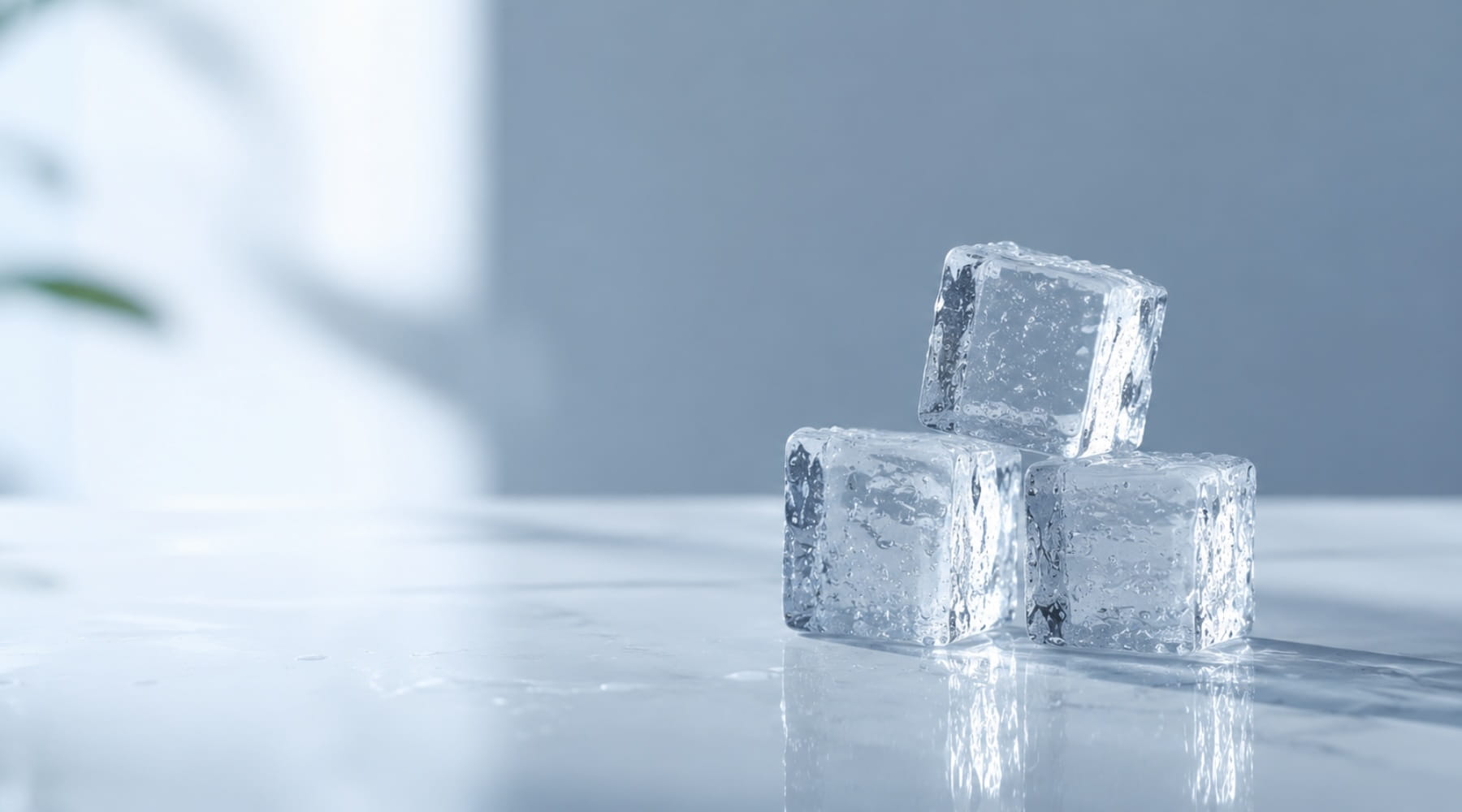
When you reach into your freezer on a hot summer afternoon, you probably don’t think twice about popping a couple of ice cubes into your glass. We rely on ice to make our water refreshing, our iced coffee crisp, and our drinks enjoyable.
But have you ever paused to ask yourself: Is tap water ice actually safe to consume?
Many people assume that freezing water kills off bacteria and removes impurities. Unfortunately, that’s a common misconception. Freezing water preserves more than just coldness, it can freeze impurities in place.
Let’s dive into what’s really hiding inside standard tap water ice, whether boiling your water helps, and how you can get crystal-clear, clean ice at home every single time.
Does Freezing Water Kill Bacteria and Impurities?
There is a widespread belief that freezing tap water acts as a natural purifier. It sounds logical: extreme cold feels like it should destroy micro-organisms just like extreme heat does.
However, freezing does not sanitize water.
While cold temperatures cause bacteria, viruses, and parasites to go dormant, many microscopic organisms can easily survive in sub-zero conditions. Once that ice cube melts in your drink at room temperature, those dormant bacteria wake back up.
Furthermore, non-living contaminants like heavy metals, chlorine, dissolved salts, and microplastics are completely unaffected by freezing. In fact, as water freezes into ice, dissolved minerals often get trapped inside, which is precisely why home-made tap water ice often looks cloudy or leaves a chalky residue at the bottom of your glass.
What Could Be Hiding Inside Your Tap Water Ice?
Tap water in most modern municipalities undergoes rigorous treatment to meet public health standards. However, "safe to drink" doesn't always mean free from unwanted taste, odor, or microscopic trace elements.
Depending on where you live and the condition of your home’s plumbing, tap water ice can contain:
-
Chlorine and Chloramines: Municipal plants use these chemicals to disinfect water. While necessary for delivery, they leave behind a distinct chemical smell and metallic taste in your ice.
-
Heavy Metals (Lead, Copper, Arsenic): Aging pipes in municipal delivery systems or within older homes can leach heavy metals directly into your tap water.
-
Dissolved Solids (TDS): High levels of minerals like calcium, magnesium, and nitrates create "hard water", leading to cloudy ice cubes and off-tasting drinks.
-
PFAS ("Forever Chemicals") and Microplastics: Emerging environmental contaminants are increasingly found in water sources worldwide, resisting traditional municipal filtration.
Clear Ice vs. Cloudy Ice: Is White Ice Bad for You?
Have you ever noticed how commercial ice from the store is completely see-through, while your home freezer produces white, cloudy cubes?
Cloudy ice isn't automatically dangerous, but it is an indicator of what’s in your water. The white cloudiness in the center of an ice cube is caused by two things: trapped air bubbles and concentrated dissolved minerals (TDS).
When an ice tray freezes from the outside in, pure water molecules freeze first, pushing air and dissolved minerals toward the center. As the core finally freezes, those impurities get trapped, creating that opaque white center.
While mineral-rich cloudy ice is usually safe, high levels of dissolved minerals can significantly spoil the flavor of delicate beverages like fine espresso, spirits, or clear iced teas.
Does Boiling Tap Water Before Freezing Work?
A popular home trick for making better ice is boiling tap water first. People often wonder if this solves the safety and clarity problem.
Boiling tap water does kill live bacteria and pathogens, and it drives out dissolved gasses, which makes your ice noticeably clearer.
However, boiling does not remove chemical contaminants or heavy metals.
In fact, boiling water causes pure water to evaporate as steam, which actually concentrates remaining dissolved solids, heavy metals, and fluoride in the leftover liquid. If your main concern is chemical purity or mineral taste, boiling isn't a long-term solution.
How to Get Pure, Safe, and Crystal-Clear Ice at Home
If you want ice that is genuinely free of unpleasant odors, heavy metals, and trace contaminants, the key isn't how you freeze it, it's how you filter the water before it freezes.
While standard carbon pitcher filters improve basic taste by removing chlorine, they leave smaller dissolved particles and heavy metals behind. To get true purity, you need advanced filtration.
The Best Solution: Reverse Osmosis (RO) Filtration
A Reverse Osmosis (RO) water purifier is widely considered the gold standard for home water treatment. RO systems work by forcing tap water through a semi-permeable membrane with microscopic pores (as small as 0.0001 microns).
Here is why RO water makes superior ice:
-
Removes up to 99% of Contaminants: An under-sink RO system reduces heavy metals (lead, arsenic), PFAS, fluoride, nitrates, microplastics, and dissolved salts.
-
Eliminates Odors & Off-Tastes: By stripping away chlorine and organic compounds, your ice tastes pure and neutral, letting your drink’s actual flavor shine through.
-
Yields Exceptionally Clear Ice: Removing Total Dissolved Solids (TDS) eliminates the cloudy core, giving you denser, clearer, and slower-melting ice cubes.
-
Protects Your Built-in Ice Maker: If connected to your refrigerator’s internal ice maker, RO water prevents scale buildup, extending the lifespan of your appliance.
Simple Tips for Maintaining Fresh Ice at Home
Even if you use purified RO water, poor freezer habits can contaminate your ice after it’s made. Keep these best practices in mind:
-
Keep Trays Covered: Ice acts like a sponge for odor. Uncovered ice trays will absorb smells from open food items in your freezer.
-
Clean Ice Bins Regularly: Wash your ice trays or refrigerator ice storage bins with warm water and mild soap every few weeks.
-
Rotate Your Ice: Don't let old ice sit at the bottom of the bin for months, stale ice accumulates freezer odors over time.
-
Replace Filters on Time: If you use an under-sink RO water purifier or inline fridge filter, replace the filter cartridges according to manufacturer guidelines to ensure peak performance.
The Bottom Line
Is tap water ice safe? For most households connected to monitored municipal supplies, tap water ice won't make you immediately sick, but it often carries unwanted chlorine, heavy metals, and dissolved minerals that affect both purity and taste.
If you want peace of mind, pristine clarity, and beverage-quality ice every single day, investing in a high-efficiency under-sink Reverse Osmosis water filtration system is the most reliable way to upgrade your home drinking water and ice supply.


