

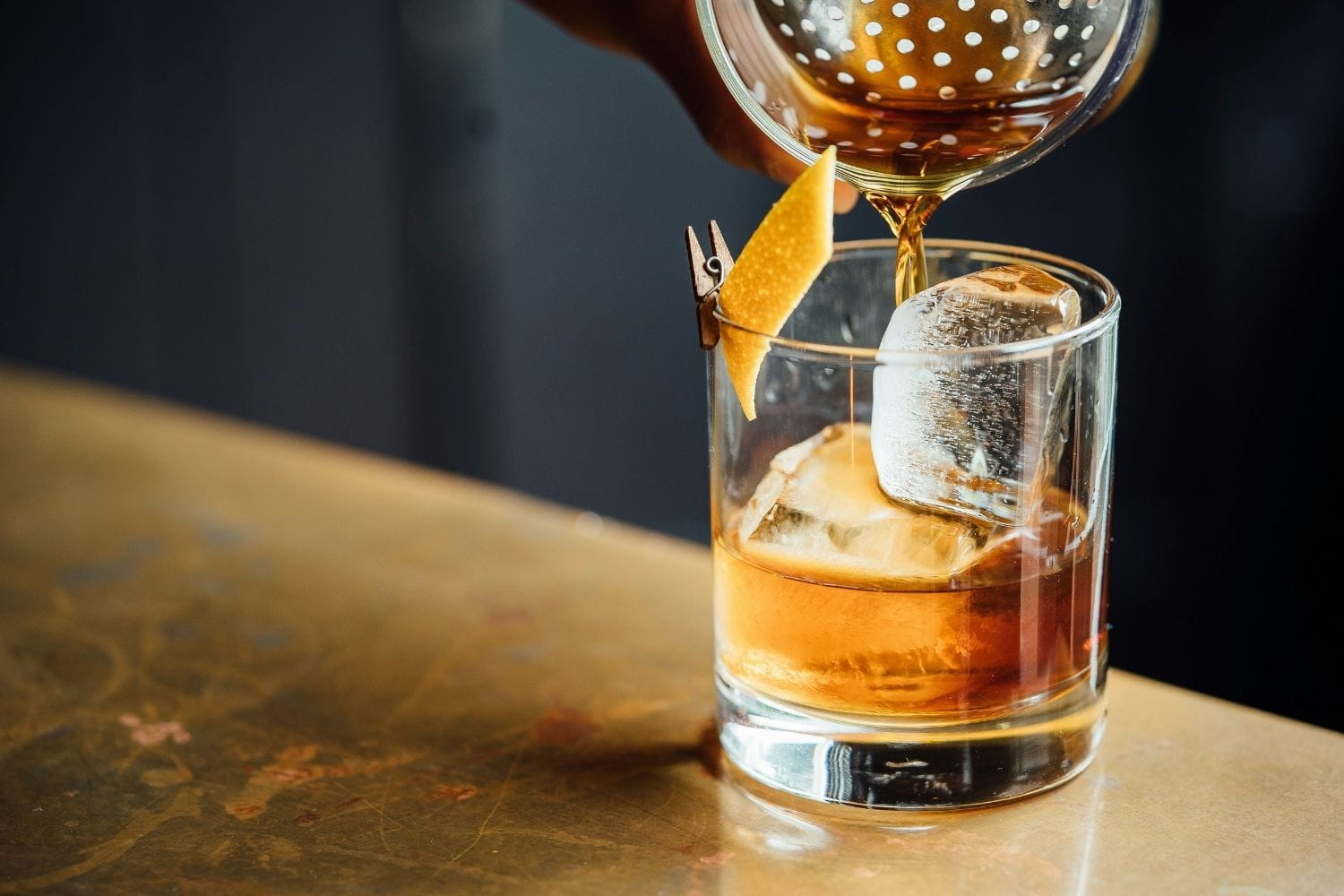
Whether you are pouring a rare single malt Scotch or crafting a classic Old Fashioned at home, every detail matters. You carefully select your spirits, precision-measure your bitters, and temperature-control your glass. Meanwhile, don’t forget one of the largest ingredients in your drink: water.
Ice is a dynamic ingredient that gradually dilutes, reshapes, and defines the flavor profile of your drink. If you are freezing standard tap water, residual minerals, disinfectants, and dissolved gases will directly impact the delicate aromatics of your spirits.
Here is a look at why Reverse Osmosis (RO) water creates superior craft ice, how chemistry influences dilution, and how upgrading your home water filtration elevates every sip.
The "Cloudy" Ice Cube
When you freeze unfiltered tap water, the resulting ice cube is often cloudy, white, and uneven in the center. That cloudiness is more than just an aesthetic issue, it is a visual map of dissolved impurities.
According to data from the U.S. Geological Survey (USGS), over 85% of American homes have hard water containing elevated levels of calcium, magnesium, carbonates, and trace heavy metals. Municipal tap water also contains residual chlorine or chloramines added during treatment.
As water freezes into an ice crystal lattice, pure water molecules align first, forcing dissolved minerals, air bubbles, and chemical impurities toward the center. This creates two distinct problems for cocktail enthusiasts:
-
Off-Flavors: As the ice melts, municipal chlorine, organic compounds, and heavy minerals dilute directly into your drink, competing with subtle barrel-aged esters or botanical gin aromatics.
-
Structural Weakness: Microscopic air pockets and trapped minerals weaken the crystal structure of the ice, causing it to crack and melt unpredictably fast.
How Fast Ice Melts: The Mechanics of Dilution
In cocktail making and whiskey tasting, controlling dilution is everything. Master distillers spend years aging spirits in oak barrels to achieve a precise alcohol level (alcohol by volume, or ABV). When you add ice, you want it to chill the drink quickly without turning it watery before you can savor the flavors.
Cloudy ice made from tap water creates two major issues for dilution:
Unpredictable and Rapid Melting
Because cloudy ice is filled with microscopic air bubbles and uneven mineral pockets, its internal structure is porous and weak. When warm room-temperature liquor hits a cloudy ice cube, the thermal shock causes the cube to crack immediately along these internal fault lines. Fragmented ice has far more surface area exposed to the liquid, causing it to melt rapidly and over-dilute your drink in minutes.
The Advantage of High-Density Pure RO Ice
In contrast, water purified through Reverse Osmosis removes almost all dissolved solids and trapped air. When RO water freezes, it forms a solid, uniform ice structure with no weak center or stress cracks. Dense, pure ice melts slowly and predictably from the outside in. This cools your drink down fast while keeping the melt rate under total control, so your second or third sip tastes just as balanced as your first.
Bad Water Hides Good Spirits
Whiskey and craft spirits get their complex aromas such as notes of vanilla, oak, caramel, honey, or peat from years of maturation in wooden barrels. These delicate flavor compounds are balanced delicately within the spirit.
When unfiltered ice melts into your glass, the tap water introduces direct off-flavors that clash with these notes:
-
Chlorine and Chemical Odors: Even tiny traces of municipal chlorine become noticeable as ice melts. Chlorine introduces a subtle chemical smell that mutes the spirit's natural nose and aroma.
-
Hard Mineral Residuals: High levels of calcium and magnesium in hard water can leave a chalky, heavy, or slightly metallic finish on the palate. This alters the smooth mouthfeel the distiller intended.
-
Flavor Masking: Instead of enhancing the drink, tap water impurities compete with the spirit, masking delicate taste notes and flattening the overall flavor profile.
Using pure RO water for your ice provides a completely neutral foundation. It dilutes the spirit naturally without introducing any extra taste, ensuring that 100% of what you smell and taste comes directly from the drink itself.
Tap Pitchers vs. Reverse Osmosis: What Is the Difference?
A common question home bartenders ask is: "Can't I just use a standard countertop pitcher filter or refrigerator door filter?"
While basic water filters are a step up from plain tap water, they work very differently than a dedicated Reverse Osmosis system. Standard pitcher filters rely primarily on basic activated carbon. Carbon is effective at catching chlorine odors, but it allows almost all dissolved hard minerals, heavy metals, and tiny impurities to pass right through into your ice tray.
|
Water Source |
Ice Appearance |
Melting Speed |
Impact on Spirits |
|
Standard Tap Water |
Cloudy with white core |
Fast (cracks easily) |
Leaves chemical or metallic notes; over-dilutes quickly |
|
Basic Pitcher Filter |
Slightly hazy / semi-clear |
Moderate |
Reduces chlorine smell, but hard minerals still affect taste |
|
Reverse Osmosis (RO) |
Crystal Clear & Solid |
Slow & Steady |
Completely neutral; preserves spirit flavor and stays cold longer |
An under-sink Reverse Osmosis system uses high water pressure to force tap water through an ultra-fine membrane with tiny microscopic pores. This process removes up to 99% of dissolved solids, minerals, and contaminants, delivering pristine water that creates true bar-quality clear ice spheres or large cubes right in your home kitchen.
Elevate Your Home Bar with Filter United
If you are looking to bring commercial-grade water quality to your kitchen, Filter United offers advanced filtration engineering designed for home craft beverage enthusiasts and daily hydration alike.
Our flagship VIVA21 Series features high-performance options tailored to your specific water preference:
-
VIVA21 5-Stage WQA-Certified Reverse Osmosis System: Engineered for ultra-pure water production, eliminating up to 99% of contaminants, heavy metals, and dissolved solids for pure ice and clean taste.
-
VIVA21 6-Stage Remineralization Reverse Osmosis System: For those who prefer optimal pH balance, this system purifies water through RO filtration before adding back essential, natural minerals like calcium and magnesium.
Final Thoughts
Great cocktails start long before the pour. By upgrading your water source to a high-purity Reverse Osmosis system, you protect the integrity of your spirits, craft crystal-clear ice, and ensure every glass tastes exactly as the master distiller intended.


