

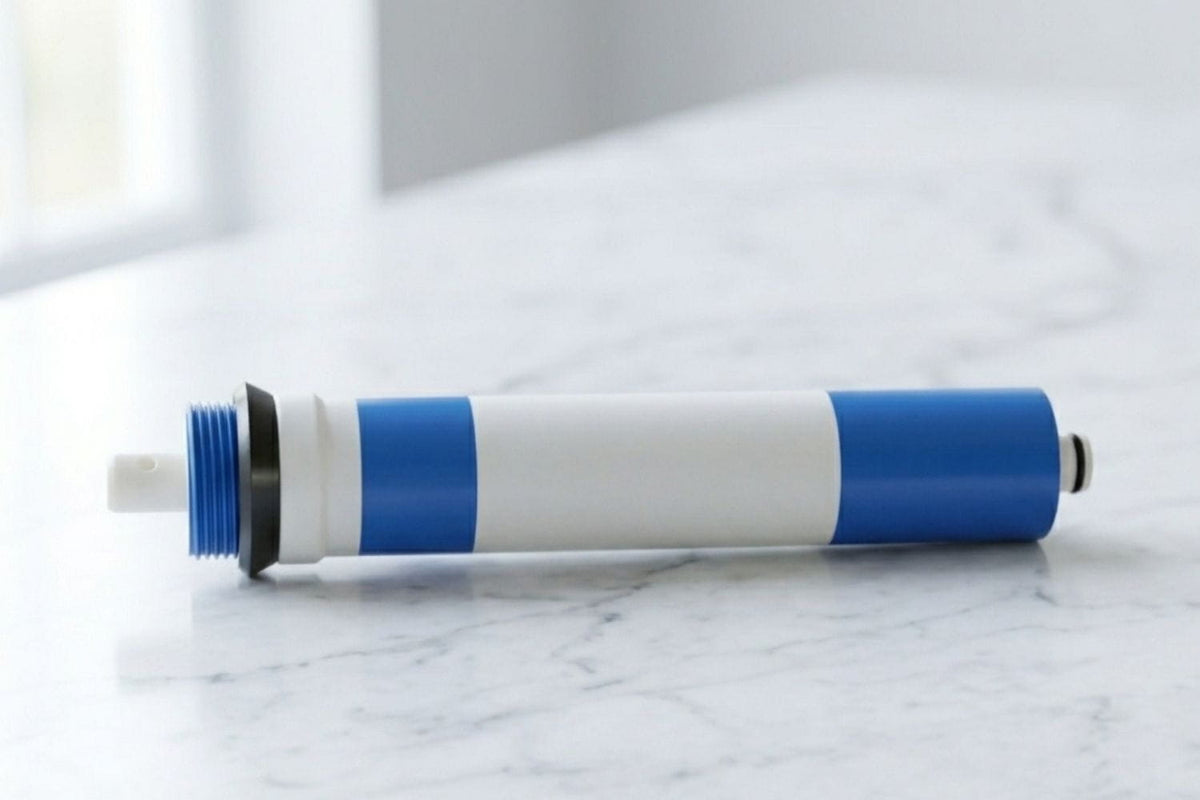
At the heart of every modern reverse osmosis (RO) setup lies a quiet workhorse: the reverse osmosis membrane. When shopping for drinking water systems or maintaining your home setup, understanding how an RO membrane works and knowing when to replace it can save you money, protect your health, and ensure your water always tastes top-tier.
What Is a Reverse Osmosis (RO) Membrane and How Does It Work?
Think of a reverse osmosis membrane as the ultimate bouncer for your drinking water. While standard water filters catch large debris like dirt, sand, and rust, an RO membrane works on a microscopic level.
Technically speaking, most residential RO membranes are made of Thin-Film Composite (TFC) polyamide material. This semi-permeable sheet features tightly woven pores as small as 0.0001 microns. To put that into perspective:
-
A single human hair is about 70 microns wide.
-
Bacteria and viruses range from 0.02 to 2 microns.
-
An RO membrane pore is small enough to block dissolved salts, heavy metals, and invisible micro-contaminants.
How the Filtration Process Works
Under household water pressure, raw tap water is forced through the synthetic layers of the RO membrane. Clean water molecules pass through into your storage tank or glass, while up to 99% of dissolved contaminants, including lead, arsenic, fluoride, nitrates, and microplastics, are swept away down the drain line.
Without a functioning membrane, a reverse osmosis system is essentially just a basic sediment filter.
How Long Does an RO Membrane Last?
On average, a residential reverse osmosis membrane lasts between 2 to 3 years under normal operating conditions.
Unlike standard pre-filters (like sediment or carbon blocks) that require replacement every 6 to 12 months, the RO membrane is built for long-term endurance. However, its actual longevity depends heavily on several environmental and lifestyle factors.
4 Key Factors That Affect RO Membrane Lifespan
Why do some home water filters run smoothly for four years while others clog early? It usually comes down to four primary factors:
1. Incoming Water Quality & Hardness
Your feed water’s composition plays the biggest role in membrane wear. High levels of Total Dissolved Solids (TDS), calcium, magnesium (water hardness), and dissolved iron create physical buildup (known as scaling) on the membrane surface.
2. Pre-Filter Maintenance
An RO membrane relies on "frontline protection". Sediment pre-filters trap physical particles, while activated carbon pre-filters remove chlorine.
-
Why chlorine protection matters: Thin-Film Composite (TFC) membranes are highly sensitive to chlorine. Continuous exposure to chlorine degrades TFC polymers, permanently damaging the membrane. Replacing pre-filters on schedule protects the main membrane from chemical burn.
3. Daily Water Usage Volume
A large family using 10 gallons of purified water daily for cooking, hydration, and ice-making will naturally wear down a membrane faster than a single occupant using 1 gallon a day.
4. Feed Water Pressure & Temperature
RO systems require adequate water pressure (ideally 50 to 80 PSI) to push water through the semi-permeable layer efficiently. Low water pressure forces the system to work harder, increasing wear and brine waste.
5 Clear Signs It’s Time to Replace Your RO Membrane
You don't need a degree in chemistry to figure out when your filter needs changing. Watch out for these common warning signs:
1. A Noticeable Drop in Water Pressure or Flow Rate
If filling your water pitcher suddenly takes twice as long, or if trickles replace your fast stream, the pores in your membrane may be clogged with scale or sediment buildup.
2. The Water Taste or Odor Changes
Pure RO water should taste clean, crisp, and neutral. If you notice a metallic flavor, brackish undertones, or a flat taste, contaminants are likely leaking through worn membrane layers.
3. Rising TDS (Total Dissolved Solids) Levels
The most accurate way to test your membrane is with a simple handheld TDS meter.
-
The Rule of Thumb: Measure the TDS reading of your tap water versus your filtered RO water. A healthy RO membrane should reduce TDS by 85% to 95%. If your tap water reads 300 PPM and your RO water reads above 50–60 PPM, your membrane efficiency has dropped.
4. The RO System Runs Continuously
If your under-sink system won't stop purging water or the drain line runs continuously, it means the system cannot build enough pressure inside the storage tank due to a clogged or damaged membrane.
5. It’s Been Over 3 Years
Even if the water tastes fine, micro-tears in synthetic membranes can develop silently over time. Replacing your membrane every 2 to 3 years prevents subtle contamination leaks.
How to Extend the Life of Your RO Membrane
Replacing a high-quality RO membrane isn't overly expensive, but extending its service life saves money and keeps your filtration running at peak performance. Here are three simple practices:
-
Change Pre-Filters Regularly (Every 6–12 Months): Think of sediment and carbon pre-filters as bodyguards for your membrane. Replacing them cost-effectively prevents heavy debris and chlorine from destroying the membrane layer.
-
Install a Water Softener if You Have Hard Water: If your home tests high for mineral scale, adding a whole-house softener reduces calcium buildup, significantly prolonging membrane health.
Choosing the Right RO System & Filter Replacements
Upgrading your home water filtration setup or selecting reliable replacement components is one of the most important investments you can make for your family's daily health and water safety. At Filter United, we engineer comprehensive home water solutions that seamlessly combine certified safety, extended membrane longevity, and hassle-free DIY installation. Choose the 5-Stage WQA-Certified Reverse Osmosis System for heavy-duty contaminant reduction backed by multi-stage pre-filtration that maximizes membrane lifespan and delivers proven purity, or opt for the 6-Stage Remineralization Reverse Osmosis System to pair deep RO purification with an essential mineral post-filter that restores beneficial calcium and magnesium for perfectly balanced, alkaline drinking water.
To ensure your system performs at its peak year after year, we also provide comprehensive Maintenance Kits designed for effortless upkeep. Whether you need standalone pre-filter sets, complete replacement filter bundles, or high-rejection replacement RO membranes, every component is expertly engineered to fit standard home setups seamlessly. With Filter United, keeping your water crisp, clean, and refreshing is always simple, reliable, and stress-free.
The Bottom Line
Understanding what an RO membrane does and watching for early signs of wear ensures your family always has access to pure, refreshing drinking water. By keeping up with routine pre-filter changes every 6 to 12 months and checking your water’s TDS levels once or twice a year, your RO membrane can easily deliver 2 to 3 years of clean, worry-free hydration.


