

There is no shortage of advice about drinking water filters, and unfortunately, not all of it is helpful. One person says a basic pitcher is all you need. Another insists that reverse osmosis removes “everything good” from water. Then there are claims that if your tap water meets government standards, there is no reason to filter it at all.
A water filter is not automatically necessary for every household, and no single filtration method is the right answer for every water concern. The best choice depends on what is actually in your water, which contaminants you want to reduce, and what kind of system fits your home and daily routine.
To make the process easier, let’s look at some of the most common water filtration myths, what the evidence actually tells us, and what you should pay attention to when choosing a home water filter.
Myth 1: “My tap water meets EPA standards, so I don’t need a filter”
The reality: Misleading, not necessarily false.
If your water comes from a regulated public water system, it is subject to federal and state oversight. Meeting applicable drinking water standards is important, and it means the water system is required to manage regulated contaminants according to established rules.
But “meets standards” and “contains absolutely nothing you would prefer to reduce” are not the same thing.
The EPA regulates many drinking water contaminants, but not every substance that may be present in water is currently regulated. The agency’s Contaminant Candidate List, for example, tracks substances known or anticipated to occur in public water systems that are not currently subject to national drinking water regulations.
There is also the question of what happens after water leaves the treatment plant. Water may travel through distribution pipes and then through a building’s or home’s plumbing before reaching your faucet. Conditions inside that plumbing can affect water quality, particularly in older properties with certain types of pipes or fixtures.
PFAS is another example of why water quality is not always a simple yes-or-no question. Federal PFAS drinking water requirements have also been evolving, with the EPA announcing proposed changes in 2026 related to compliance and the scope of certain PFAS regulations.
That does not mean every tap water supply is unsafe. It means that a home filter can serve a different purpose: reducing specific contaminants based on your household’s concerns, local water conditions, or preference for additional point-of-use treatment.
A good first step is to review your local water utility’s Consumer Confidence Report and, if you rely on a private well or have concerns about your home plumbing, consider appropriate water testing before choosing a filtration system.
Myth 2: “All water filters basically do the same thing”
The reality: False.
This is probably one of the most important misconceptions to clear up.
“Water filter” is a broad term. Different technologies are designed to address different water quality concerns, so the type of filter matters just as much as the brand name on the box.
Here is a simplified comparison:
|
Filtration Type |
Often Used to Reduce |
What to Keep in Mind |
|
Activated carbon |
Chlorine, taste, odor, and certain other contaminants depending on the product |
Performance varies by filter media and certified contaminant claims |
|
Ultrafiltration (UF) |
Sediment, particles, and certain microorganisms depending on membrane specifications |
Generally does not substantially reduce dissolved salts or lower TDS |
|
Reverse osmosis (RO) |
Total dissolved solids and a range of dissolved contaminants, depending on the system’s verified claims |
Produces reject water and requires regular filter and membrane maintenance |
A basic pitcher may be perfectly suitable if your main goal is improving chlorine taste or odor. That does not mean it will provide the same contaminant reduction as every under-sink system.
The same principle applies to reverse osmosis. RO systems are designed to reduce dissolved substances, but you should still check the specific system’s certified or independently verified claims rather than assuming it removes every possible contaminant.
For example, NSF/ANSI 58 is the principal standard covering point-of-use reverse osmosis drinking water systems. It includes requirements related to material safety, structural integrity, TDS reduction, efficiency, recovery, and certain optional contaminant-reduction claims. Those optional claims can include substances such as lead, nitrate/nitrite, fluoride, arsenic, and others, but certification should be checked at the product level.
The lesson is simple: buy a filter for the contaminants you want to address, not just the word “filter” on the packaging.
Myth 3: “Reverse osmosis removes healthy minerals, so RO water is unhealthy”
The reality: Partly true, but the conclusion is misleading.
Reverse osmosis is effective partly because its membrane reduces many dissolved substances in water. That includes dissolved minerals such as calcium and magnesium.
So, yes—RO water generally contains fewer dissolved minerals than the water entering the system.
But it does not automatically follow that RO water is unhealthy.
The nutritional importance of minerals depends heavily on a person’s overall diet, and drinking water is only one potential source of minerals. Whether the mineral content of water is an important consideration for you may also depend on your diet, local source water, and personal preferences.
Some people simply prefer the taste of water that contains more dissolved minerals. For that reason, certain RO systems include a remineralization stage that adds selected minerals back after the main purification process.
This can change the taste and mineral profile of the finished water, but it should not be viewed as a substitute for a balanced diet or as a universal requirement for every RO user.
In other words, there is no need to treat low-mineral RO water as automatically “bad”, and there is no need to assume that every household must have a remineralization filter. It is largely a matter of water preference and system design.
Myth 4: “A water filter is too expensive and too difficult to maintain”
The reality: Usually overstated.
The upfront cost of a filtration system can certainly vary. A simple pitcher costs far less than a multi-stage under-sink system, and installation requirements also differ.
But maintenance is often more manageable than people expect.
Most home filtration systems follow a predictable maintenance schedule: replace pre-filters and post-filters at recommended intervals, monitor the RO membrane or other long-life components, and follow the manufacturer’s sanitation and service instructions.
The important part is not simply how often a filter needs replacement, it is whether replacement filters are easy to find and whether the ongoing cost is clear before you buy.
This is also why a very low initial purchase price does not always tell the full story. A system with difficult-to-source cartridges or unusually expensive replacements may cost more over time than a system with a slightly higher upfront price and straightforward maintenance.
Instead of assuming a filter is either “cheap” or “expensive”, look at the total cost of ownership:
-
Initial system price
-
Installation requirements
-
Replacement filter costs
-
Recommended replacement intervals
-
Membrane or other long-term component costs
-
Water use and wastewater, where applicable
That gives you a much more realistic picture of what the system will cost to own.
What to Look for When Choosing a Water Filter
Once you move past the myths, choosing a water filter becomes much more practical.
1. Start with your actual water concerns
Are you mainly trying to improve taste? Reduce chlorine? Address lead, nitrate, fluoride, PFAS, or high TDS? Your answer should guide the technology you consider.
Avoid buying a system based solely on broad phrases like “purest water” or “ultimate protection”. Specific performance claims are far more useful.
2. Look for third-party certification and read what it actually covers
A certification mark can be valuable, but it is important to understand the claim behind it.
NSF notes that certification to a particular standard does not mean a filter reduces every possible contaminant. Consumers should check both the applicable standard and the specific contaminant-reduction claims for the product.
For example:
-
NSF/ANSI 42 commonly covers aesthetic claims such as chlorine, taste, and odor.
-
NSF/ANSI 53 addresses certain contaminants with potential health effects.
-
NSF/ANSI 58 applies to reverse osmosis drinking water treatment systems.
The NSF certified product resources can help consumers verify certifications and better understand applicable standards. The Water Quality Association’s Gold Seal program is another third-party certification program that tests and certifies products to established standards.
3. Don’t judge a system by the number of stages alone
Five stages are not automatically better than three, and six stages are not automatically better than five.
What matters is what each stage actually does.
A well-designed system should use each stage for a clear purpose—for example, sediment protection, carbon treatment, membrane filtration, or final taste adjustment. A longer feature list is not necessarily better if the extra stages do not provide meaningful benefits for your water.
4. Think about installation and everyday use
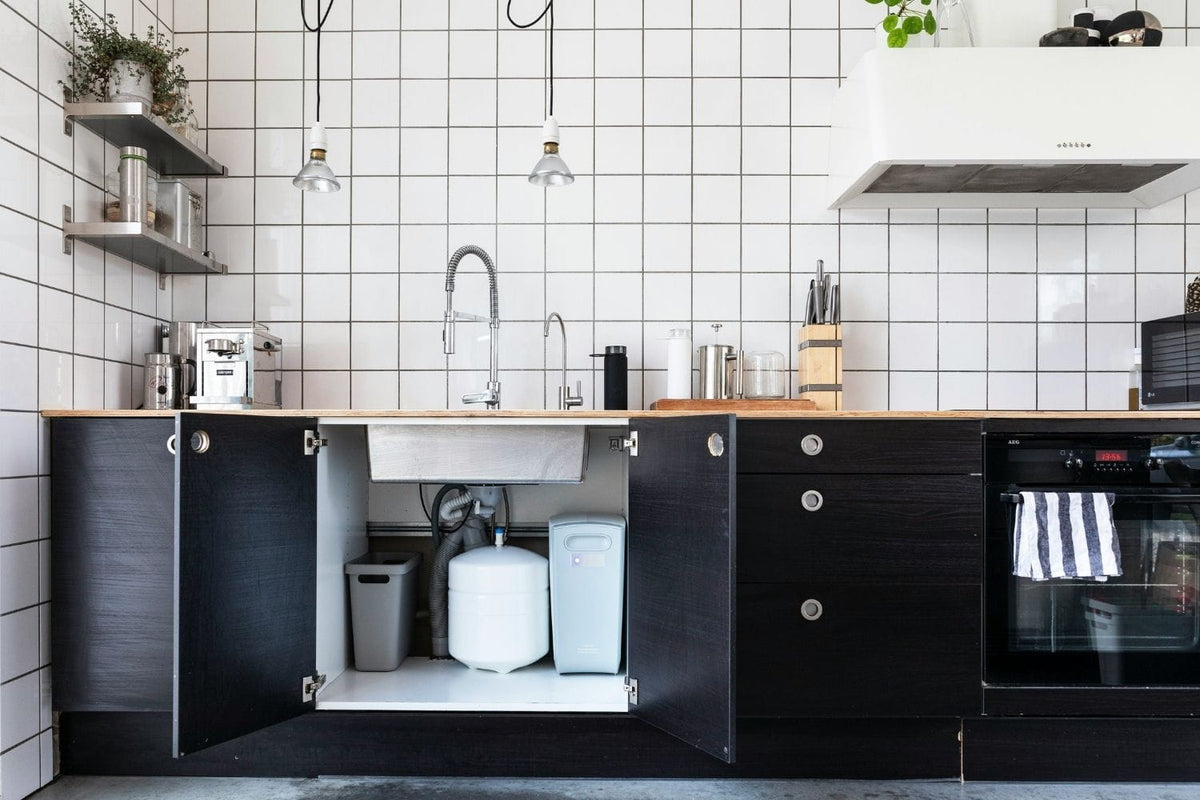
An under-sink system may be a good fit for a household that wants filtered water directly from a dedicated faucet. A countertop or pitcher filter may be more practical for renters or people with limited installation options.
For RO systems, also consider available under-sink space, water pressure requirements, storage tank capacity, wastewater characteristics, and whether you prefer a system with remineralization.
5. Check replacement filters before buying the system
This is easy to overlook, but it can make a big difference over the life of the product.
Look for clearly identified replacement sets, reasonable maintenance instructions, and filters that you can confidently obtain when it is time to replace them.
Choose the Filter That Matches Your Water
There is no universal “best water filter” for every home.
A simple carbon filter may be enough for someone focused on taste and chlorine. A more comprehensive treatment system may make sense for a household with specific contaminant concerns. Reverse osmosis can be a practical option when the goal is to reduce TDS and a broader range of dissolved contaminants, provided the system is selected based on verified performance claims and maintained properly.
At Filter United, our approach is to make that choice easier rather than presenting one system as the answer for everyone. Our products are designed around different household preferences, including a 5-stage RO configuration for straightforward multi-stage purification and a 6-stage option with an additional remineralization stage for people who prefer a different mineral profile and taste.
The most important thing is to look past the myths and marketing shortcuts. Know what is in your water, identify what you want to reduce, and choose a system based on transparent, verifiable performance.
That is a much better path to cleaner, better-tasting water than simply choosing the filter with the biggest claims or the highest number of stages.


