

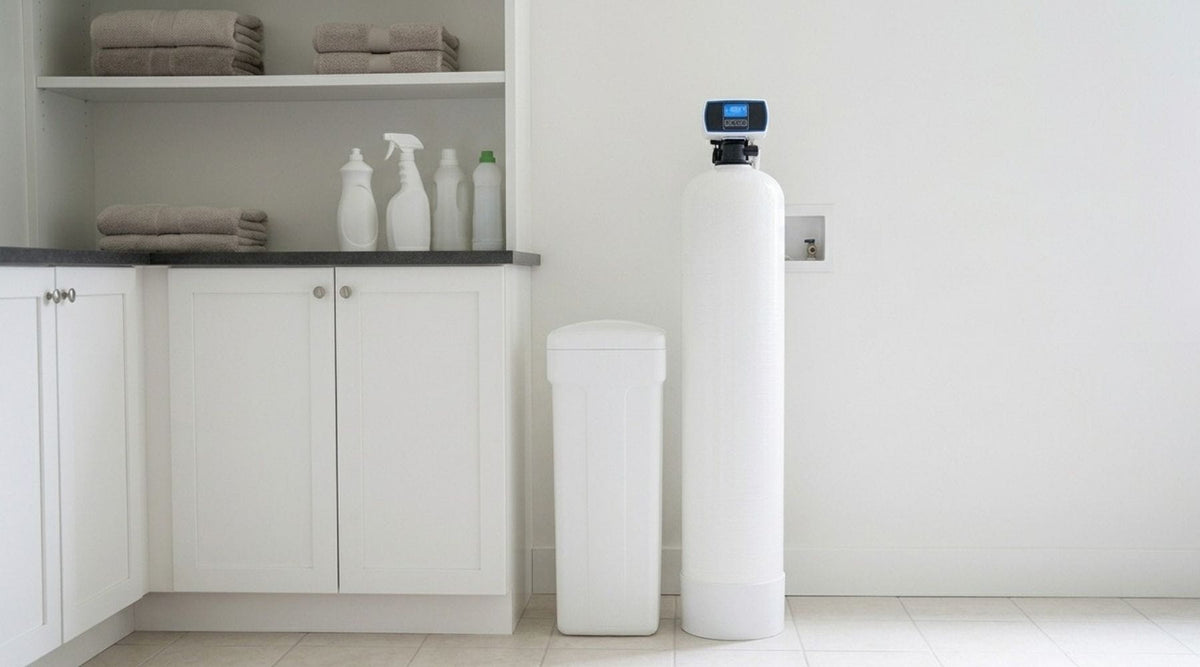
If you have ever stared at the white, chalky residue on your glass shower door or poured a glass of tap water that tasted slightly metallic, you have likely looked into residential water treatment.
Two names consistently top the list: Reverse Osmosis (RO) systems and Water Softeners. Here is a clear breakdown of how Reverse Osmosis systems and Water Softeners work, how they differ, and why using both might be the ultimate solution for your home’s water quality.
Understanding the Difference: Filtration vs. Ion Exchange
To choose the right system, it helps to understand that these technologies target entirely different water problems.
-
Reverse Osmosis (RO) is a purification process designed to clear water of dissolved contaminants, heavy metals, and micro-particles at a molecular level.
-
Water Softening is a conditioning process designed to remove hardness minerals (specifically calcium and magnesium) to protect pipes and appliances.
|
Feature |
Reverse Osmosis (RO) System |
Water Softener System |
|
Primary Function |
Purifies water for drinking/cooking |
Softens water for the whole house |
|
Key Target |
Heavy metals, TDS, PFAS, bacteria, chlorine |
Calcium and magnesium ions (Hardness) |
|
Technology |
Semi-permeable membrane filtration |
Ion-exchange resin beads (Salt-based) |
|
Installation Point |
Point-of-Use (Under-sink / dedicated faucet) |
Point-of-Entry (Main water line) |
|
Primary Benefit |
Clean, safe, great-tasting drinking water |
Prevents limescale, protects pipes & skin |
What is a Water Softener and How Does It Work?
Water hardiness affects over 85% of homes in the United States, according to data from the U.S. Geological Survey (USGS). Hard water contains elevated levels of dissolved calcium and magnesium ions dissolved from bedrock. While harmless to drink, hard water causes costly home maintenance issues.
How It Works
A water softener uses a process called ion exchange. Water enters a tank filled with tiny resin beads coated in sodium (or potassium) ions. As hard water flows through:
-
The resin beads attract and grab calcium and magnesium ions.
-
The beads release a harmless amount of sodium ions into the water.
-
The minerals are trapped, and "softened" water flows into your home plumbing.
What a Water Softener Fixes
-
Limescale Buildup: Eliminates crusty buildup inside kettles, water heaters, and shower heads.
-
Appliance Lifespan: Extends the life of dishwashers and washing machines by preventing mineral clogging.
-
Dry Skin & Dull Hair: Soft water washes away soap lather completely without leaving a drying film on your body.
-
Soap Efficiency: Allows you to use up to 50% less laundry detergent and dish soap.
What a Water Softener DOES NOT Do
A water softener does not purify water. It will not filter out chlorine, heavy metals like lead, chemical pollutants, nitrates, or micro-organisms. It simply swaps hardness minerals for sodium.
What is Reverse Osmosis (RO) and How Does It Work?
If a water softener protects your home's infrastructure, a Reverse Osmosis system protects your body.
RO technology was originally developed to desalinate seawater for marine and industrial applications, but modern engineering has brought this advanced purification process directly under the kitchen sink.
How It Works
An RO system uses household water pressure to force raw tap water through a semi-permeable membrane with pore sizes around 0.0001 microns. To put that in perspective, a single strand of human hair is roughly 70 microns wide.
Water passes through multiple filtration stages:
-
Pre-Filtration: Sediment and carbon blocks trap rust, dirt, chlorine taste, and odors to protect the sensitive membrane.
-
RO Membrane: The heart of the system. It rejects up to 99% of dissolved solids (TDS), including contaminants far too tiny for standard carbon filters.
-
Post-Filtration & Remineralization: Cleans up any residual taste and, in advanced systems, adds essential healthy minerals back into the purified water.
What an RO System Removes
According to independent testing standards like NSF/ANSI certifications, high-grade RO membranes effectively remove:
-
Heavy Metals: Lead, arsenic, chromium-6, and mercury.
-
Chemical Contaminants: PFAS ("forever chemicals"), nitrates, pesticides, and pharmaceuticals.
-
Disinfection Byproducts: Chlorine, chloramines, and VOCs.
-
Microscopic Impurities: Fluoride, dissolved salts, and microplastics.
What an RO System DOES NOT Do
Standard RO systems are designed as "Point-of-Use" (POU) solutions, which are typically supplying a dedicated faucet at the kitchen sink or connecting to a refrigerator ice maker. Installing a whole-house RO system is rarely practical for average residential homes due to cost, water volume requirements, and pipe corrosion risks from untreated RO water.
The Comparison: Which System Do You Need?
Choosing between the two depends entirely on your local municipal water source, well water testing, and personal health priorities.
You Need a Water Softener If:
-
You notice white scale deposits around faucets, shower glass, or inside tea kettles.
-
Your skin feels tight and dry after showering, or hair feels brittle.
-
Soap and shampoo refuse to lather easily.
-
You want to prevent premature breakdown of your water heater and appliances.
You Need a Reverse Osmosis System If:
-
You want high-grade, purified drinking and cooking water straight from your tap.
-
Your local water quality report shows high Total Dissolved Solids (TDS), lead, or PFAS warnings.
-
You dislike the chemical taste or odor of municipal chlorine in tap water.
-
You want to replace expensive, single-use plastic bottled water with a reliable home source.
Why You Might Need Both: The Ultimate Home Water Setup
In many regions across North America, tap water suffers from both high mineral hardness and high municipal contaminants.
If you live in an area with hard water and install only an RO system, the heavy calcium and magnesium ions will rapidly clog the delicate 0.0001-micron RO membrane, causing it to degrade long before its expected lifespan.
Conversely, if you install only a water softener, your water will be soft on your skin and appliances, but it may retain a high level of dissolved chemicals, heavy metals, and a slightly elevated sodium taste from the ion exchange process.
The Dual-Protection Strategy
When paired together, the two systems work in complete synergy:
-
Step 1 (Whole-House Protection): The Water Softener sits at the main entry line. It strips hard minerals out, protecting your pipes, appliances, and shower water.
-
Step 2 (Targeted Purification): The softened water feeds into your under-sink Reverse Osmosis system. Because the hard minerals have already been removed, the RO membrane operates at peak efficiency with significantly less stress, extending filter life and delivering pristine drinking water.
Choosing the Right RO Solution for Your Home
Investing in home water treatment is one of the most effective upgrades you can make for everyday comfort and health. When selecting an RO system, look for clear multi-stage filtration design, trusted certifications, and post-treatment features that balance taste and hydration.
For example, Filter United engineered the VIVA21 Series specifically to handle diverse residential water challenges with high-efficiency multi-stage technology:
-
VIVA21 5-Stage WQA-Certified Reverse Osmosis System: Designed for rigorous contaminant reduction, featuring a high-rejection membrane independently certified by the Water Quality Association (WQA) for trusted performance against heavy metals and chemical impurities.
-
VIVA21 6-Stage Remineralization Reverse Osmosis System: Combines deep 5-stage purification with an active 6th-stage alkaline remineralization process—restoring healthy mineral ions like calcium and magnesium in precise ratios to optimize taste and pH balance.
Whether you need a complete replacement system, a seasonal Complete Filter Set, a dedicated Pre-Filter Set to protect your setup from heavy sediment, or replacement filters and accessories, maintaining timely filter changes ensures your water remains clean, clear, and fresh every day.
Final Thoughts
Water treatment isn't one-size-fits-all. Water softeners handle mechanical issues like limescale and soap lather, while Reverse Osmosis systems deliver pure, safe drinking water.
Testing your home tap water or reviewing your local consumer confidence report is the best first step. By matching the right filtration technology to your specific water profile, you can enjoy softened bath water, protected home appliances, and pure drinking water at the turn of a handle.


