

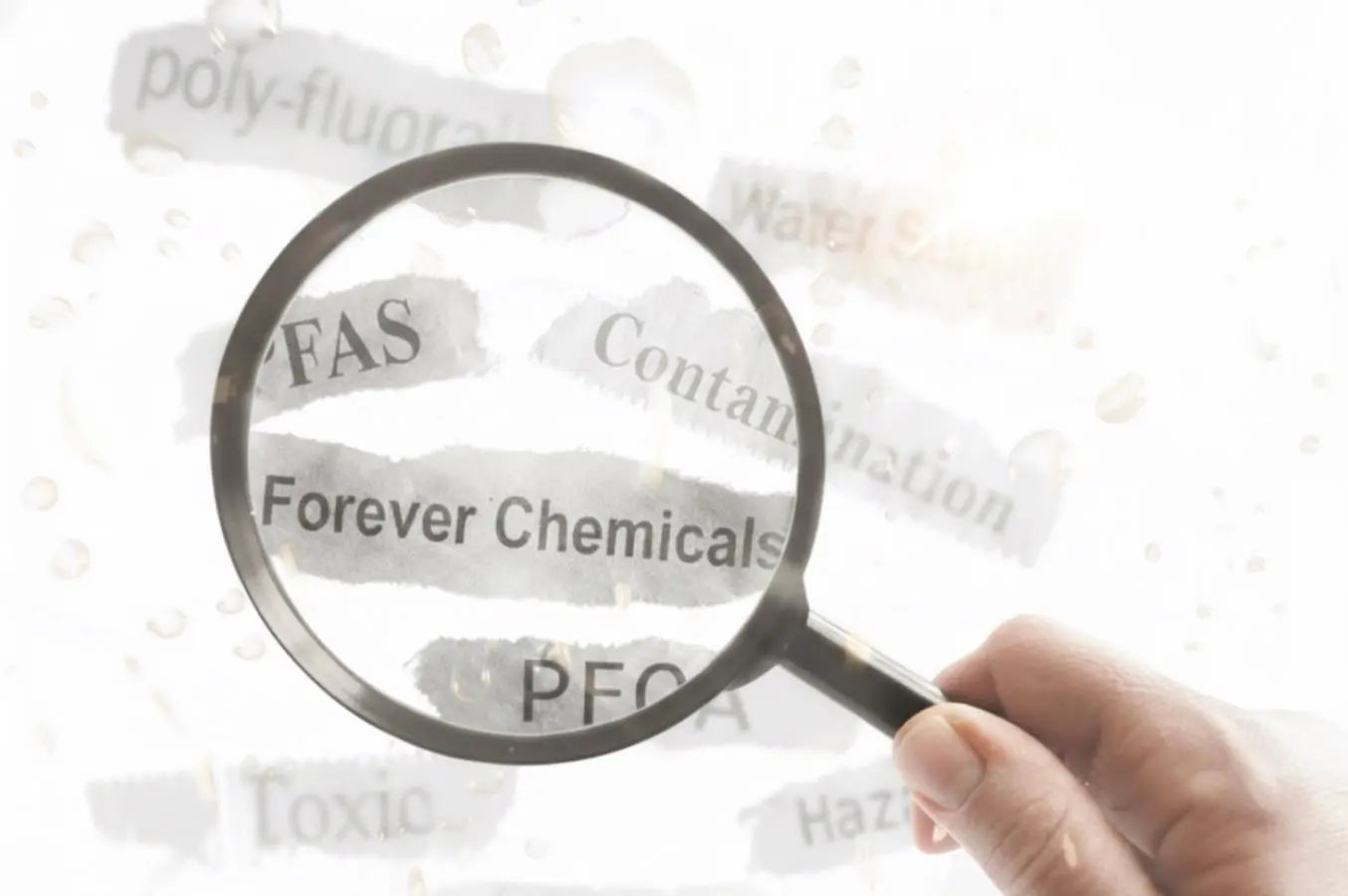
The year 2026 has arrived, and with it, a reality that scientists and environmentalists have warned about for decades: we are living in the era of "Global Water Bankruptcy." According to a landmark 2026 United Nations report, freshwater systems worldwide have reached a breaking point. But for the average American homeowner, the crisis isn’t just about the quantity of water, it’s about the invisible, persistent quality of what is coming out of the kitchen tap.
For years, Per- and Polyfluoroalkyl Substances (PFAS), commonly known as "forever chemicals," were a distant concern. Today, they are a primary legal and health liability. Recent data from USGS suggests that over 45% of U.S. tap water is contaminated with these synthetic compounds. Because they do not break down in the environment or the human body, they have been linked by the EPA to serious health risks, including endocrine disruption, high cholesterol, and certain cancers.
As we navigate this "Year of Accountability," it is becoming clear that while federal regulations are finally catching up to the pollution, the "last mile" of protection–your home’s water supply, is still your responsibility.
1. The 2026 Regulatory Landscape: Federal & State Pressure
2026 is being hailed as "Year Zero" for PFAS enforcement in the United States. The regulatory clock is ticking, and several major deadlines are converging to change how we monitor and manage our water.
The TSCA Section 8(a)(7) Reporting Deadline
The most significant federal milestone is the October 13, 2026, EPA TSCA deadline. Under Section 8(a)(7) of the Toxic Substances Control Act, thousands of companies are now legally required to disclose their history of PFAS manufacturing and usage dating back to 2011.
This is set to create the largest database of PFAS usage ever assembled. For homeowners, this means a massive wave of public information is about to break, likely revealing new "hot zones" of contamination in areas previously thought to be safe.
January 1st State-Level Bans
While the federal government gathers data, individual states are taking immediate action. As of January 1, 2026, states including Minnesota, Maine, Vermont, and Colorado have officially implemented bans on PFAS in several consumer product categories. These bans target:
-
Cleaning products and cookware
-
Cosmetics and dental floss
-
Textile treatments and carpets
The logic is simple: if these chemicals are deemed too dangerous to be in your clothes or your frying pan, they certainly shouldn’t be in your drinking water.
2. The 3-Year "Protection Gap": Why You Can’t Wait
While the EPA has established strict new Maximum Contaminant Levels (MCLs) for six types of PFAS in public water systems, there is a catch. Municipalities and water utility companies have been given until 2029 to fully comply with these standards.
This creates a dangerous three-year "Protection Gap." From now until 2029, your local water may legally meet current (but outdated) standards while still containing levels of forever chemicals that the EPA itself admits are unsafe. Relying on city-wide infrastructure upgrades means waiting years for a solution you need today. This is why EPA PFAS regulations 2026 milestones are a wake-up call for homeowners to take control of their own filtration.
3. The RO Standard: Immediate Safety Through Science
When it comes to the best water filter for forever chemicals, not all technology is created equal. Standard carbon pitchers or refrigerator filters are often "hit or miss" because PFAS molecules are incredibly small and resilient.
The 0.0001 Micron Barrier
Reverse Osmosis (RO) operates on a different level of physics. It utilizes a semi-permeable membrane that acts as a molecular sieve. With a pore size of approximately 0.0001 microns, an RO membrane blocks contaminants that are simply too small for other filters to catch. Because PFAS molecules are larger than water molecules, they are physically rejected by the membrane and flushed away, leaving only purified water for your glass.
The VIVA21 Advantage: NSF/ANSI 58 Certification
At VIVA21, we believe that safety shouldn't be based on guesswork. Our systems aren't just "designed" to filter chemicals, they carry the WQA Gold Seal and are independently certified to NSF/ANSI 58 standards.
This certification is the industry benchmark for RO systems. It specifically validates that the system can reduce PFOA and PFOS (the two most notorious PFAS) by up to 99%. If you choose our 5-Stage Undersink RO System, you are getting a barrier that has been tested against the toughest contaminants.
4. Other Water Safety FAQ About PFAS
Does boiling water remove PFAS?
No. In fact, boiling water is counterproductive. Because PFAS do not evaporate, boiling the water only causes some of the water to turn to steam, which actually concentrates the chemicals in the remaining liquid.
Is bottled water safer than RO water?
Not necessarily. Many of the bottled water sold in stores is actually just filtered tap water. Unless the brand explicitly states they use RO and provides testing data, you may still be consuming PFAS. A home RO system provides a transparent, verifiable level of safety that bottled water cannot match.
How often should I change RO filters to ensure PFAS protection?
To maintain the integrity of the PFAS removal reverse osmosis process, we recommend changing your pre-filters every 6-12 months and the RO membrane itself every 24 months, depending on your local water quality.
Conclusion: Taking Control of Your Tap
The "Year of Accountability" is not just about government reports and corporate deadlines, it is about the health of your household. We can no longer assume that "legal" water is the same as "safe" water. With the TSCA Section 8(a)(7) reporting deadline fast approaching and state bans already in effect, the evidence is clear: the time to act is now.
Don't wait for a 2029 municipal upgrade to solve a 2026 problem. By installing a certified RO system, you bridge the protection gap and ensure your family isn't part of the "Global Water Bankruptcy" statistics.
Protect your family from the 2026 PFAS surge. Explore the VIVA21 NSF 58 Certified RO Systems today and take the first step toward true water security.


