

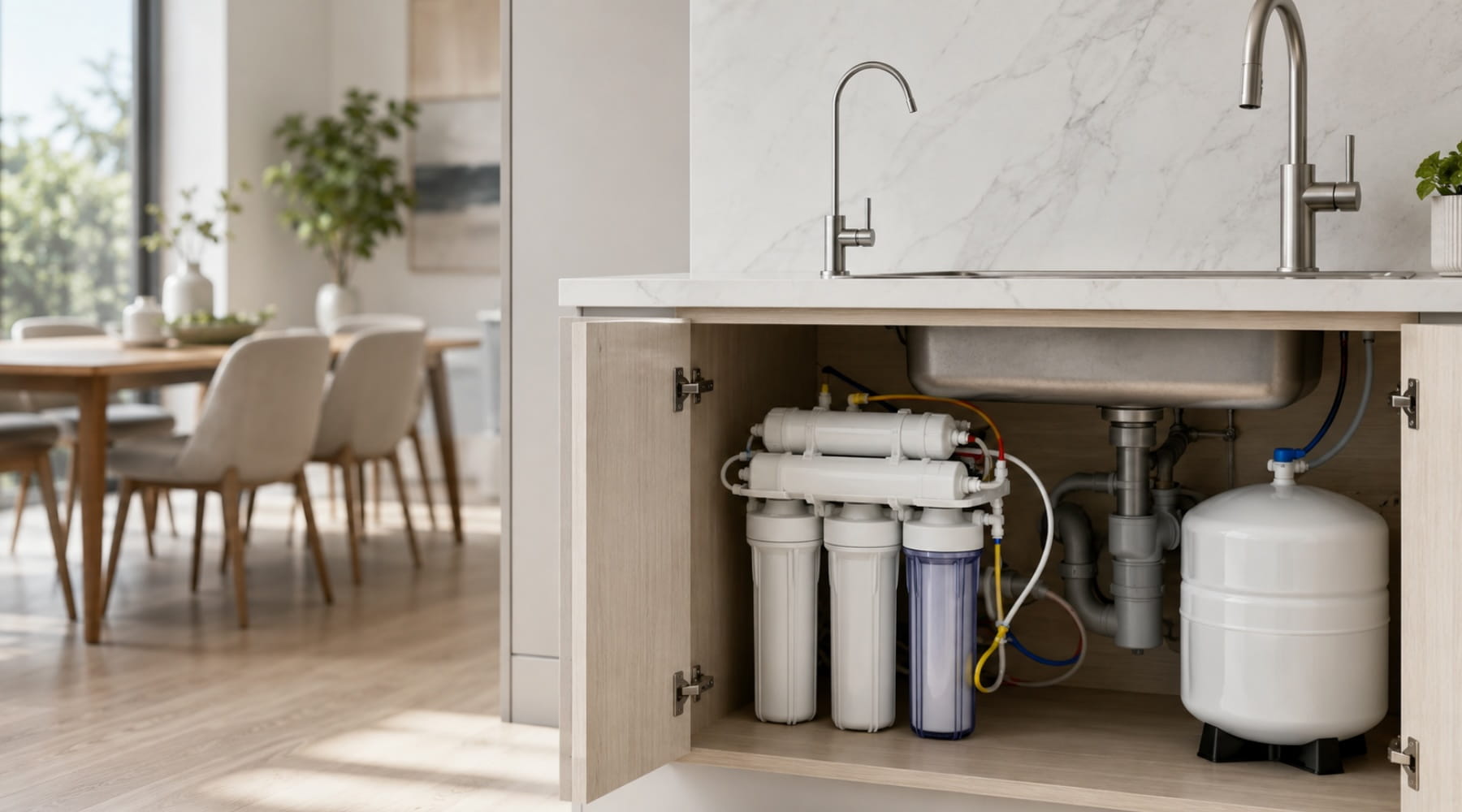
If you have toured a newly constructed home or participated in a modern kitchen remodel recently, you have likely noticed a sleek, secondary faucet sitting next to the main kitchen tap. This isn't just a design trend, it is the visible component of an under-sink Reverse Osmosis (RO) water filtration system.
More homeowners and builders are prioritizing these systems from day one. But what is driving this widespread adoption, and is a compact under-sink RO system truly worth the investment for your household? Let us dive into the science, the financial benefits, and why these systems have become a staple of modern residential design.
What is an Under-Sink RO System?
Reverse osmosis is a highly sophisticated filtration process. While standard carbon pitchers merely mask taste or trap large particles, an RO system forces water through a semipermeable membrane under pressure.
This membrane features microscopic pores roughly 0.0001 microns in size. To put that into perspective, a single human hair is about 70 microns wide. Because the pores are so small, the system rejects up to 99% of total dissolved solids (TDS), leaving you with exceptionally pure drinking water.
Under-sink models are specifically engineered to sit discreetly inside your kitchen cabinet, connecting directly to your cold water line and a dedicated countertop faucet.
4 Reasons Modern Homes Feature Under-Sink RO Systems
1. Superior Contaminant Removal and Health Security
Modern municipal water treatment plants do an incredible job of delivering water that meets baseline safety standards. However, aging city infrastructure can introduce impurities like lead or copper as water travels to your tap. Furthermore, emerging contaminants like PFAS (often called "forever chemicals"), microplastics, and high levels of nitrates frequently bypass standard city filtration.
An under-sink RO system acts as your final, foolproof line of defense. It consistently removes:
-
Heavy metals (lead, arsenic, chromium)
-
Chemical pollutants (chlorine, fluoride, PFAS)
-
Microscopic cysts, bacteria, and viruses
-
Dissolved salts and scale-causing minerals
For families prioritizing long-term wellness, having a certified purification method directly at the point of consumption offers immense peace of mind.
2. Seamless Kitchen Design and Space Optimization
In modern interior design, minimalism and clean countertops are highly valued. Clunky countertop filters or bulky water cooler dispensers conflict with this aesthetic.
Under-sink RO systems solve this problem by remaining completely hidden from view. The filtration stages and storage tank tuck away neatly underneath the sink, leaving only a low-profile, premium faucet visible on the deck. Modern systems are increasingly compact, ensuring you still have plenty of room for cleaning supplies and your garbage disposal.
3. The Culinary Advantage: Better Tasting Food and Coffee
If you have ever noticed a bitter aftertaste in your morning coffee or a distinct chemical smell when boiling water, municipal chlorine or heavy mineral content is likely the culprit.
Pure water changes how you cook. Professional chefs and baristas rely on RO water because it provides a completely neutral canvas. Without chlorine or excess minerals interfering, the true flavor profiles of your coffee beans, tea leaves, soups, and home-cooked dishes can shine through.
4. Long-Term Financial Savings and Environmental Sustainability
Purchasing single-use bottled water or heavy 5-gallon jugs is both financially draining and environmentally damaging.
Consider the math: a typical family of four drinking a healthy amount of water can easily spend hundreds of dollars a year on bottled water. An under-sink RO system provides the exact same or higher purification quality for pennies per gallon. By switching to an in-home system, you drastically reduce your household's plastic waste footprint while enjoying the convenience of an endless supply of pure water on demand.
How to Choose the Right Under-Sink RO System for Your Home
Investing in a water filtration system requires evaluating your specific household needs. Here are the core factors to look for before making a purchase:
-
TDS and Contaminant Reduction Efficiency: Look for systems that explicitly state their filtration capabilities and hold trusted certifications (such as NSF/ANSI standards) for removing specific toxins like lead or PFAS.
-
Remineralization Stages: Because RO filtration is so thorough, it removes beneficial minerals along with the harmful ones. Many premium systems now feature an alkaline remineralization stage that adds trace amounts of calcium and magnesium back into the water, balancing the pH and giving it a crisp, refreshing taste.
-
Ease of Installation and Filter Replacement: If you prefer DIY projects, look for systems that feature quick-connect fittings and simple, tool-free filter replacements. High-quality brands design their systems so filters can be swapped out in under 60 seconds.
-
Daily Production Rate (GPD): Measured in Gallons Per Day, this dictates how fast the system purifies water.
The Bottom Line
An under-sink RO system is no longer viewed as a luxury add-on, it is a practical upgrade for modern living. By offering a continuous stream of purified water right at your fingertips, it protects your family's health, elevates your culinary experiences, eliminates plastic waste, and adds tangible value to your property.
If you are ready to upgrade your home’s water quality, exploring a certified, high-efficiency under-sink RO system is the perfect place to start.


