

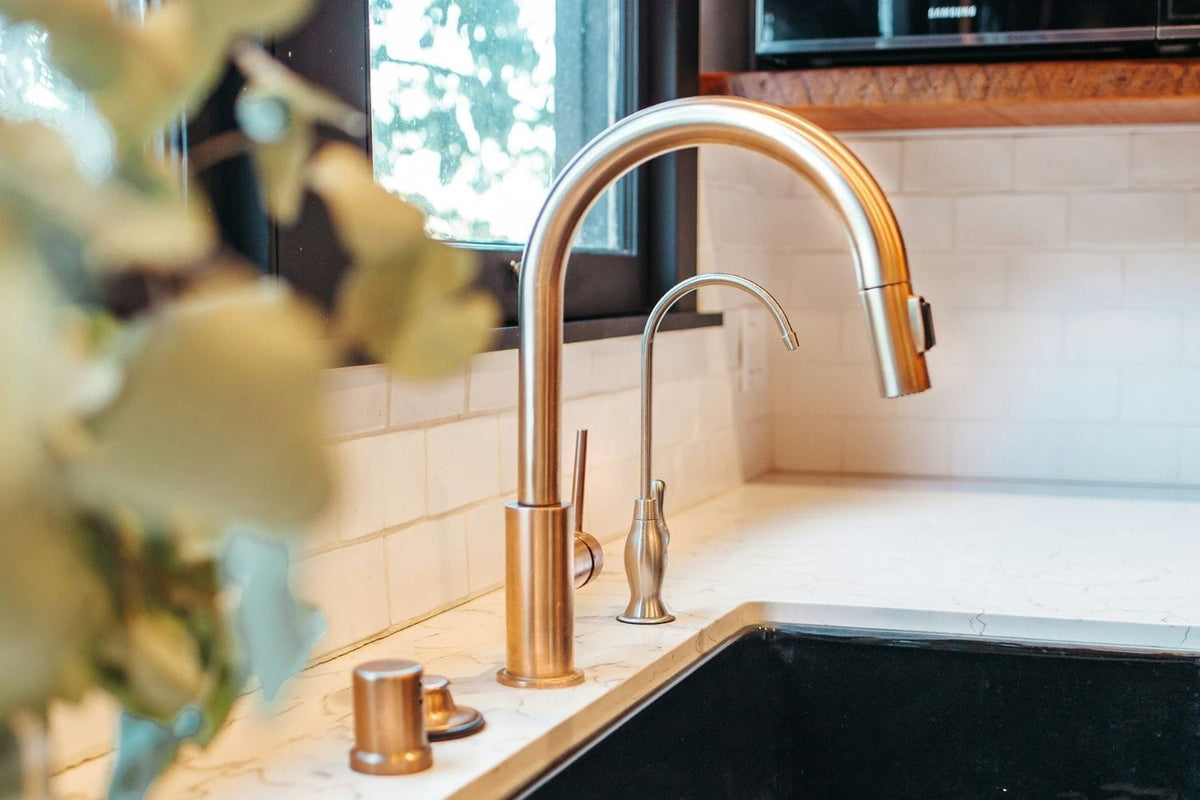
When installing a reverse osmosis (RO) system under your kitchen sink, you might come across a term that sounds more like electrical engineering than water filtration: the air gap.
You might notice a small hole at the base of your dedicated drinking water faucet, or your installer might insist on a specific type of faucet to pass local inspection. Why does a clean drinking water system need a physical gap of air? And why are local plumbing inspectors so strict about it?
In this guide, we will break down what an air gap is, how it works, why international and local plumbing codes require it, and what it means for your home’s drinking water safety.
What Exactly Is an Air Gap in Water Filtration?
At its simplest, an air gap is an unobstructed vertical space of open air between a water supply outlet and the flood level rim of a receptacle (like a sink or drain).
In the world of under-sink reverse osmosis systems, an air gap is integrated directly into the dedicated drinking water faucet. It creates a physical separation between two very different water streams:
-
Your purified drinking water (coming from your RO membrane and tank).
-
The wastewater/brine line (carrying filtered impurities down into your household drain).
Instead of sending the reject wastewater straight into the drain pipe, an air gap faucet routes the wastewater line up into the base of the faucet, allows it to drip through an open air space inside the faucet body, and then lets gravity pull it down a larger hose into your drain saddle.
The Science of Backflow: Why Is an Air Gap Necessary?
To understand why air gaps exist, you need to understand a hidden plumbing hazard: backsiphonage.
Plumbing systems rely on pressure differentials. Under normal conditions, water flows out of your pipes because the supply pressure is higher than atmospheric pressure. However, if there is a sudden drop in city water pressure, such as a main break nearby, heavy fire hydrant use, or a pump failure, a negative pressure vacuum can be created inside your home's pipes.
If your reverse osmosis system's wastewater line were directly connected to your sink drain without an air gap, that negative pressure could create a siphon effect.
The Worst-Case Scenario: Cross-Contamination
Imagine your garbage disposal backs up or your kitchen sink drain clogs with dirty, bacteria-laden wastewater. Without a physical air gap:
-
Negative pressure or drain backup could suck dirty sink water back up through the RO drain line.
-
Sewage water could contaminate the reverse osmosis membrane.
-
In extreme cases, contaminated water could siphon directly into your clean water storage tank or your home's main potable water supply.
An air gap acts as an impassable physical barrier. Because air cannot transmit liquid or bacteria across an open space via suction, it is physically impossible for drain water to cross back over into your clean drinking water line.
What Do Local Plumbing Codes Say About Air Gaps?
Plumbing codes are not created to make DIY installation difficult; they are designed to protect public health and safety. Two major plumbing standards govern North America and influence global codes:
-
The Uniform Plumbing Code (UPC)
-
The International Plumbing Code (IPC)
Key Plumbing Code Requirements
-
Mandatory Backflow Prevention: Under Section 602.0 of the UPC and Section 608 of the IPC, any connection between a potable (drinking) water system and a potential contamination source must be protected by an approved backflow prevention assembly or an air gap.
-
The 2x Rule: Standard codes dictate that an air gap must be at least twice the effective diameter of the supply pipe, and never less than 1 inch (25 mm) above the flood level rim of the sink.
-
NSF/ANSI Standard 58: Certified reverse osmosis units are tested under NSF/ANSI 58, which requires safe wastewater discharge mechanisms to ensure long-term potable water safety.
In many cities across North America, local inspectors will fail a home plumbing inspection if an under-sink RO system is installed without a code-compliant air gap faucet or an approved secondary backflow device.
Air Gap vs. Non-Air Gap RO Faucets: An Honest Comparison
When shopping for the best reverse osmosis water filter system, you will see options for both Air Gap and Non-Air Gap faucets. Neither option is inherently "bad", but they serve different preferences and compliance needs.
|
Feature |
Air Gap Faucet |
Non-Air Gap Faucet |
|
Code Compliance |
Complies with strict local codes out of the box |
May require secondary backflow prevention |
|
Backflow Safety |
100% fail-safe physical barrier |
Relies on check valves or standpipe gaps |
|
Noise Level |
Soft gurgling sound during filtration |
Virtually silent |
|
Tubing Lines |
Requires 3 tubes (Pure water, Brine In, Brine Out) |
Requires 1 pure water tube |
|
Maintenance |
Requires occasional cleaning of air gap vent |
Low maintenance |
Air Gap Faucets: The Gold Standard for Safety
-
Pros: Complete peace of mind, fully code-compliant in 100% of municipalities, zero mechanical valves to fail.
-
Cons: Can make a faint gurgling sound while the system refills the tank; requires a slightly larger sink hole or dedicated faucet cutout.
Non-Air Gap Faucets: Sleek & Silent
-
Pros: Quiet operation, easier DIY installation with smaller tubing, sleek minimal aesthetic.
-
Cons: Requires a mechanical check valve or specialized drain standpipe to prevent backflow; may not satisfy local plumbing inspectors in strict code regions.
Troubleshooting Common Air Gap Issues (Gurgling & Leaks)
If you already own an air gap RO system, you might occasionally notice two issues: gurgling noises or water leaking from the faucet air gap hole. Here is how to troubleshoot them quickly:
1. Water Leaking from the Air Gap Hole
If water spills out of the little window at the base of your faucet onto the sink counter:
-
The Cause: A blockage in the lower drain line. Debris from your garbage disposal or grease buildup in the drain saddle tube is restricting water from flowing down into the drain.
-
The Fix: Disconnect the 3/8" line running from the faucet down to the drain pipe and clear any food debris or sludge using a pipe cleaner or warm water flush.
2. Loud Gurgling Sounds
-
The Cause: Air bubbles getting trapped or the tubing sagging beneath the sink, creating an unexpected trap line.
-
The Fix: Ensure the drain tube runs in a continuous downward slope from the faucet to the drain saddle with no dips, loops, or sharp kinks.
Upgrade Your Home’s Water with Filter United
At Filter United, we believe that enjoying ultra-pure, crisp drinking water should never compromise your home's plumbing safety.
Whether you are upgrading an older system or purchasing your first under-sink reverse osmosis system, Filter United engineered our filtration lineup with premium materials, high-recovery membranes, and code-ready designs.
Why Choose Filter United RO Systems?
-
High-Efficiency Filtration: Removes up to 99% of contaminants, including PFAS, microplastics, lead, fluoride, heavy metals, and chlorine.
-
WQA Certified Performance: Tested and certified by the Water Quality Association to meet rigorous industry standards, giving you total peace of mind in every drop.
-
Hassle-Free Installation: Color-coded quick-connect fittings and step-by-step guides mean you spend less time plumbing and more time enjoying fresh water.
The Bottom Line
An air gap isn't just a quirky design feature or an annoying piece of local code regulation. It is a time-tested, zero-electricity physical barrier that protects your family from cross-contaminated drain water.
Before installing a reverse osmosis system, check your local building and plumbing codes. If an air gap is required, choosing a certified air-gap faucet setup is the safest and smartest investment you can make for your home's water quality.
Ready to transform your home drinking water? Explore our full line of advanced reverse osmosis filtration systems at Filter United today!


