

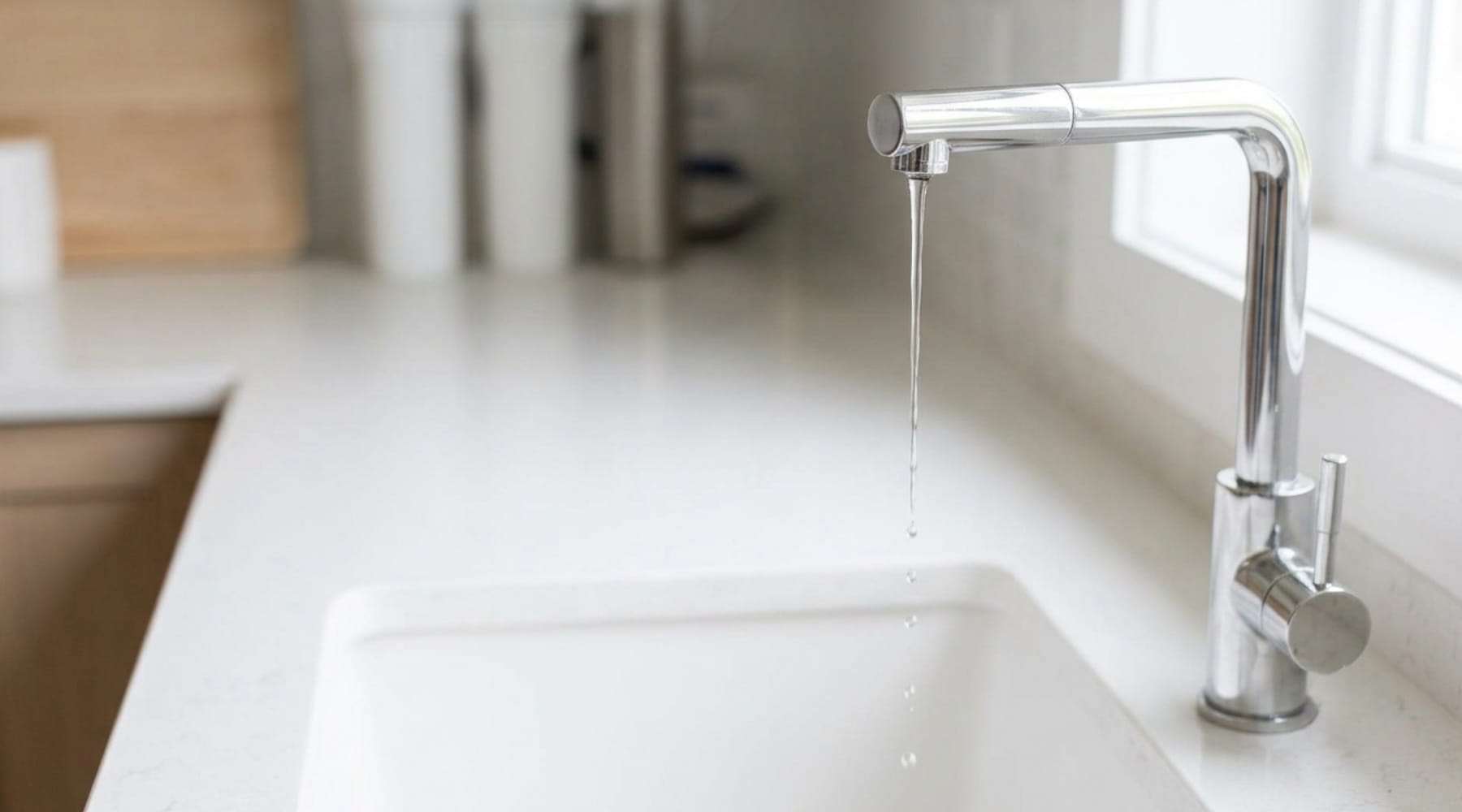
Imagine turning on your dedicated kitchen faucet for a glass of crisp, healthy drinking water, only to find a weak, frustrating trickle. A sudden drop in RO water flow rate is a common headache for many homeowners, but it doesn’t always mean you need an expensive RO system repair or a brand-new RO membrane.
Most sudden drops in water pressure stem from minor, easily fixable issues within the filtration stages or the storage tank. This guide walks you through the exact technical causes behind a sudden low water pressure event and provides a step-by-step checklist to get your clean water flow back up to speed.
Phase 1: The Quick External Checklist
Before opening up your filtration system, rule out external plumbing variables that might mimic an internal breakdown.
-
Test the Main Kitchen Faucet: Turn on your regular cold-water faucet. If the entire kitchen is suffering from a weak stream, the root cause is your home's incoming feed water pressure, not the RO unit. This usually happens during municipal water line repairs or main valve issues.
-
Inspect the Feed Water Adapter Valve: Locate the valve connecting your home’s cold-water line to the RO input tubing. Ensure it hasn't been accidentally bumped or partially closed. It must be turned fully open.
-
Verify the Storage Tank Valve: Find the small valve located at the top of your metal RO storage tank. The handle must run parallel to the tubing to allow water to flow out freely. If it is sitting perpendicular, the tank line is locked.
Phase 2: Diagnosing Internal System Blockages
If your incoming utility pressure is normal but your purified water faucet is still trickling, the issue is inside the system. Let’s look at the components most likely to cause a sudden failure.
1. A Clogged Stage 1 Sediment Filter
While a high-quality Reverse Osmosis membrane degrades gradually over two to four years, pre-filters can choke up almost instantly.
-
The Cause: If your local city water utility recently flushed nearby fire hydrants or repaired a water main, a massive wave of rust, dirt, and silt can enter your pipes. The Stage 1 sediment filter does its job by trapping these large particles, but a sudden heavy influx will completely seal the filter surface overnight.
-
The Result: Without water passing through the initial stages, the system cannot build up the necessary hydraulic pressure required to push water across the semi-permeable RO membrane.
-
The Solution: Turn off your feed water valve, open the first filter housing, and inspect the cartridge. If it is heavily discolored or covered in silt, an immediate water filter replacement will solve your flow issues.
2. Loss of RO Storage Tank Air Pressure
A standard domestic RO system produces water slowly, drop by drop, and collects it inside a pressurized storage tank. Inside this tank sits a heavy-duty rubber bladder surrounded by compressed air. If your system delivers a strong, normal flow for about 5 to 10 seconds and then abruptly dies down to a slow trickle, your storage tank is losing its driving force.
-
Low Pressure Air Charge: Over time, air can naturally migrate through the metal tank walls. When the air pressure drops too low, the bladder cannot expand properly to push the stored water up to your sink.
-
How to Fix It: Turn off the incoming feed water valve and completely drain all remaining water from the tank through your RO faucet. Locate the small air valve (Schrader valve, identical to a bicycle tire stem) near the base of the tank. Use a standard low-pressure tire gauge to read the pressure. An empty tank must sit exactly between 7 to 8 PSI. If it reads lower, use a manual bicycle pump to carefully add a few counts of air until it reaches the correct pressure.
-
Ruptured Tank Bladder: If you depress the air valve stem during your check and water squirts out instead of air, the internal rubber bladder has ruptured. Once a bladder tears, the tank can no longer hold an air charge. The only solution is to secure a replacement storage tank.
3. Kinked Tubing or a Stuck Auto Shut-Off Valve (ASO)
-
Physical Kinks: Under-sink storage spaces are high-traffic areas. Moving dish soap bottles, trash bins, or cleaning supplies can easily pinch or kink the flexible, color-coded polytubing. Visually trace each line from the feed valve to the faucet to ensure no lines are bent at sharp angles.
-
The Auto Shut-Off Valve (ASO): This mechanical valve automatically stops incoming water once the storage tank reaches full capacity. If the internal diaphragm of the ASO tears or gets jammed by a microscopic piece of debris, it can lock itself in the "closed" position permanently. If your pre-filters are clean and your tank is properly pressurized, but absolutely no water is entering the membrane housing, a faulty ASO is likely blocking the line. Replacing an ASO is a quick, highly affordable fix.
Preventing Future Water Flow Drops
The single most effective way to protect your system from sudden pressure drops is keeping up with a routine water filter replacement schedule. Sediment and carbon pre-filters should generally be swapped every 6 to 12 months depending on your household water usage and local water hardness.
Regular maintenance ensures that your system components work under optimal pressure conditions, preventing unnecessary stress on the main membrane and guaranteeing a steady, uninterrupted flow of clean water.
If you have completed these troubleshooting steps and determined that your system requires a fresh set of pre-filters, a new high-output membrane, or a pressurized tank upgrade, explore our high-performance components on our product page to find the exact, certified parts for your setup.


